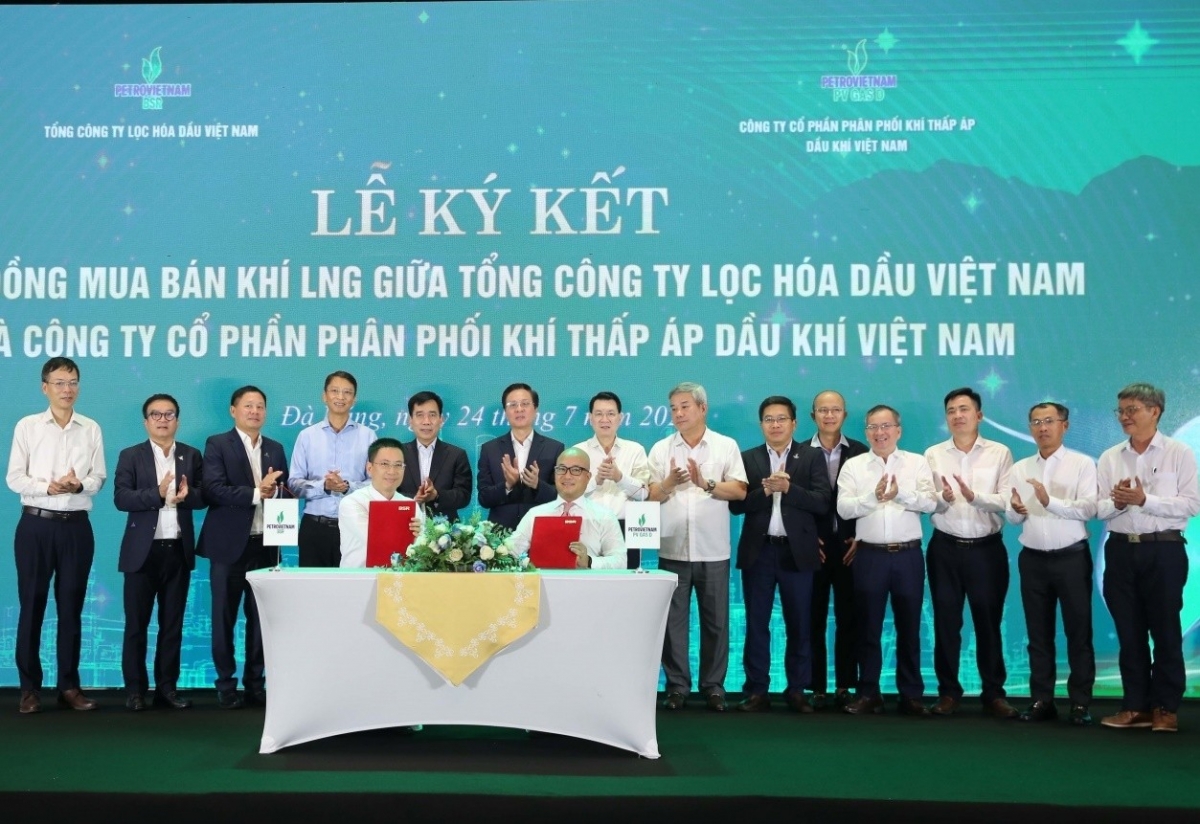
Strategic LNG Partnership Marks New Era for Vietnam's Energy Security
In a significant move toward diversifying energy sources and ensuring national energy security, Vietnam Oil Refinery Corporation (BSR) under Petrovietnam has signed a landmark liquefied natural gas (LNG) purchase agreement with Vietnam Gas Corporation (PV GAS). This strategic collaboration represents a pivotal moment in Vietnam's energy landscape, positioning the country to meet growing energy demands while transitioning toward cleaner energy sources.
The agreement, signed between BSR and PV GAS—with PV GAS D (Petrovietnam Gas Joint Stock Company) acting as representative—underscores Vietnam's commitment to developing a robust LNG market and reducing dependency on traditional energy sources. As Vietnam continues its economic development, securing reliable and cleaner energy supplies has become increasingly critical for sustainable growth.
Comprehensive Overview of the LNG Agreement
The strategic LNG purchase agreement between BSR and PV GAS represents a comprehensive partnership that extends beyond simple commodity exchange. The contract establishes a framework for long-term LNG supply that will serve as a foundation for Vietnam's expanding energy infrastructure.
Liquefied natural gas (LNG) is a clean-burning fossil fuel that has been cooled to approximately -162°C (-260°F), reducing its volume by about 600 times compared to its gaseous state. This transformation enables efficient storage and transportation of natural gas across long distances, making it an essential component of global energy trade. In Vietnam's context, LNG serves multiple purposes: industrial fuel, power generation, and transportation fuel, offering versatility in meeting diverse energy needs.
The agreement formalizes the relationship between two key Petrovietnam entities, creating synergy within the national energy ecosystem. By establishing direct supply channels between gas producers/refiners and distributors, Vietnam aims to optimize its energy value chain while minimizing supply chain vulnerabilities.
Strategic Significance for Vietnam's Energy Sector
The BSR-PV GAS LNG partnership carries profound strategic implications for Vietnam's energy security and development trajectory. This agreement contributes to several critical national objectives:
- Enhanced Energy Security: By diversifying energy sources beyond traditional imports, Vietnam reduces vulnerability to supply disruptions and price volatility in global energy markets.
- Market Development: The agreement establishes a foundation for Vietnam's emerging LNG market, creating infrastructure and expertise that will support future LNG projects across the country.
- Internal Synergy: The collaboration strengthens the integration between Petrovietnam's subsidiaries, optimizing resource allocation and operational efficiency within the national energy conglomerate.
- Reduced Dependency: Vietnam aims to decrease reliance on coal and oil imports, which have dominated the country's energy mix historically.
- Emission Reduction: LNG adoption supports Vietnam's commitment to reduce greenhouse gas emissions, aligning with international climate agreements and national environmental targets.
Roles and Capabilities of BSR and PV GAS
Vietnam Oil Refinery Corporation (BSR) stands as a cornerstone of Petrovietnam's downstream operations. As the operator of the Dung Quat Oil Refinery—one of Southeast Asia's most sophisticated refining facilities—BSR plays a pivotal role in Vietnam's petroleum processing capabilities. The Dung Quat refinery, with a processing capacity of 6.5 million tons per year, produces a comprehensive range of petroleum products including gasoline, diesel, kerosene, fuel oil, and other petroleum-based products.
BSR's participation in the LNG agreement reflects its strategic expansion into cleaner energy sources. As Vietnam's refining sector evolves, BSR aims to integrate LNG into its operations, potentially using LNG as feedstock or fuel for its refining processes. This diversification enhances the company's resilience amid global energy transitions and changing regulatory environments.
Vietnam Gas Corporation (PV GAS) serves as the exclusive operator of Vietnam's natural gas pipeline system and holds a monopoly in the country's gas distribution sector. As the sole entity with comprehensive capabilities in Vietnam's gas sector, PV GAS manages the entire value chain from exploration and production to distribution and consumption.
PV GAS possesses extensive experience in handling natural gas, including LNG importation, regasification, and distribution. The corporation operates over 3,000 kilometers of gas pipelines connecting major industrial zones and power plants across Vietnam. With established infrastructure in key economic regions, PV GAS is uniquely positioned to facilitate LNG integration into Vietnam's energy matrix.
Development Prospects for LNG in Vietnam
Vietnam's energy consumption has been growing at an impressive rate, driven by rapid industrialization, urbanization, and rising living standards. Electricity demand, in particular, has been increasing by approximately 8-10% annually between 2021-2030, necessitating substantial investments in power generation infrastructure.
As Vietnam seeks to balance economic development with environmental commitments, LNG has emerged as a critical transitional fuel. Unlike coal, which has dominated Vietnam's power generation, LNG offers lower carbon emissions and improved air quality. The Vietnamese government has recognized LNG's potential in the energy transition, incorporating it into national power development plans through 2030 with a vision toward 2050.
The following table provides an overview of major LNG projects currently under development or planned in Vietnam:
| Project Name | Location | Capacity (MW) | Development Status | Key Features |
|---|---|---|---|---|
| Quang Ninh LNG Terminal | Quang Ninh Province | 1,000 | Under Construction | Integrated terminal and power plant; scheduled for completion by 2025 |
| Bac Lieu LNG Power Complex | Bac Lieu Province | 3,200 | Under Construction | Multiple phases; includes regasification terminal and power plants |
| Soc Trang LNG Project | Soc Trang Province | 1,500 | Pre-implementation | Focus on southern industrial zones; planned for 2026-2028 |
| Vung Tau LNG Terminal | Ba Ria-Vung Tau Province | 1,000 | Pre-implementation | Strategic location near existing oil & gas infrastructure |
Beyond these major projects, Vietnam is exploring additional LNG import facilities in strategic locations along its coastline, particularly in regions with high industrial activity and power demand. The government has also signaled interest in developing floating storage and regasification units (FSRUs) as a flexible solution for LNG importation, given Vietnam's extensive coastline and existing port infrastructure.
Economic and Environmental Benefits
The BSR-PV GAS LNG partnership delivers substantial economic and environmental advantages that align with Vietnam's sustainable development goals. Economically, the agreement enhances energy security by diversifying supply sources, reducing exposure to global oil price fluctuations, and creating domestic value in the energy sector.
Environmentally, LNG represents a significant improvement over coal and oil in terms of emissions profile. When compared to coal, LNG combustion produces approximately 40% less carbon dioxide (CO2) and virtually eliminates emissions of sulfur dioxide (SO2), nitrogen oxides (NOx), and particulate matter—pollutants that contribute to air pollution and public health issues. These environmental benefits are particularly valuable for Vietnam, which has been experiencing air quality challenges in its rapidly urbanizing areas.
The adoption of LNG also supports Vietnam's international climate commitments. As a signatory to the Paris Agreement, Vietnam has pledged to reduce greenhouse gas emissions, with a target of achieving net-zero emissions by 2050. LNG serves as a critical bridge fuel in this transition, enabling immediate emission reductions while allowing time for the development of renewable energy infrastructure.
From an economic perspective, the development of LNG infrastructure stimulates job creation, attracts foreign investment, and positions Vietnam as a competitive energy market in the region. The establishment of LNG import terminals, regasification facilities, and distribution networks requires substantial capital investment, generating economic activity across multiple sectors.
Future Vision and Implementation Roadmap
The BSR-PV GAS LNG agreement serves as a cornerstone in Vietnam's broader energy strategy, which aims to transform the country's energy mix while ensuring economic growth and environmental sustainability. According to Vietnam's Power Development Plan VIII (PDP8), LNG is expected to constitute 20-25% of the country's primary energy mix by 2030, up from minimal current usage.
To achieve this ambitious target, Vietnam has outlined a comprehensive implementation roadmap that includes:
- Infrastructure Development: Construction of additional LNG import terminals, regasification facilities, and distribution networks across the country, with particular focus on regions with high industrial and power demand.
- Market Liberalization: Gradual opening of the LNG market to private and international players while maintaining strategic control over critical infrastructure.
- Technology Transfer: Collaboration with international LNG technology providers to build domestic capacity in LNG handling, storage, and distribution.
- Human Resource Development: Training programs to develop expertise in LNG operations, safety protocols, and environmental management.
- Regulatory Framework: Establishment of comprehensive regulations governing LNG importation, safety standards, and environmental safeguards.
Looking beyond 2030, Vietnam envisions LNG playing a complementary role to renewable energy sources in a diversified energy portfolio. The government recognizes that while renewables will eventually dominate the energy mix, LNG provides necessary baseload power and grid stability during the transition period.
Internationally, Vietnam is actively engaging with major LNG-producing nations to secure long-term supply contracts. Countries including Australia, Qatar, the United States, and Indonesia have emerged as key partners in Vietnam's LNG strategy, offering diverse supply sources and competitive pricing structures.
Conclusion
The strategic LNG purchase agreement between Vietnam Oil Refinery Corporation (BSR) and Vietnam Gas Corporation (PV GAS) represents a landmark achievement in Vietnam's energy development journey. This partnership not only strengthens national energy security through diversification but also accelerates the country's transition toward cleaner energy sources.
As Vietnam continues its economic growth trajectory, the development of a robust LNG infrastructure will be essential to meeting rising energy demands while honoring environmental commitments. The BSR-PV GAS collaboration demonstrates the effectiveness of strategic partnerships within the national energy ecosystem, serving as a model for future energy initiatives.
However, realizing Vietnam's full LNG potential requires sustained investment, policy support, and technological advancement. The government must continue to refine the regulatory framework, attract private investment, and develop human resources with specialized expertise in LNG operations.
Ultimately, the integration of LNG into Vietnam's energy landscape represents more than an infrastructure development—it signifies a fundamental shift toward a more sustainable, resilient, and diversified energy future. As Vietnam positions itself as a dynamic player in Southeast Asia's energy market, the BSR-PV GAS LNG agreement will be remembered as a pivotal moment in the nation's energy transformation.
With careful implementation and strategic vision, Vietnam's LNG strategy will not only ensure energy security for today but also lay the foundation for a sustainable energy tomorrow.
#LNG #Petrovietnam #BSR #PVGAS #VietnamEnergy #EnergySecurity #SustainableDevelopment