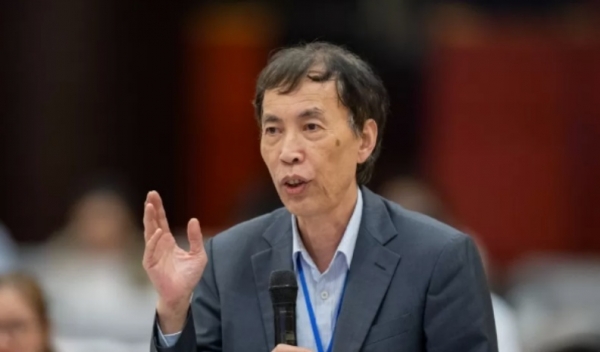
Dr. Vo Tri Thanh Calls for Transparent and Simplified Decentralization Mechanisms in Revised Petroleum Law
The revision of the Petroleum Law aims not only to resolve existing issues in the petroleum sector but also to establish a modern legal framework that aligns with the new role of the Vietnam National Oil and Gas Group (Petrovietnam) in the context of energy transition. This perspective was shared by Dr. Vo Tri Thanh, an economic expert, during a recent seminar on amending the Petroleum Law.
Background for Amending the Petroleum Law
The current Petroleum Law has been in effect for over 15 years, during which the domestic and international economic-energy landscape has changed significantly. Vietnam's petroleum sector is facing numerous new challenges in the context of global energy transition, the development of renewable energy sources, and pressure to reduce emissions. Meanwhile, Petrovietnam is transforming from a traditional oil and gas company into a diversified energy conglomerate, requiring a suitable legal framework.
According to Dr. Vo Tri Thanh, amending the Petroleum Law is necessary to create conditions for the sustainable development of Vietnam's petroleum sector while meeting the requirements of international integration and Vietnam's commitments on climate change.
Dr. Vo Tri Thanh's Perspective
At the seminar, Dr. Vo Tri Thanh emphasized two core requirements for the draft revised Petroleum Law:
- Establish clear, transparent mechanisms for decentralization and authority distribution between state management agencies and state-owned enterprises in the petroleum sector.
- Simplify administrative procedures to facilitate oil and gas exploration and exploitation activities while ensuring effective and sustainable management of national resources.
"We need a state management mechanism for oil and gas that is both effective and flexible, creating favorable conditions for enterprise development. Decentralization and authority distribution must be implemented transparently to avoid overlapping responsibilities, time consumption, and resource waste," Dr. Vo Tri Thanh emphasized.
Current Issues in the Petroleum Sector
Dr. Vo Tri Thanh identified several major issues in the current petroleum sector that need to be addressed through law revision:
- Approval procedures for petroleum projects remain complex and lengthy, causing delays in implementation.
- The mechanism for decentralization and authority distribution among ministries, sectors, and localities is unclear, leading to responsibility shifting.
- Legal provisions on petroleum contracts have not been updated to international standards, making it difficult to attract foreign investment.
- The role and responsibilities of Petrovietnam have not been clearly defined in the context of energy transition.
The New Role of Petrovietnam in the Energy Transition Context
Dr. Vo Tri Thanh analyzed that Petrovietnam is transitioning from an oil and gas company to a diversified energy conglomerate. This transformation requires a new legal framework that accommodates:
- Petrovietnam's role as a leading enterprise in Vietnam's energy sector.
- The need to develop renewable energy alongside traditional energy sources.
- Requirements for applying high technology and digital transformation in the energy sector.
- Vietnam's commitments to reduce emissions and develop a green economy.
"Petrovietnam needs to be granted more autonomy in making investment decisions, especially for renewable energy projects, while being accountable for the effectiveness and sustainability of these projects," Dr. Vo Tri Thanh stated.
Specific Proposals for Transparent and Simplified Mechanisms
To address the aforementioned issues, Dr. Vo Tri Thanh proposed several specific solutions:
- Establish a "one-stop" mechanism for approving petroleum projects to minimize administrative procedures.
- Create a transparent information system on petroleum activities, from exploration to exploitation and processing.
- Clearly distinguish between state management functions and enterprise management functions to avoid the situation of "both playing and refereeing."
- Update petroleum contract regulations according to international standards to facilitate international cooperation.
- Develop a separate legal framework for Petrovietnam in its new role as a diversified energy conglomerate.
Opinions from Other Experts
Besides Dr. Vo Tri Thanh's perspective, many other experts contributed their opinions at the seminar:
- Dr. Tran Dinh Long, energy expert: "The revision of the Petroleum Law should aim for sustainable development, balancing resource exploitation and environmental protection."
- Mr. Nguyen Van Thien, representative of the Ministry of Industry and Trade: "We will continue to absorb expert opinions to perfect the draft law, ensuring feasibility and alignment with reality."
- Ms. Le Thi Mai, legal expert: "It is necessary to clearly define the responsibilities of stakeholders in petroleum activities, especially accountability to society."
Expected Timeline for Petroleum Law Revision
According to the plan, the revised Petroleum Law project will be submitted to the National Assembly for consideration and approval in 2024. The expected timeline is as follows:
| Time Period | Activity | Expected Outcome |
|---|---|---|
| Q1/2023 | Complete draft law | The overall proposal and draft law submitted to the Government |
| Q2-3/2023 | Appraisal and consultation | Improved draft law after collecting opinions from stakeholders |
| Q4/2023 | Submit to National Assembly | Draft law submitted to the National Assembly at its 6th session |
| Q1-3/2024 | Review and approval | Law reviewed and approved by the National Assembly at its 7th session |
| Q2/2024 | Promulgation and effectiveness | Law officially takes effect from January 1, 2025 |
Conclusion
The revision of the Petroleum Law is a necessary step for Vietnam's petroleum sector to adapt to new circumstances, develop sustainably, and effectively contribute to the country's socio-economic development. Dr. Vo Tri Thanh's perspective on the need for transparent and simplified decentralization mechanisms in the revised law has received broad agreement from many experts, promising to create an effective legal framework that aligns with global energy sector development trends.
Petrovietnam and the entire Vietnamese petroleum sector are facing opportunities and challenges during the transition process. A modern, transparent, and effective legal framework will provide a solid foundation for the sustainable development of Vietnam's petroleum sector, meeting the requirements of the new era.