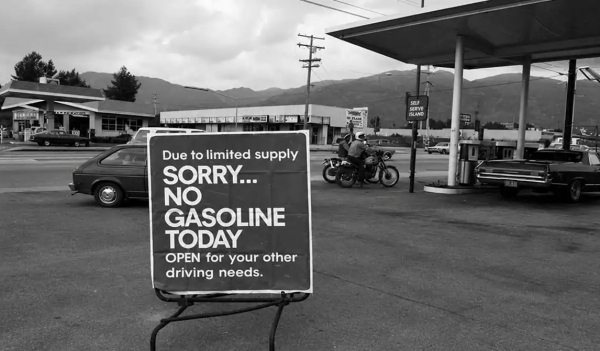
From Oil Crisis to Tech Revolution: Revisiting History's Most Significant Energy Disruptions
The history of the global oil industry is marked by numerous crises that have reshaped energy markets worldwide. According to calculations by Reuters based on data from the International Energy Agency (IEA), OPEC, and the U.S. Energy Department, the U.S.-Iran conflict has caused the largest daily supply shock in oil history. However, when considering the total volume of oil lost throughout the crisis period, the 1979 Iranian Islamic Revolution remains the most severe oil crisis in recorded history.
The Modern Oil Crisis: U.S.-Iran Conflict
The most recent oil crisis originated from escalating tensions between the United States and Iran, particularly after Washington withdrew from the 2018 nuclear agreement and imposed stringent sanctions on Tehran's oil industry. The implementation of Washington's "Maximum Pressure" campaign led to a significant reduction in Iran's oil production.
According to IEA data, Iran's oil production decreased from approximately 3.8 million barrels per day (bpd) in 2018 to around 2.3 million bpd in 2019, representing a decline of about 1.5 million bpd. This constitutes the largest daily production decrease in any single oil crisis to date.
The Iranian Revolution of 1979: A Historical Perspective
When examining the total volume of oil lost throughout the crisis period, the 1979 Iranian Islamic Revolution surpasses all others. This revolution led to the collapse of the monarchy and the rise of an Islamic government under Ayatollah Khomeini's leadership.
The political and social turmoil caused production disruptions that lasted for many months. Iran's oil production dropped from approximately 6 million bpd before 1979 to around 1.5 million bpd by 1980. The total volume of oil lost during this period amounted to hundreds of millions of barrels, far exceeding the reduction caused by the more recent U.S.-Iran conflict.
Global Economic Impact
| Crisis | Peak Oil Price | Duration | Key Economic Effects |
|---|---|---|---|
| 1979 Iranian Revolution | $39/barrel | 1979-1980 | High inflation, economic recession |
| U.S.-Iran Conflict | $76/barrel | 2019 | Slower growth, market volatility |
Both crises caused significant oil price shocks. During the 1979 crisis, oil prices increased from approximately $15/barrel to a peak of $39/barrel. In contrast, during the recent U.S.-Iran tensions, oil prices rose from around $60/barrel to $76/barrel in April 2019.
Market Responses and Producer Nations
In response to supply shocks, OPEC and other oil-producing nations often face pressure to increase production to compensate for lost oil. However, in both crises, market response capabilities were limited due to geopolitical factors and infrastructure constraints.
- During the 1979 crisis: OPEC countries, particularly Saudi Arabia, attempted to increase production to compensate, but not enough to prevent soaring prices.
- During the recent crisis: The U.S. lobbied OPEC to increase production, but OPEC+ members had limitations on production capacity and price management policies.
Key Lessons Learned
Both oil crises demonstrated the vulnerability of global energy markets to geopolitical shocks. Important lessons include:
- Dependence on supply from a small number of major oil-producing countries creates risks for global energy security.
- Supply diversification and development of alternative energy sources are necessary to reduce oil dependence.
- Major oil-consuming countries need to build strategic reserves to respond to crises.
- Foreign policy related to major oil-producing countries requires careful consideration to avoid supply disruptions.
The Future of Oil Markets
In the context of the global energy transition toward renewable sources, traditional oil crises may become less severe in the future. However, oil will continue to play a significant role in the global energy mix for decades to come.
The development of shale oil technology and alternative energy sources has changed oil market dynamics, reducing dependence on OPEC and traditional producers. Nevertheless, geopolitical factors will continue to be the primary risk to oil market stability.
Conclusion
Although the U.S.-Iran conflict caused the largest daily supply shock in oil history, the 1979 Iranian Islamic Revolution remains the most severe oil crisis when considering the total volume of oil lost throughout the crisis period. Both crises have left valuable lessons about the vulnerability of global energy markets and the importance of energy security.
In the current context, with geopolitical tensions continuing in key oil-producing regions, global oil markets still face numerous challenges. Understanding the history of past oil crises will help policymakers and investors better prepare for future market fluctuations.