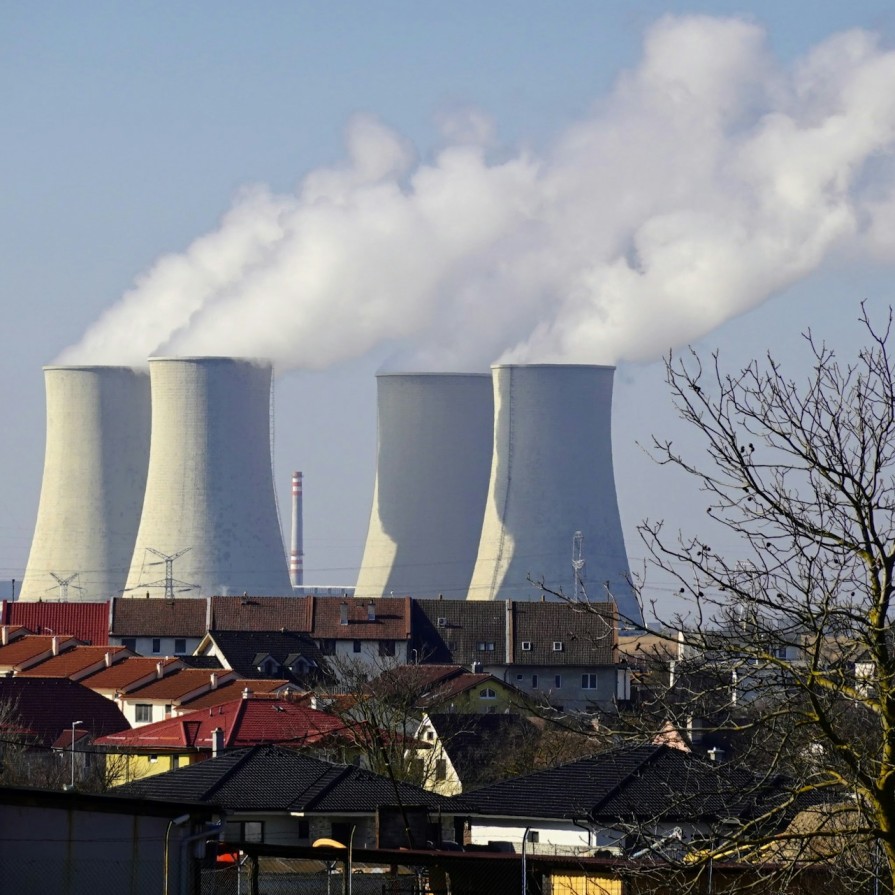
Record European Heatwave Threatens Energy Security and Causes Power Outages
A devastating tropical heatwave is sweeping across Europe, threatening energy security across the continent as power plants are forced to shut down and the risk of localized power outages continues to grow. The electrical grid is becoming overloaded, and ecosystems are also suffering severe consequences. Rivers are heavily affected by rising temperatures, which in turn impacts the energy industry and power plants that depend on water sources for their cooling systems.
Just this week, France announced it would reduce production at up to five nuclear power plants, with two plants already cutting output. The country is expected to endure high-pressure conditions creating a "heat dome" for the next few weeks, with temperatures potentially reaching as high as 42°C (107.6°F) in some areas on Wednesday.
Record Temperatures and Serious Consequences
A similar heatwave that occurred last month caused a transformer to fail, leaving nearly 70,000 homes without power as temperatures reached deadly levels. The country recorded its hottest day in history, with temperatures reaching 44°C (111°F).
| Event | Highest Temperature (°C) | Highest Temperature (°F) | Consequences |
|---|---|---|---|
| Last month's heatwave | 44 | 111 | Recorded hottest day in history |
| This week's forecast | 42 | 107.6 | Reduced production at 5 nuclear plants |
High temperatures are not only dangerous for humans, but they also pose a significant threat to ecosystems. Rivers are becoming warmer under these conditions, and one of the impacts of this change is that their water is no longer effective in cooling nuclear power plants - France's primary energy source. As a result, the country is expected to need to reduce output at plants nationwide just as demand is surging.
The Temperature-Energy Vicious Cycle
The irony is that just when electricity is needed more than ever to maintain bearable temperatures, the electrical grid is most likely to fail. "When it gets hotter, equipment doesn't work as well as it used to," Iain Staffell, associate professor of sustainable energy at Imperial College London, was quoted by DW recently. "I think we need to adapt the electricity system to cope with changing weather," he added.
The reduction in nuclear power output in France could significantly impact energy capacity and electricity prices in France and neighboring countries like Germany and the UK, which import electricity generated from France's large-scale nuclear industry. And nuclear is just part of the story. The heatwave is also affecting hydropower output and limiting the cooling capabilities of coal and gas power plants.
Impact on Other Energy Sources
| Energy source | Heatwave impact | Level of impact |
|---|---|---|
| Nuclear power | Warmer river water reduces cooling efficiency | High |
| Hydropower | Decreased river water levels | Moderate |
| Coal/gas power | Limited cooling capabilities | Moderate |
Future and Adaptation Strategies
Europe can expect this stress situation to become the new normal as climate change alters climate patterns worldwide and increases the frequency and intensity of extreme weather. Policies need to be quickly formulated and implemented to prepare European electrical grids to withstand these kinds of temperatures regularly in the future.
"Utilities can adapt by planning for summer peaks, making cooling demand more flexible, hardening the grid for high temperatures, deploying batteries and demand response, and climate-proofing power plant cooling systems," Simone Tagliapietra, senior fellow at Bruegel, an economic and policy think tank, recently told MIT Technology Review via email.
Policy Challenges and Public Response
However, all these priorities are costly and difficult to implement, leading to inaction from European leadership and widespread weaknesses in the continent's energy infrastructure. Last year, the European Environment Agency reported that all 27 countries in the European Union have climate adaptation plans, but noted that "lack of long-term funding" has hampered implementation.
This has led to public frustration and outrage, not to mention more than 1,000 unnecessary deaths. "Everyone is asking, why are we not prepared," Francois Gemenne, professor of environmental politics at France's HEC Paris business school, recently said to The New York Times. "We are becoming aware of our own fragility."
This event highlights the urgent need to invest in sustainable and climate-adaptive energy infrastructure to protect Europe's energy security and the safety of its citizens in the decades to come.