Middle East Tensions Escalate: President Trump Threatens Attack on Iran's Primary Oil Export Center
July 11, 2024 - The volatile situation in the Middle East reached a critical juncture as President Donald Trump issued a direct threat to strike one of Iran's most vital oil export facilities. This latest development represents a significant escalation in the ongoing confrontation between Washington and Tehran, with potentially far-reaching consequences for global energy markets.
Background of Middle East Tensions
The Middle East has long been characterized as a geopolitical powder keg with complex conflicts. In recent months, tensions between the United States and Iran have escalated considerably following the US withdrawal from the 2018 nuclear agreement and the imposition of stringent economic sanctions on Tehran.
Incidents including attacks on commercial vessels in the Persian Gulf, the downing of an American drone, and the 2019 strike on Saudi Arabian oil facilities have further complicated the situation. Iran consistently accuses the United States of destabilizing the region, while Washington maintains that Tehran is developing its nuclear program and exerting negative influence on neighboring countries.
President Trump's Latest Threat
In a message posted on social media platform Twitter on the morning of July 11, President Trump warned that the United States was prepared to attack Iranian energy infrastructure if Tehran continued its nuclear activities.
"We have credible intelligence indicating that Iran is preparing new nuclear activities at one of their largest oil export centers. If this occurs, the United States will respond with precise strikes against these facilities," President Trump stated.
The threat came just days after Iran announced it would exceed the uranium enrichment limits set in the 2015 nuclear agreement, an action the US has described as a "blatant violation" of the accord.
Potential Impact on Global Oil Markets
An attack on Iran's oil facilities could have severe consequences for the global energy market. The key potential impacts include:
- A sharp increase in oil prices due to concerns about supply disruptions
- Direct impact on countries importing oil from Iran (such as China, India, and Japan)
- Possible regional instability spreading to other oil-producing nations
- Threats to maritime security in the Persian Gulf
Reactions from Stakeholders
Iran: Iran's Ministry of Foreign Affairs strongly condemned President Trump's threat, describing it as "provocative" and a "violation of international law." Iran has stated it will take decisive countermeasures if the United States proceeds with any attack.
European Union: The EU has called on both sides to exercise restraint and avoid escalating tensions. A spokesperson for the European Commission stated: "We urge all parties to exercise restraint and return to the negotiating table."
Russia: Moscow has accused the United States of "creating the risk of war" in the Middle East and has called for diplomatic efforts to resolve the crisis.
China: Beijing has expressed concern about the situation and called for resolving the dispute through dialogue.
Data on Iran's Oil Exports
| Year | Daily Oil Exports (Million Barrels) | Annual Revenue (Billion USD) | Global Market Share (%) |
|---|---|---|---|
| 2018 | 2.5 | 50 | 5.2 |
| 2019 | 1.8 | 30 | 3.8 |
| 2020 | 1.2 | 20 | 2.5 |
| 2023 | 2.0 | 40 | 4.2 |
*Data is estimated and may vary across different sources
The Targeted Oil Export Center
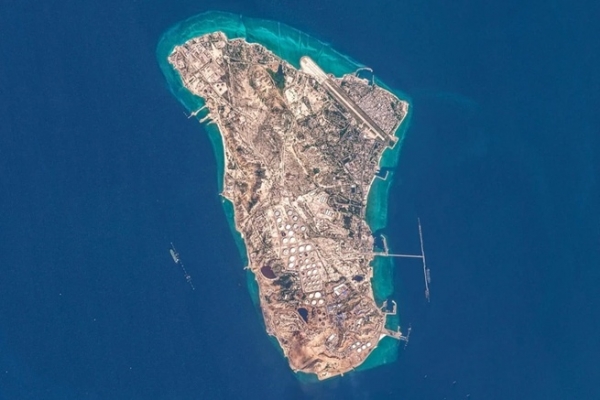
According to intelligence sources, the potential target of any US military action could be Kharg Island - one of the world's largest oil terminals, with the capacity to export up to 1.7 million barrels of oil per day. This facility plays a crucial role in exporting Iranian crude oil to Asian and European markets.
Future Projections
International relations analysts predict that the situation in the Middle East is likely to remain tense in the coming months. Both the US and Iran show no signs of compromise, increasing the risk of military conflict.
The global energy market should prepare for significant volatility. Analysts suggest that oil prices could rise to $100 per barrel if conflict erupts and causes substantial supply disruptions.
However, there remain hopes for diplomatic solutions. Some diplomats have indicated that relevant parties are secretly preparing for new negotiations, although the likelihood of success remains uncertain.
This news organization will continue to monitor and provide updates on the latest developments from this Middle East hotspot.
Keywords: #MiddleEast #Iran #USA #DonaldTrump #Oil #Energy #Conflict