How Middle Eastern Nations Are Developing Alternatives to the Strait of Hormuz
The Strait of Hormuz, one of the world's most vital maritime chokepoints, is witnessing increasing geopolitical tensions that have compelled many Middle Eastern nations to seek alternative solutions to ensure energy security. In this context, numerous major pipeline projects are being constructed or planned to reduce dependence on the route passing through this sensitive waterway.
The Strategic Importance of the Strait of Hormuz
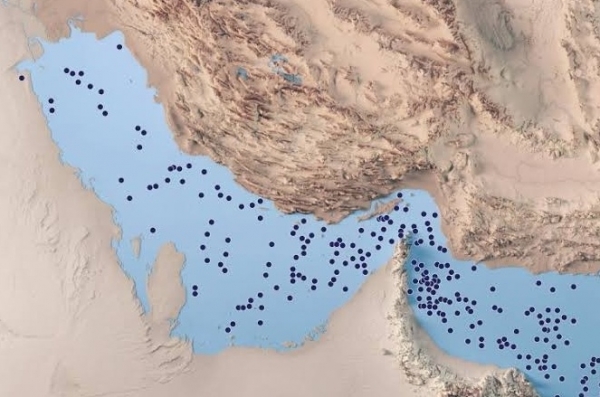
The Strait of Hormuz connects the Arabian Sea with the Persian Gulf, serving as the only maritime passage to the Indian Ocean for Gulf nations. Approximately 20-30% of global oil shipments pass through this region daily, equivalent to about 17-20 million barrels per day.
This strategic location has made the Strait of Hormuz a security hotspot for decades. Recent crises in the region and tensions between Iran and Western powers have raised concerns among oil-exporting nations about the potential disruption or blockade of this critical passage.
Major Oil Pipeline Projects
To mitigate risks, Middle Eastern countries are accelerating the construction of oil pipelines that directly connect to ports outside the Persian Gulf:
1. Saudi Arabia's East-West Pipeline to the Red Sea
At the end of 2019, Saudi Arabia completed and operationalized the East-West Pipeline with a capacity of 5 million barrels per day. This pipeline allows oil from fields in eastern Saudi Arabia to be transported to the port of Yanbu on the Red Sea, completely bypassing the Strait of Hormuz.
2. Iraq's Pipeline to the Mediterranean
Iraq is advancing the construction of a pipeline from its southern fields to the port of Ceyhan on the Mediterranean Sea. This project has a capacity of approximately 1.5 million barrels per day and helps Iraq reduce its dependence on oil exports through the Strait of Hormuz.
3. Kuwait's Pipeline to the Red Sea
Kuwait is constructing a pipeline from the Al-Ahmadi field to the port of Mina Al-Ahmadi on the Red Sea. This project is expected to be completed by 2024 with a capacity of about 1.8 million barrels per day.
4. Other Projects in the UAE and Oman
The United Arab Emirates (UAE) is developing the Jebel Ali port as a major oil transshipment hub, reducing dependence on routes passing through the Strait of Hormuz. Oman is also investing in the Sohar port as an alternative oil export point.
Alternative Shipping Routes
In addition to pipelines, Middle Eastern nations are developing alternative maritime shipping routes:
- Red Sea Route: Utilizing ports such as Jeddah (Saudi Arabia), Port Sudan (Sudan), and other Red Sea ports to export oil to Europe and Asia.
- Mediterranean Route: Using ports such as Ceyhan (Turkey), Haifa (Israel), and other Eastern Mediterranean ports to export oil to Europe.
- Indian Ocean Route: Developing ports such as Salalah (Oman) and ports in Yemen for direct oil exports to Asia.
Regional and International Cooperation
Middle Eastern countries are also enhancing cooperation to ensure energy security:
- Cooperation agreements between Saudi Arabia and Jordan regarding the construction of refineries and oil pipelines.
- Joint projects between Iraq and Turkey for developing oil pipelines to the Mediterranean.
- Cooperation between the UAE and Israel on developing ports and energy infrastructure.
Impact on Regional Energy Security
The development of alternative pipelines and shipping routes is creating significant changes in the regional energy map:
- Enhanced Diversification: Middle Eastern nations are reducing dependence on a single route, increasing resilience against geopolitical shocks.
- Shift in Oil Flow: Oil from the region is being distributed to new markets, reducing the burden on the Strait of Hormuz.
- Strengthened Regional Cooperation: Energy infrastructure projects are fostering economic cooperation between previously tense nations.
Future Outlook
According to experts, the trend of developing alternative pipelines and shipping routes will continue in the coming years:
- Middle Eastern nations will continue investing in energy infrastructure to ensure export security.
- New technologies such as energy transition may change long-term oil demand.
- The development of new pipelines and ports will create competition among oil export centers.
Comparison of Major Pipeline Projects
| Project | Country | Starting Point | Endpoint | Capacity (bbl/day) | Status |
|---|---|---|---|---|---|
| East-West Pipeline | Saudi Arabia | Abqaiq | Yanbu | 5,000,000 | Completed |
| Iraq-Ceyhan Pipeline | Iraq | Basra | Ceyhan | 1,500,000 | Being Expanded |
| Kuwait-Red Sea Pipeline | Kuwait | Al-Ahmadi | Mina Al-Ahmadi | 1,800,000 | Under Construction |
| UAE-Oman Pipeline | UAE | Abu Dhabi | Sohar | 1,200,000 | Planned |
Conclusion
The development of alternative pipeline and shipping routes is reshaping the Middle Eastern energy landscape. Countries in the region are proactively reducing dependence on the Strait of Hormuz, ensuring energy security amid increasingly complex geopolitical circumstances. These efforts not only help Middle Eastern nations protect economic interests but also contribute to diversifying global energy supplies.
However, these projects require substantial investment and face numerous technical, financial, and political challenges. Nevertheless, the trend of reducing dependence on the Strait of Hormuz is likely to continue in the coming years, creating profound changes in the regional and global energy structure.