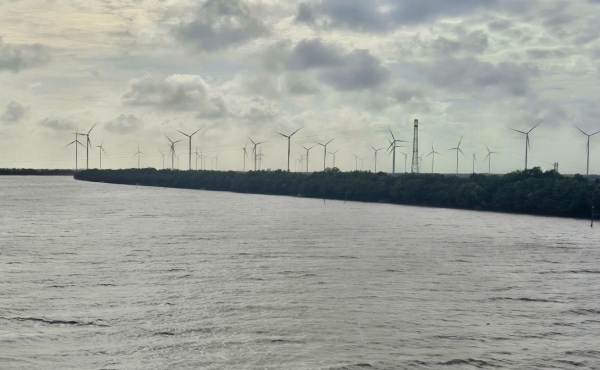
Can Tho Proposes Special Policy Mechanisms to Accelerate Offshore Wind Power Development
In the context of Vietnam's intensified push for clean energy transition and its commitment to achieving carbon neutrality by 2050, Can Tho City has officially proposed to the Government to consider and issue special mechanisms and policies to promote offshore wind power development, with the goal of transforming the region into the nation's clean energy hub.
Context of Offshore Wind Power Development in Vietnam
Vietnam possesses the second-largest offshore wind potential in Southeast Asia, with a coastline stretching over 3,260 km and an extensive exclusive economic zone. According to assessments by the Ministry of Industry and Trade, Vietnam's total offshore wind power potential could reach approximately 475 GW, with the Mekong Delta region accounting for a significant portion of this potential.
However, the development of offshore wind power projects in Vietnam currently faces numerous challenges regarding policy mechanisms, administrative procedures, and investment capital. Currently, offshore wind projects in Vietnam remain in the experimental phase, lacking stable and long-term electricity pricing mechanisms to attract strategic investors.
Details of Can Tho's Proposal
In its proposal to the Government, Can Tho suggests improving the legal framework and electricity pricing mechanisms that would allow for parallel implementation of administrative procedures to accelerate the deployment of offshore wind power projects. Specifically, the city proposes:
- Establishing a special pricing mechanism for offshore wind power that ensures financial viability for investors
- Allowing parallel implementation of planning approval, project approval, and other procedures
- Considering preferential policies on taxes, fees, and other tax types for offshore wind power projects
- Supporting the development of electrical infrastructure, particularly the transmission system from offshore projects to the national grid
- Establishing a national steering committee for offshore wind power development to coordinate ministries, sectors, and localities
Current Status of Wind Power Development in Can Tho and the Mekong Delta
Can Tho, with its strategic location at the heart of the Mekong Delta, is striving to become the region's clean energy center. The city currently plans to develop a series of offshore wind power projects with a total capacity of up to 3,500 MW.
However, these projects are encountering numerous difficulties in administrative procedures and lack attractive electricity pricing mechanisms. Mr. Nguyen Van Tam, Chairman of the Can Tho City People's Committee, stated: "We need special mechanisms to be able to compete with regional countries such as Thailand, the Philippines, or Malaysia in attracting investment in offshore wind power."
Comparison of Current and Proposed Mechanisms
| Factor | Current Mechanism | Proposed Mechanism | ||
|---|---|---|---|---|
| Electricity Pricing | Applied according to Decision 39/2021/QD-TTg, lacking long-term mechanisms | Establish special, long-term electricity pricing mechanisms (20-25 years) | ||
| Administrative Procedures | Sequential procedures that are time-consuming | Lack of coordination between ministries and sectors | Allow parallel implementation of procedures | Establish national steering committee for coordination |
| Investment Incentives | Applied generally to renewable energy projects | Specific policies for offshore wind power projects |
Current Challenges
The development of offshore wind power in Vietnam faces several significant challenges:
- Legal challenges: The legal framework remains incomplete, particularly regarding land, environmental regulations, and impact assessments
- Technical challenges: Shortage of experts and technology in the offshore wind power sector
- Financial challenges: High initial investment costs, high risks, and lack of suitable financing mechanisms
- Infrastructure challenges: The transmission system cannot yet meet the connection needs of offshore projects
Socio-Economic Impact
The development of offshore wind power in Can Tho and the Mekong Delta is expected to bring numerous positive impacts:
| Sector | Expected Impact |
|---|---|
| Economy | |
| Environment | |
| Energy Security |
Expert Perspectives
According to industry experts, the application of special mechanisms for offshore wind power is necessary for Vietnam not to miss opportunities in the global energy transition.
Dr. Nguyen Dinh Hoa, a renewable energy specialist, commented: "Offshore wind power is the inevitable direction for Vietnam's sustainable development. However, to attract strategic investors, we need competitive electricity pricing mechanisms and streamlined investment procedures."
Ms. Tran Thi Minh Anh, representative of the Vietnam Renewable Energy Association, added: "Can Tho has a favorable geographical location for offshore wind power development. With the application of special mechanisms, this area can completely become the clean energy center of the Mekong Delta region and the country."
Future Vision
The successful implementation of special policy mechanisms will help Can Tho and the Mekong Delta become the nation's clean energy center, contributing to Vietnam's commitment at COP26 to reach net "zero" emissions by 2050.
It is expected that if approved by the Government, Can Tho will immediately implement pilot projects with a total capacity of approximately 1,000 MW in the 2023-2025 period, expanding to 3,500 MW by 2030.
Conclusion
Can Tho's proposal for special policy mechanisms for offshore wind power development is a necessary step for Vietnam to leverage its renewable energy potential and move toward sustainable development goals. Completing the legal framework and electricity pricing mechanisms will not only help attract investors but also contribute to ensuring national energy security and environmental protection.
The successful implementation of offshore wind power projects in Can Tho will not only bring economic and social benefits to the locality but also create momentum for the development of the renewable energy sector nationwide, affirming Vietnam's position in the global energy transition.