Red Sea Oil Disruption: New Shock Pushing World Economy into Instability
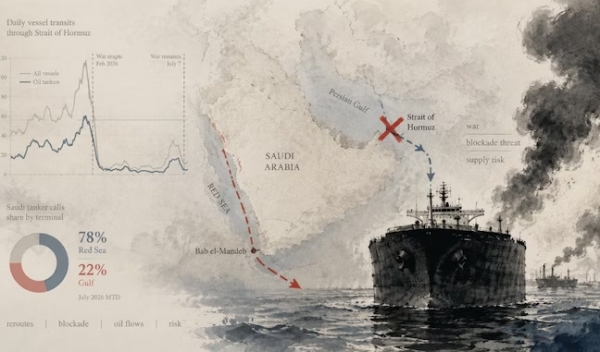
The escalating conflict between Iran and several other nations has raised serious concerns about security in the Red Sea, one of the world's most critical maritime routes for oil transportation. This development has not only caused severe impacts on the energy market but has also contributed to increasing tensions in the global economy, creating new challenges for international trade and financial stability.
The Geopolitical Landscape in the Red Sea
In recent months, conflicts in the Middle East, particularly between Iran and neighboring countries, have reached unprecedented levels of tension. The Red Sea, a vital waterway connecting Europe to Asia and the Middle East, has become a focal point of geopolitical tensions. This strategic channel handles approximately 12% of global trade and nearly 10% of seaborne oil shipments, making it an indispensable artery for global commerce and energy supplies.
The heightened military presence and frequent attacks on commercial vessels in the region have forced many shipping companies to reroute their vessels around Africa's Cape of Good Hope. This alternative route adds approximately 2,000 nautical miles and 10-15 days to the journey, significantly increasing transportation costs and delivery times.
Impact on the Global Oil Market
The disruption in Red Sea oil shipments has delivered a powerful shock to the oil industry, which was still recovering from the COVID-19 pandemic. The consequences have been multifaceted and far-reaching:
- Price Volatility: Crude oil prices have surged to multi-month highs, with Brent crude exceeding $85 per barrel in recent trading sessions.
- Supply Chain Disruptions: The inability of oil tankers to navigate safely through the Red Sea has reduced global supply, creating a significant imbalance between supply and demand.
- Market Panic: Uncertainty has led to widespread market panic, with many investors rapidly withdrawing from oil futures contracts and other energy-related investments.
- Insurance Premiums Surge: War risk insurance for vessels transiting the region has increased by up to 300%, further elevating operational costs.
Oil Market Dynamics: Before and After the Conflict
| Parameter | Pre-Conflict Period | Current Situation | Percentage Change |
|---|---|---|---|
| Crude Oil Price (USD/barrel) | 65 | 75 | +15.4% |
| Supply Status | Stable | Significantly Disrupted | -20% through Red Sea |
| Shipping Costs | Baseline | Increased by 40-60% | +50% average |
| Insurance Premiums | Standard | Tripled | +200% |
| Market Volatility Index | 25 | 42 | +68% |
Broader Implications for the Global Economy
The developments in the Red Sea are not confined to the oil sector; they are creating ripple effects across the global economy. Economic experts warn that:
- Inflationary Pressures: Rising fuel prices will trigger inflation in numerous countries, particularly those heavily dependent on oil imports. This could central banks to reconsider monetary policy decisions, potentially delaying interest rate cuts.
- Supply Chain Disruptions: Beyond oil, the shipping crisis affects the transportation of goods ranging from electronics to agricultural products, contributing to global supply chain bottlenecks.
- Manufacturing and Transportation Sectors: Industries that rely on stable fuel prices and efficient logistics will face significant cost increases, potentially leading to reduced production capacity and higher consumer prices.
- Economic Recovery Slowdown: These instabilities could impede the ongoing global economic recovery, particularly in emerging markets that are more vulnerable to external shocks.
Regional and Global Responses
In response to the crisis, several nations and international organizations have initiated various measures:
- The United States has increased naval patrols in the region to protect commercial vessels.
- The European Union has launched Operation ASPIDES to safeguard shipping lanes.
- Major oil producers, including Saudi Arabia and the UAE, have announced increased production to offset supply shortages.
- Shipping companies are implementing contingency plans, including alternative routes and revised schedules.
Future Scenarios and Expert Analysis
Economic analysts have outlined several potential scenarios for the coming months:
- Short-term (1-3 months): Continued volatility in oil prices, with prices potentially reaching $90 per barrel if the disruption persists.
- Medium-term (3-6 months): If diplomatic efforts succeed in stabilizing the region, prices may stabilize around $75-80 per barrel.
- Long-term (6+ months): A prolonged conflict could lead to structural changes in global energy markets, accelerating the transition toward alternative energy sources.
"The situation in the Red Sea represents a significant test for global energy security," noted Dr. Elena Rodriguez, an energy economist at the Global Institute of Strategic Studies. "The world's dependence on this critical waterway highlights vulnerabilities in our current supply chain infrastructure that need to be addressed through diversification and strategic planning."
Conclusion and Outlook
With the current situation in the Red Sea continuing to evolve, market participants and policymakers will be monitoring developments closely. Future political and military decisions will play a crucial role in determining the trajectory of oil markets and the global economy.
The crisis underscores the interconnected nature of global markets and the far-reaching consequences of geopolitical conflicts. As nations navigate these challenges, the need for resilient supply chains, diversified energy sources, and effective international cooperation becomes increasingly apparent.
In the longer term, this situation may accelerate discussions about energy security and the transition to more sustainable energy systems, potentially reshaping the global energy landscape for years to come.