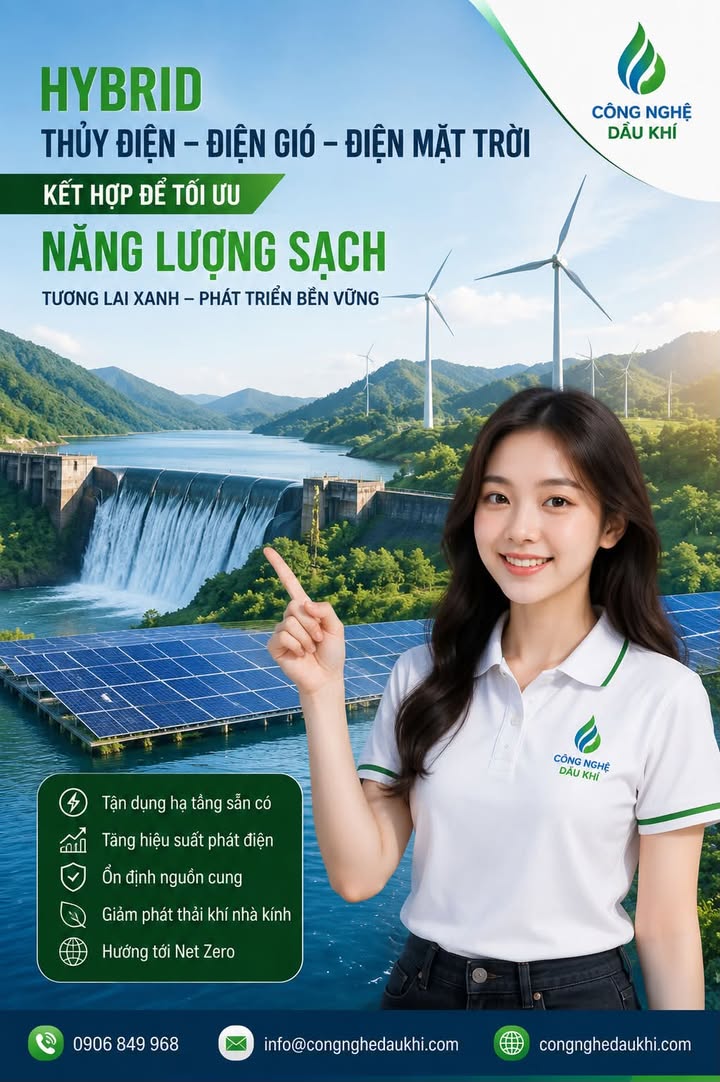
Can today's thousands of hydroelectric reservoirs become "energy super complexes" that greatly increase clean electricity output without needing to build much new infrastructure?
According to a new report by energy research organization Ember, existing hydropower plants possess great potential to develop hybrid renewable energy projects between hydropower, wind power and solar power. Instead of operating independently, combining multiple power sources in the same location can help increase clean power output, make the most of available transmission infrastructure and improve the stability of the power system.
Ember estimates that about 25 GW of wind and solar power could be added to existing hydropower areas without needing to build a completely new infrastructure system. This is considered one of the most effective development directions in the context of many countries racing to achieve the net zero emissions target.
Comparison table of power generation models
Criteria for Traditional Hydropower Hybrid Model thelectric power + wind power + solar power
Power generation source One source Multiple sources
Utilization of transmission lines Medium Very high
Power source stability Depends on water quantity Balance between water, sun and wind
Efficiency in using land fund Medium High
Capacity Scalability Limited Flexibility
The biggest strength of the Hybrid model is that the energy sources can support each other. During the day, solar power generates large capacity while hydropower can deflate to store water. When it is cloudy or at night, hydropower and wind power continue to make up for the electricity shortage, significantly reducing the fluctuations that are a disadvantage of renewable energy.
Another important benefit is taking advantage of previously invested infrastructure. Most hydroelectric plants own transformer station systems, transmission lines and large land funds. This helps significantly reduce initial investment costs compared to building a completely new wind or solar power project.
Outstanding benefits of the Hybrid model
Content Impact
Increase high power generation capacity
Significantly reduce infrastructure investment costs
Increase the efficiency of exploiting the power grid. High
Reduce greenhouse gas emissions Hugely
Supports electrical system stability Much better
This trend dis being promoted by many countries to simultaneously solve three major problems including ensuring energy security, reducing carbon emissions and optimizing investment costs. Instead of building many new transmission lines, taking advantage of existing hydropower centers can shorten project implementation time as well as reduce environmental impact.
For Vietnam, this is also an interesting direction as the hydroelectric system has been widely developed in many mountainous areas. Combining floating solar power on reservoirs, wind power in neighboring areas and regulated hydropower can create large-scale renewable energy centers, contributing to meeting growing electricity demand for many years to come.
️ Suggest illustrations or infographics
* Hydroelectric lake combines floating solar power and wind turbines
* Hybrid model diagram between hydropower, wind power and solar power
* Statistics table of potential additional capacity of 25 GW according to the Ember report
* Illustration of a shared transmission system between many clean energy sources