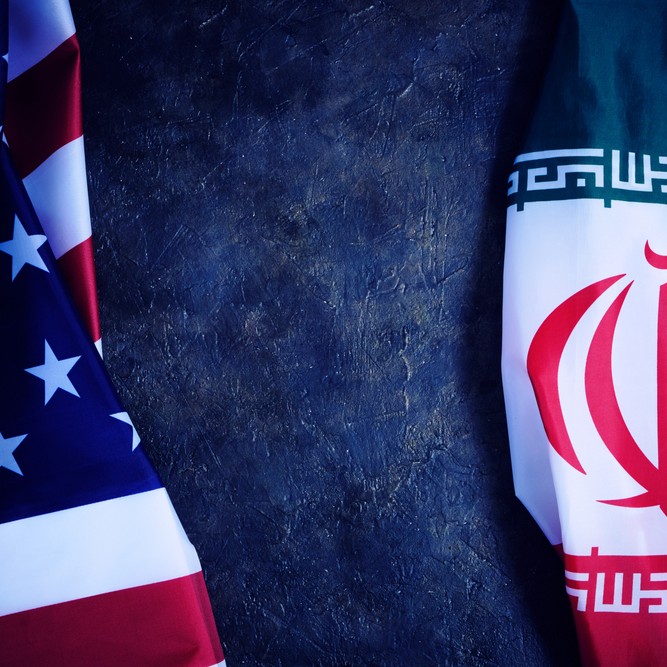
Escalating Geopolitical Tensions in the Middle East Transform Global Energy Landscape
In a week marked by heightened international tensions, Iran has conducted military strikes targeting U.S. military infrastructure in the Middle East, prompting Washington to expand its military operations in the region. Following twelve consecutive nights of U.S. airstrikes targeting Iranian command centers, missile sites, air defense systems, and nuclear-related facilities, Tehran has retaliated with attacks on U.S. radar, communications, air defense, and aviation assets in Bahrain, Kuwait, and Jordan. These facilities include those associated with the Fifth Fleet, Camp Arifjan, Ali Al Salem Air Base, and Muwaffaq Salti Air Base.
The Iranian attacks have resulted in the deaths of multiple U.S. military personnel in Jordan, Kuwait, Iraq, and Saudi Arabia. Concurrently, Iran maintains military control over the Strait of Hormuz, attacking oil tankers entering unauthorized routes and threatening to blockade all regional oil, gas, and chemical exports amid ongoing U.S. military operations. Washington has responded with an expanded bombing campaign, reinstated maritime blockades, and threatened further major attacks.
Iranian and Houthi Military Operations
Iran has placed both of the Middle East's primary oil export corridors under attack. Houthi fighters in Yemen have attacked the Saudi oil tankers Encelia and Layla in the Red Sea after declaring a blockade on cargo shipments linked to Saudi Arabia through the Bab el-Mandeb Strait. They set both vessels on fire and threatened the route that Riyadh has used to circumvent Iran's closure of Hormuz.
Saudi Arabia has been moving millions of barrels of oil per day through the kingdom to the Yanbu port on the Red Sea via the East-West Pipeline, but these shipments still must pass through Bab el-Mandeb to reach the Atlantic Ocean. Along with the Strait of Hormuz and Bab el-Mandeb, these represent the world's most strategically important maritime choke points.
| Export Corridor | Global Trade Percentage |
|---|---|
| Strait of Hormuz | Approximately 20% |
| Bab el-Mandeb | Approximately 12% |
Turkish Internal Politics: Formation of a New Opposition Movement
President Erdoğan's campaign to neutralize Turkey's main political opposition has led to the formation of a second national opposition movement. Özgür Özel, former chairman of the Republican People's Party (CHP), has left the party after a court annulled the congress at which he was elected leader, reinstating former leader Kemal Kılıçdaroğlu. This decision has been described by Özel's supporters as judicial interference.
The new party is expected to attract dozens of CHP parliament members and, according to initial surveys, could expand beyond CHP's traditional secular base by attracting Kurdish voters, Turkish nationalists, and religious conservatives into a broader opposition alliance against Erdoğan.
Europe Tightens Sanctions on Russian Energy Sector
The European Union has tightened sanctions against Russia's energy sector while preserving one of Moscow's most important LNG export routes. The bloc's 21st sanctions package bans new contracts for shipping Russian LNG to third countries but exempts existing Greek shipping agreements, allowing Dynagas to continue transporting cargo from Novatek's Yamal LNG project under contracts dating back to 2015.
The sanctions package also maintains the G7 price cap on Russian crude oil at $44.10 per barrel for another year, despite rising global oil prices. This exemption preserves a significant Russian LNG export revenue stream while allowing Brussels to announce another escalation in sanctions measures.
Energy Transactions, Mergers & Acquisitions
Repsol is prioritizing new Venezuelan oil production over the $5.4 billion debt that Caracas still owes. The Spanish energy company has kept production at approximately 71,000 barrels of oil equivalent per day during the first half of 2026 but now plans to increase output by 50% within one year and triple it within three years, thanks to expanded exploration and export rights secured under Venezuela's new energy reforms.
CEO Josu Jon Imaz stated that Repsol will prioritize payments for current production and defer the historical debt. This arrangement provides Venezuela with foreign capital and operational expertise needed to increase production without resolving the $5.4 billion debt the country owes the company.
Energy Exploration and Development
The Permian Basin has once again reached natural gas transportation capacity limits. Kinder Morgan reported that the Gulf Coast Express (GCX) pipeline has immediately reached full operational capacity, helping to alleviate the basin's gas surplus, raising Waha prices, and strengthening the business case for several other billion-dollar projects. The company is now pushing additional expansions, including the proposed Permian Link pipeline by 2030, while evaluating over $1 billion in new investment decisions in the second half of the year.
APA Corporation has brought a new gas discovery in Egypt into production just weeks after the discovery. This represents one of the first concrete results of Cairo's campaign to boost upstream investment. The company's Khalda Petroleum joint venture is now producing 40 million cubic feet of natural gas per day from the Wanda field in Egypt's Western Desert after constructing a 10-kilometer pipeline to quickly bring gas to market, with full connection to the national electricity grid expected by the end of July.
Energy Infrastructure Development
Enbridge has commenced construction on the $2.8 billion expansion of its Westcoast pipeline system, adding 300 million cubic feet of natural gas transportation capacity in British Columbia. The Sunrise Expansion program includes approximately 140 kilometers of new pipeline and additional compression facilities and is expected to be operational by late 2028.
Energy Financial Results Exceed Expectations
Kinder Morgan has raised its full-year profit guidance after reporting record second-quarter results, driven by another surge in U.S. natural gas infrastructure demand. Adjusted EBITDA increased 12% year-over-year to $2.2 billion, surpassing expectations, as the company noted that 92% of its $9.6 billion project backlog now relates to natural gas projects.
More than 60% of that backlog is dedicated to energy distribution and local grid networks, indicating growing electricity demand driven by AI is reshaping pipeline investment in the U.S. Management also indicated they expect to approve over $1 billion in additional projects in the second half of the year as demand for new gas infrastructure continues to increase.
TotalEnergies doubled its second-quarter profits as the Middle East war drove oil and gas prices higher, demonstrating how major energy corporations are transforming geopolitical disruptions into record profits. Net income rose to $5.4 billion, from $2.7 billion a year earlier, as higher hydrocarbon prices, trading profits, and more than 4% production growth from new projects in Brazil, the U.S., and Libya offset production losses and export disruptions in the Middle East.
These developments not only impact regional political and economic situations but also have profound implications for the global energy sector.