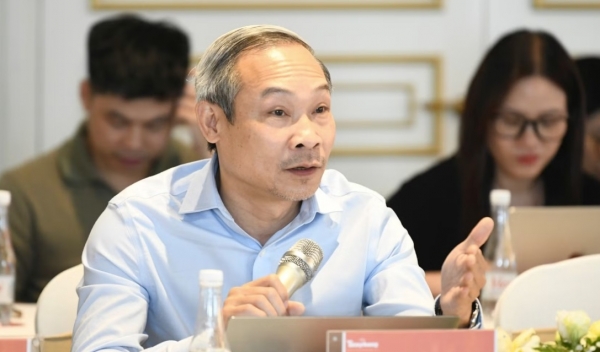
State-Owned Enterprises Must Abandon "Quantity-Counting" Mindset to Drive Economic Growth
In the context of Vietnam's economy facing numerous new challenges, the restructuring of state-owned enterprises (SOEs) has become a hot topic among policymakers and industry professionals. Recently, National Assembly Deputy Phan Duc Hieu presented a strong viewpoint, arguing that SOE restructuring in the new phase requires a complete mindset shift, moving away from reducing the number of enterprises through mergers, dissolutions, or capital divestment.
Shifting the SOE Restructuring Mindset
According to Deputy Phan Duc Hieu, the core objective of SOE restructuring must focus on enhancing operational efficiency, competitiveness, and leveraging the leading role of the state-owned economic sector. This perspective aligns with the spirit of Resolution 79 of the Party Central Committee, emphasizing a shift from quantity to quality.
"We should not continue to focus on reducing the number of SOEs as a standalone goal," emphasized Deputy Phan Duc Hieu. "Instead, we need to concentrate on improving operational efficiency, enhancing competitiveness, and ensuring SOEs genuinely contribute to the sustainable development of the economy."
Comparing Old and New SOE Restructuring Approaches
| Old Restructuring Mindset | New Restructuring Mindset |
|---|---|
| Focused on reducing the number of SOEs | Focused on improving operational efficiency |
| Prioritized mergers, dissolutions, and capital divestment | Prioritized governance reform and enhanced competitiveness |
| Viewed SOEs as a burden on the state budget | Viewed SOEs as drivers of economic growth |
| Success measured by reduced number of SOEs | Success measured by contribution to GDP and growth |
Current Context of SOE Restructuring
Since initiating the SOE restructuring process in 2011, Vietnam has achieved notable results. However, according to Deputy Phan Duc Hieu, this process still has limitations when it focuses too heavily on reducing the number of enterprises.
"We have achieved the goal of reducing the number of SOEs, but the operational efficiency and competitiveness of many enterprises remain limited," he noted. "This is the time to change our approach to truly unlock the potential of the state-owned economic sector."
Current Status of SOE Operations
- As of the end of 2022, approximately 575 SOEs remain nationwide (down from over 1,000 enterprises in 2011)
- About 70-75% of SOEs are profitable
- Market capitalization of listed SOEs accounts for approximately 30-35% of total market capitalization
- Contributions to the state budget from the SOE sector remain modest compared to potential
The Leading Role of SOEs in the Economy
Deputy Phan Duc Hieu emphasized that SOEs should play a leading role in key sectors of the economy, particularly in the context of the Fourth Industrial Revolution and digital transformation.
"SOEs need to pioneer in applying new technologies, innovation, and developing key industries," he proposed. "Only when SOEs are truly strong in competitiveness and innovation can we expect the leading role of the state-owned economic sector."
Strategic Industries Where SOEs Should Focus
| Industry | Leading Role | Challenges |
|---|---|---|
| Energy | Ensuring national energy security | Transition to clean energy |
| Aviation | Developing modern airport systems | Improving service quality |
| Maritime | Developing port systems | Competition with regional ports |
| Telecommunications | Developing digital infrastructure |
Proposed Solutions
To truly change the approach to SOE restructuring, Deputy Phan Duc Hieu proposed several specific solutions:
- Change performance evaluation methods: Instead of focusing solely on quantity, develop a comprehensive set of indicators to assess operational efficiency, competitiveness, and economic contribution.
- Corporate governance reform: Increase autonomy for SOEs while enhancing the accountability of managers.
- Accelerate technology application: Encourage SOEs to invest in digital transformation and Industry 4.0 development.
- Strengthen cooperation with the private sector: Develop joint venture and partnership models to leverage the strengths of both sectors.
- Improve the legal framework: Update legal regulations to align with current realities and new development trends.
Conclusion
Deputy Phan Duc Hieu's perspective on shifting SOE restructuring from a "quantity-counting" mindset to a "quality-enhancing" approach represents an important direction for Vietnam's new development phase. Only when the state-owned economic sector is truly strong in operational efficiency and competitiveness can we expect SOEs to play a leading role in the country's sustainable development.
As Deputy Phan Duc Hieu emphasized: "SOE restructuring is not the ultimate goal, but a means to improve operational efficiency and enhance the leading role of the state-owned economic sector. This is the important mindset shift we need to implement in the new phase."