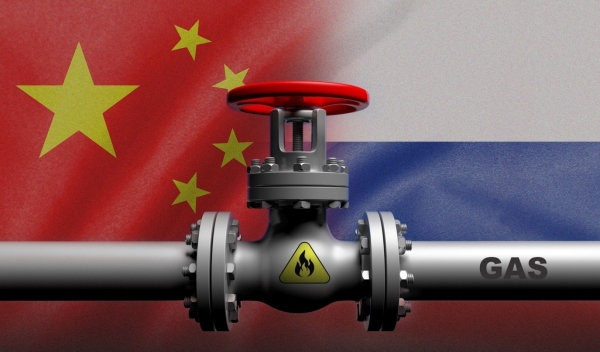
Why the Russia-China Gas Pipeline Project Faces Stalemate
The escalating geopolitical tensions and the conflict in Ukraine have significantly reshaped the global energy landscape, with the energy cooperation between Russia and China now confronting substantial challenges. The Power of Siberia 2 pipeline project, once expected to become Russia's largest gas export route to China, is currently facing a deadlock due to unresolved pricing disagreements between the two nations.
Background of Russia-China Energy Relations
Prior to the Ukraine conflict, Russia had established itself as one of China's key energy suppliers. However, following the imposition of international sanctions, Moscow has increasingly relied on Asian markets for energy exports. China, with its massive energy demands, has emerged as an ideal partner in this context.
The first Power of Siberia pipeline, connecting the two countries, became operational in 2019 with a designed capacity of approximately 38 billion cubic meters of gas annually. Nevertheless, to meet China's growing energy demands, Russia proposed constructing a second pipeline—Power of Siberia 2.
Details of the Power of Siberia 2 Project
Power of Siberia 2, also known as Sila Sibiri 2, represents a massive energy infrastructure project designed to transport natural gas from gas fields in Yakutia and Irkutsk in Siberia to China through Mongolia. The project is planned to have a capacity of up to 50 billion cubic meters per year—more than 1.3 times that of the first pipeline.
The pipeline is expected to span approximately 2,800 kilometers, with about 1,000 kilometers crossing Mongolian territory. Total investment in the project is estimated at $10-15 billion. Power of Siberia 2 is envisioned to become a cornerstone of Russia's gas export strategy to Asian markets for decades to come.
Projected Timeline
- 2022: Framework agreement signing
- 2023-2024: Completion of surveys and detailed design
- 2025-2027: Construction phase
- 2028: Completion and commissioning
Primary Cause of Stalemate: Pricing Disagreements
The core issue causing the deadlock in Power of Siberia 2 negotiations centers on disagreements over gas pricing. According to industry sources, both sides have significantly different approaches to pricing mechanisms.
Russia, facing financial pressure due to sanctions, wants to implement gas prices linked to European market benchmarks, which would maximize their revenue. In contrast, China, as the major customer, seeks to negotiate lower prices based on long-term, stable pricing mechanisms.
| Factor | Russia's Proposal | China's Proposal |
|---|---|---|
| Gas Pricing | Linked to European market prices | Fixed long-term pricing mechanism |
| Contract Duration | 20-25 years | 30 years or more |
| Penalty Terms | More stringent | More flexible |
Geopolitical Factors at Play
The Ukraine conflict has created a complex geopolitical backdrop for the project. Although China has not officially condemned Russia's military actions, it aims to maintain good relations with Western nations. This creates a delicate balancing act when considering deep energy cooperation with Russia.
Additionally, the United States and its Western allies are increasing pressure on China to reduce its dependence on Russian energy. They are offering alternative options, including liquefied natural gas (LNG) from the US, Australia, and the Middle East, as well as renewable energy sources.
Potential Impacts if the Project Fails
The failure to implement Power of Siberia 2 would have profound consequences for all parties involved:
- For Russia: Loss of opportunity to redirect energy exports to Asia, continued dependence on the European market despite restrictions imposed by sanctions.
- For China: Potential long-term energy shortages as economic demands continue to grow.
- For Mongolia: Missed opportunity to become an energy transit hub and collect transit fees from the pipeline crossing its territory.
Future Prospects for the Project
Despite the current deadlock, many experts believe the Power of Siberia 2 project will eventually materialize. This confidence stems from the strategic interests both nations have in the project:
- Russia needs alternative markets for its gas exports
- China requires stable and diversified energy sources
- The substantial initial infrastructure investment already committed to the project
However, the completion timeline may be delayed compared to the original plan. Some analyses suggest it could take an additional 1-2 years for both sides to reach an agreement on pricing and contract terms.
Conclusion
The Power of Siberia 2 project stands at a critical juncture as negotiations over gas pricing between Russia and China have shown no significant progress. Pricing disagreements, combined with the complex geopolitical landscape following the Ukraine conflict, present considerable challenges to the project.
Nevertheless, given the long-term strategic benefits the project offers to both nations, there is a high probability that Power of Siberia 2 will be implemented, albeit potentially with adjusted terms and a delayed timeline compared to initial plans. The successful execution of this project will not only reshape energy flows across the Asia-Pacific region but also demonstrate the resilience of the Russia-China strategic partnership in the evolving global context.