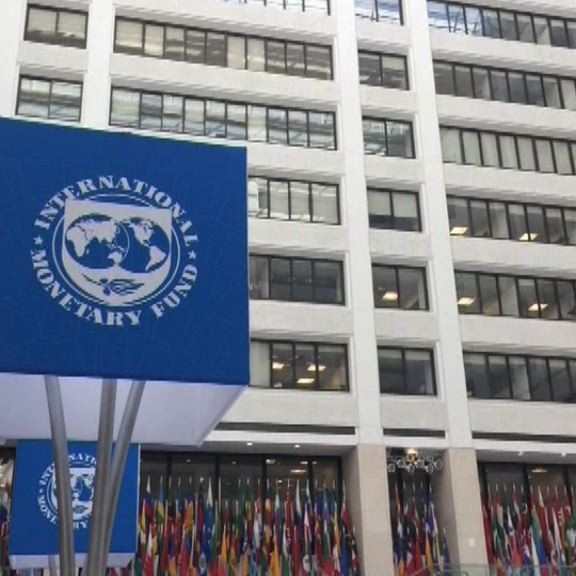
IMF Cuts Global Economic Growth Forecast to 3% for 2026 as Iran Conflict Counteracts AI Benefits
The International Monetary Fund (IMF) has reduced its global economic growth forecast for 2026 to 3%, down from the 3.5% projection for 2025. The impact of the Iran conflict is expected to offset the positive effects of the ongoing artificial intelligence (AI) boom, creating a complex economic landscape for the coming year.
Global Impact of Oil Prices and Inflation
According to the IMF, oil prices are projected to average 32% higher this year compared to the previous year, while global consumer prices are expected to rise by 4.7%, marking the end of two years of declining inflation. However, the wave of investment in AI is anticipated to become one of the few bright spots, with productivity benefits helping to mitigate the damage from higher energy prices, particularly in developed economies.
| Indicator | 2025 | 2026 | Change |
|---|---|---|---|
| Global Economic Growth | 3.5% | 3.0% | -0.5% |
| Average Oil Prices | 100% | 132% | +32% |
| Global Inflation | 2.3% | 4.7% | +2.4% |
US Economy: Stable Growth Fueled by AI
The US economy is expected to expand by 2.3% in 2026, slightly faster than the 2.1% GDP growth recorded in 2025, driven by favorable fiscal policies alongside continued AI-driven investment delivering strong productivity benefits.
As a net energy exporter, the US is less vulnerable than most major economies to supply disruptions and higher foreign oil prices. Meanwhile, the delayed effects of the 2025 tax cuts, continuous AI investment, and strong corporate profits are supporting the stock market and helping to maintain consumer spending.
Europe: Weak Growth and High Energy Costs
In contrast, the euro area economy is expected to expand at a modest 0.9%, down from 1.4% in 2025, largely due to high energy costs. The euro area remains heavily affected by energy price volatility as it imports most of the oil and gas it consumes.
| Country/Region | 2025 GDP Growth | 2026 GDP Growth | Change |
|---|---|---|---|
| United States | 2.1% | 2.3% | +0.2% |
| Europe | 1.4% | 0.9% | -0.5% |
| China | 5.2% | 4.6% | -0.6% |
| India | 7.7% | 6.4% | -1.3% |
Higher energy costs are driving up inflation, tightening household incomes and forcing governments to spend more on debt servicing, defense, and support for households and businesses.
Labor Market Expected to Cool
Meanwhile, the labor market is expected to cool, with job growth projected to reach just 0.3%, ending a prolonged trend of declining unemployment rates.
China and India: Strong Growth Despite Slowdowns
China's economy is expected to grow at 4.6%, with the collapse of its domestic real estate market and energy difficulties being offset by public works spending, an export boom, and advanced technology manufacturing. Meanwhile, India's economy is expected to grow at 6.4%, slower than last year's 7.7%, with strong domestic consumer spending maintaining the country's position as the world's fastest-growing major economy.
The Dual Impact of AI and Conflict
The IMF emphasizes that while the AI boom is driving productivity and growth in many countries, the negative impacts from the Iran conflict and rising energy prices are creating significant countervailing pressure. Particularly in developed countries, AI benefits are helping to mitigate the damage from high energy prices, but in energy-importing nations like Europe, the negative impacts are prevailing.
The renewed inflation forecast also presents new challenges for central banks, potentially forcing them to maintain tighter monetary policy, which could limit future economic growth.
In conclusion, the global economic landscape for 2026 will be shaped by the complex interplay between breakthrough technology (AI) and geopolitical tensions (Iran conflict), with countries possessing energy capabilities and technological positions likely to have advantages in the new environment.
By Alex Kimani for Oilprice.com