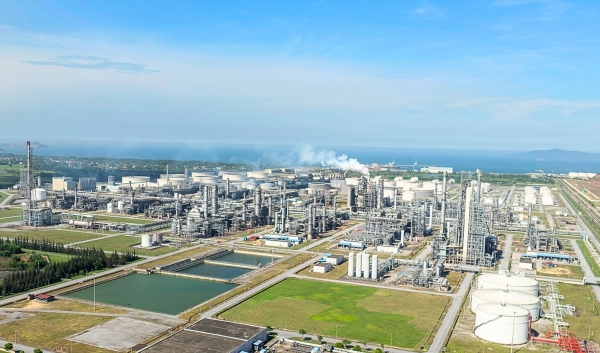
The Strategic Value of Nghi Sơn Oil Refinery to Vietnam's Energy Security and Economic Growth
In the context of socio-economic development and increasing energy demand, ensuring national energy security has become a top strategic priority. The Nghi Sơn Oil Refinery (NSOR) project represents not just a large-scale industrial undertaking but a critical solution that enables Vietnam to gradually enhance its self-sufficiency in fuel supply, reduce dependence on imports, and contribute to macroeconomic stability.
Development Background of Vietnam's Oil Refining Industry
Prior to the operation of the Nghi Sơn Oil Refinery, Vietnam had only one oil refinery - the Dung Quüt Refinery, which met approximately one-third of the country's fuel demand. The remaining portion had to be imported, making the economy vulnerable to price fluctuations and supply disruptions in the global market.
This heavy reliance on imported fuel not only put pressure on the trade balance but also posed potential risks to energy security. In this context, the construction of additional modern oil refineries became an urgent requirement to ensure the sustainable development of the nation.
Scale and Technology of the Nghi Sơn Oil Refinery
The Nghi Sơn Oil Refinery is located in the Nghi Sơn Economic Zone, Thanh Hóa Province, with a total investment of approximately $9 billion. This is a joint venture project between the Vietnam Oil and Gas Group (PetroVietnam - 25.1%), Mitsui & Co (Mitsui - 35.1%), Idemitsu Kosan (Idemitsu - 35.1%), and Thailand's PTT Public Company Limited (PTT - 4.7%).
To operate the refinery, PetroVietnam has signed crude material purchase contracts with partners for 20 years, ensuring a stable supply for production operations. The advanced Japanese refining technology enables the plant to process various types of crude oil and produce high-standard products.
Economic Value of the Nghi Sơn Oil Refinery
The Nghi Sơn Oil Refinery has a designed capacity of 10 million tons per year, producing various products including gasoline, diesel, kerosene, fuel oil, propylene, and polypropylene to meet approximately 30-35% of the country's fuel demand. This significantly reduces the cost of imported fuel, saving foreign currency annually.
| Indicator | Before NSOR Operation | After NSOR Operation |
|---|---|---|
| Domestic Demand Satisfaction Rate | ~33% | ~66-70% |
| Import Dependency | High (approximately 67%) | Significantly Reduced (approximately 30-34%) |
| Budget Revenue Generation | Limited | Increased by trillions of VND annually |
In addition, the refinery creates thousands of direct jobs and tens of thousands of indirect jobs, contributing to local economic development and promoting supporting industries. The Nghi Sơn seaport system built to serve the refinery has also become an important logistics center in the region.
Value for National Energy Security
Energy security is a vital factor for the sustainable development of a nation. Having an additional modern oil refinery helps Vietnam:
- Reduce dependence on foreign fuel sources
- Stabilize domestic fuel supply, avoiding disruptions due to international market fluctuations
- Ensure defense and security production capabilities
- Enhance the ability to respond to energy emergency situations
According to experts, increasing the self-sufficiency rate in fuel supply from 33% to approximately 70% helps Vietnam significantly reduce risks from geopolitical fluctuations and global energy prices.
Impact on National Industrial Modernization
The Nghi Sơn Oil Refinery not only contributes to ensuring energy security but also serves as a driving force for the country's industrial modernization process:
- Industrial Value Chain Development: The refinery provides raw materials for various other industries such as chemicals, plastics, rubber, textiles, and more.
- Foreign Investment Attraction: The successful project demonstrates a favorable investment environment, attracting additional large-scale industrial projects.
- Technology Transfer: Advanced Japanese refining technology is applied in Vietnam, enhancing the country's industrial capabilities.
- High-Quality Human Resource Development: The refinery trains engineers and skilled workers, contributing to improving the quality of Vietnam's human resources.
Challenges and Prospects
Despite its many strategic values, the Nghi Sơn Oil Refinery also faces several challenges:
- Global crude oil price fluctuations affecting profitability
- Environmental protection pressures during operations
- Competition with other refineries in the region
- The need to transition to clean energy in the future
However, with its strategic position and government support, the refinery is expected to continue playing a vital role in Vietnam's socio-economic development in the coming years. Plans to expand scale and diversify products are being studied to meet the market's growing demands.
Conclusion
The Nghi Sơn Oil Refinery is not just a large-scale industrial project but also a symbol of Vietnam's energy sector development. With its strategic value in terms of economy and energy security, the refinery significantly contributes to the country's industrial modernization process, enhancing Vietnam's position on the regional and global energy map.
In the context of global energy transition, owning modern oil refineries like Nghi Sơn provides Vietnam with additional advantages and flexibility in ensuring energy security and sustainable development. This is a valuable lesson for implementing key industrial projects in the future.