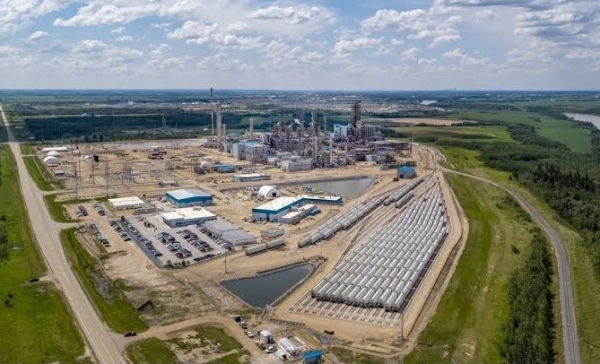
Canada Launches Major Pipeline Project to Connect with Asian Markets
In a strategic move that reshapes North America's energy landscape, Canada has officially commenced development of a groundbreaking pipeline project spanning over 1,200 kilometers. This ambitious infrastructure initiative aims to directly connect the oil-rich province of Alberta with Pacific markets, marking a significant shift in Canada's energy export strategy and reducing decades-long dependence on the United States.
The project represents not just an engineering marvel but a geopolitical realignment for Canada's energy sector. With global energy demand continuing to evolve, particularly in rapidly developing Asian economies, this pipeline positions Canada as a key player in the international oil market while diversifying its export destinations.
Project Overview and Key Specifications
The newly approved trans-mountain pipeline will traverse the challenging terrain of British Columbia, a province that has given its formal endorsement to the project after years of environmental and economic considerations. Prime Minister Mark Carney confirmed that all necessary regulatory approvals have been obtained, allowing construction to proceed.
This infrastructure project represents one of the most significant energy developments in Canada in recent decades, with an estimated construction timeline of five years and a projected investment exceeding CAD 15 billion. The pipeline will incorporate state-of-the-art safety systems and environmental protection measures to address concerns about potential ecological impacts.
Strategic Objectives and Significance
The pipeline's development is driven by several interconnected strategic objectives that will reshape Canada's energy sector:
- Market Diversification: Creating a direct conduit between Alberta's vast oil reserves and Asian markets, particularly China, Japan, and South Korea, which represent the world's fastest-growing energy consumption regions.
- Reducing US Dependence: Breaking the historical pattern where over 95% of Canadian oil exports have flowed south to the United States, diversifying export destinations and improving terms of trade.
- Enhancing Energy Security: Strengthening Canada's position in global energy markets while creating domestic economic benefits including job creation and regional development.
- Technological Advancement: Implementing next-generation pipeline technologies that minimize environmental footprint while maximizing efficiency and safety.
Economic and Geopolitical Implications
The economic impact of this pipeline extends far beyond construction costs. Once operational, the facility is expected to generate approximately CAD 300 million annually in tax revenues for federal and provincial governments. More significantly, it will create an estimated 50,000 direct and indirect jobs during the construction phase and 15,000 permanent positions in related industries.
From a geopolitical perspective, the pipeline represents a strategic pivot for Canada as it seeks to balance its relationship with the United States while expanding its economic ties with Asia-Pacific nations. This realignment comes at a time when global energy markets are undergoing significant transformation, with traditional consumption patterns shifting toward Asia.
Environmental Considerations and Mitigation Measures
The project has not been without controversy, with environmental advocacy groups raising concerns about potential impacts on ecosystems, particularly in British Columbia's sensitive coastal and mountain regions. In response, the project developers have implemented comprehensive environmental protection measures:
- Advanced leak detection systems with 24/7 monitoring capabilities
- Specialized construction techniques to minimize terrain disturbance
- Wildlife corridor systems to preserve animal migration patterns
- Emergency response protocols with rapid deployment capabilities
Additionally, a dedicated Environmental Monitoring Fund has been established, committing CAD 1.2 billion to ongoing research and conservation initiatives throughout the pipeline's operational lifetime.
Project Summary and Timeline
| Parameter | Specification |
|---|---|
| Total Length | 1,200+ kilometers |
| Route | Alberta to British Columbia Pacific Coast |
| Provincial Approval | British Columbia |
| Primary Objective | Reduce US market dependence |
| Estimated Cost | CAD 15+ billion |
| Construction Timeline | 5 years |
| Projected Capacity | 890,000 barrels per day |
| Target Markets |
Future of Canada's Oil Industry
This pipeline project arrives at a critical juncture for Canada's oil industry, which has faced mounting challenges in recent years. Beyond the immediate economic benefits, the project signals a strategic repositioning of Canada's energy sector in response to global market shifts.
Industry analysts suggest that the pipeline will enable Canada's oil sands producers to access higher-value markets in Asia, potentially improving profit margins by 15-20% compared to US market prices. This economic advantage could stimulate further investment in extraction technologies, potentially positioning Canada as a global leader in sustainable oil production.
The project also aligns with Canada's broader economic strategy of diversifying trade relationships beyond traditional partners. As global economic power continues to shift toward Asia, this infrastructure represents a tangible commitment to participating in the region's economic growth.
International Market Implications
The pipeline's completion is expected to have far-reaching implications for global oil markets. By providing an alternative supply source to Asian markets, Canadian oil could help balance regional supply dynamics and potentially influence global pricing mechanisms.
Energy economists predict that the pipeline could reshape trade flows in the Pacific Rim, with Canadian crude potentially competing with oil from the Middle East, Russia, and Africa. This increased competition could benefit Asian consumers while creating new opportunities for Canadian producers to establish long-term supply contracts.
Conclusion: A Strategic Imperative
The Canada-Asia pipeline project represents more than mere infrastructure development; it embodies a strategic recalibration of the nation's economic future in an increasingly interconnected global marketplace. By establishing direct access to Asian markets, Canada is not only diversifying its energy export portfolio but also positioning itself as a reliable supplier in a region poised for continued economic expansion.
As construction commences, all eyes will be on this ambitious project – from industry stakeholders monitoring economic impacts to environmental groups assessing ecological outcomes. Regardless of perspective, this pipeline marks a defining moment in Canada's energy history and its evolving role in the global energy landscape.
The project's success will depend on balancing economic imperatives with environmental responsibilities, a challenge that will likely shape Canada's energy development strategy for decades to come. As the world transitions toward new energy paradigms, this pipeline represents both a bridge to current market realities and an investment in Canada's economic resilience.