Federal Government Restarts Oil and Gas Leasing Plans in California Despite Opposition
Can California continue to resist oil and gas development when the federal government remains determined to auction off tens of thousands of acres for extraction?
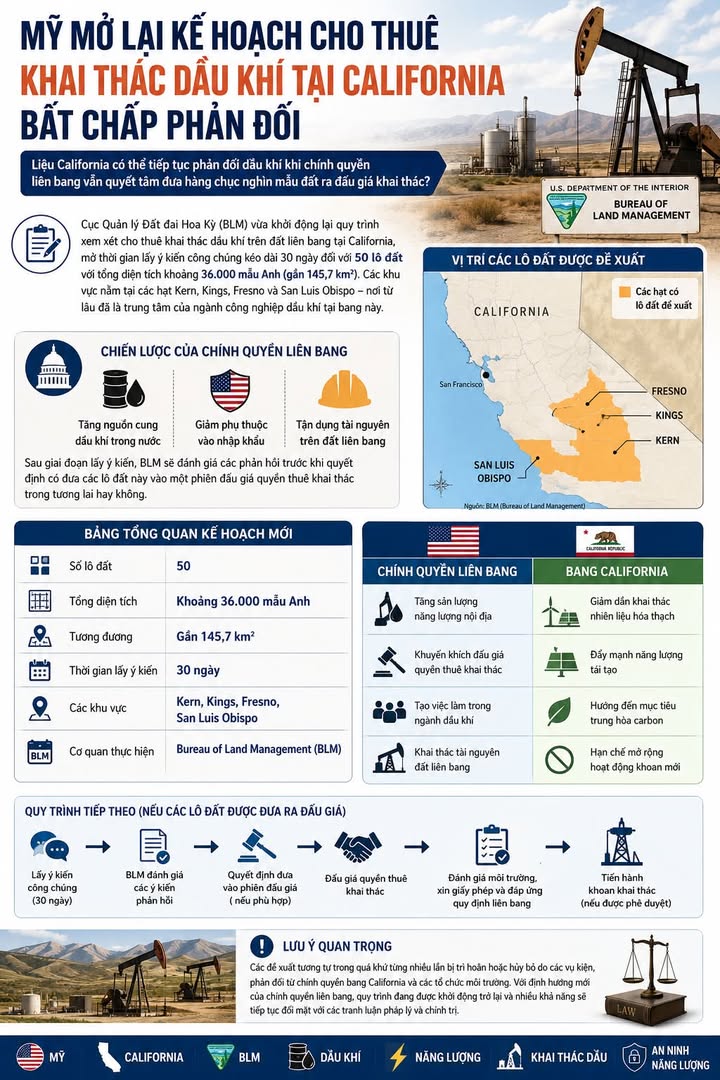
The U.S. Bureau of Land Management (BLM) has recently restarted the review process for oil and gas leasing on federal lands in California, initiating a 30-day public comment period for 50 parcels spanning approximately 36,000 acres (about 145.7 km²). These areas are located in Kern, Kings, Fresno, and San Luis Obispo counties, regions that have long been centers of the state's oil and gas industry.
This move represents part of the Trump administration's strategy to boost domestic energy production, aiming to increase domestic oil and gas supplies, reduce dependence on imports, and utilize resources on federal lands. Following the comment period, BLM will evaluate all feedback before deciding whether to include these parcels in a future oil and gas leasing auction.
Overview of the New Plan
| Detail | Information |
|---|---|
| Number of Parcels | 50 |
| Total Area | Approximately 36,000 acres |
| Equivalent Area | Nearly 145.7 km² |
| Comment Period | 30 days |
| Target Areas | Kern, Kings, Fresno, San Luis Obispo counties |
| Implementing Agency | Bureau of Land Management (BLM) |
Kern County continues to be the focal point of the plan, as it is California's largest oil-producing area. Meanwhile, Kings and Fresno counties also possess numerous traditional oil fields, while San Luis Obispo has potential for developing some extraction areas on federal lands.
Contrasting Visions: Federal vs. State Policies
| Federal Government Position | California State Position |
|---|---|
| Increase domestic energy production | Gradually phase out fossil fuel extraction |
| Encourage oil and gas leasing auctions | Promote renewable energy development |
| Create jobs in the oil and gas industry | Work toward carbon neutrality goals |
| Develop resources on federal lands | Limit expansion of new drilling activities |
Notably, this is not the first time these areas have been considered for leasing. Similar proposals have been delayed or canceled multiple times due to lawsuits, opposition from the California state government, and environmental organizations. However, with the new federal administration's direction, the process is being restarted.
If all parcels are included in an auction and companies win leasing rights, the projects would still undergo numerous environmental assessments, permit applications, and must comply with federal regulations before drilling can commence.
Political and Legal Implications
This move also reflects the significant divergence between federal and California energy policies. While Washington seeks to expand extraction to ensure energy security and support the oil and gas industry, California remains committed to reducing emissions and developing wind, solar power, and electric vehicles. This fundamental difference suggests that oil and gas projects in California will likely continue to face legal and political debates in the foreseeable future.
The renewed push for oil and gas leasing comes as the United States continues to navigate its energy transition, balancing between traditional energy sources and renewable alternatives. California, as a leader in climate action and renewable energy adoption, finds itself at the center of this national debate over the future of American energy policy.
Environmental groups have already indicated their intention to challenge the leasing process, citing potential impacts on local ecosystems, water quality, and contributions to climate change. Meanwhile, industry representatives argue that domestic energy production is essential for economic stability and national security.
As the 30-day comment period progresses, stakeholders on all sides are preparing to voice their opinions, setting the stage for what promises to be another contentious chapter in the ongoing debate over energy development in California.