Europe Isn't Rejecting Air Conditioning - Just Calling It Something Else
Recent unprecedented heatwaves across Europe have reignited a familiar debate in American media outlets. Numerous articles from prestigious publications like The Washington Post and The New York Times have questioned why Europe remains slower than the United States in adopting air conditioning technology. Some commentators suggest that European citizens may be culturally resistant to embracing cooling technology or that governments have actively prevented its deployment. As temperature records continue to break with alarming frequency, this narrative implies that Europe has fundamentally failed to prepare its built environment for a demonstrably warmer future.
The Critical Distinction: Air Conditioning vs. Heat Pumps
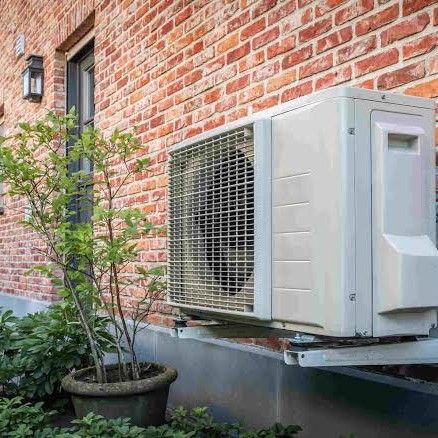
Initially, this argument appears compelling when examining surface-level statistics. The household adoption rate of traditional air conditioning in Europe is indeed significantly lower than across much of the United States, where mechanical cooling systems have become standard features in modern homes. However, this comparison increasingly overlooks a fundamental technological and terminological transformation that has occurred across Europe over the past decade. The continent isn't rejecting cooling technology; rather, it is deploying it under a different name and through a different technological pathway.
| Criterion | United States | Europe |
|---|---|---|
| Residential air conditioning ownership rate | Approximately 88% of households | Approximately 10% of households |
| Government heat pump support policies | Limited federal programs; state-level incentives | Extensive national subsidies; tax incentives; renovation grants |
| Cooling capability via heat pump systems | Uncommon in residential installations | Standard feature in modern heat pump installations |
| Primary driver for adoption | Comfort during extreme heat | Energy efficiency; carbon reduction; energy security |
Europe's Cooling Capabilities Are Growing Faster Than Many Realize
This technological distinction is crucial because it fundamentally changes how Europe is adapting to a warmer climate. While the United States has historically developed separate cooling systems alongside existing heating infrastructure, European construction and retrofitting practices have evolved in the opposite direction. For decades, heating dominated energy needs in the European climate, making investments in high-efficiency heating systems economically rational, while cooling remained a secondary consideration for most of the year.
The ongoing electrification revolution is dramatically changing this equation. Every new heat pump installed within Europe's carbon reduction frameworks simultaneously expands the continent's cooling capacity without requiring households to purchase a completely separate device. Millions of homes are thus gaining air conditioning as a beneficial byproduct of the transition away from fossil fuel dependency. This approach represents a more integrated and energy-efficient solution to the dual challenge of maintaining comfortable indoor temperatures year-round.
Government Support and Incentive Programs
From Germany and France to the Netherlands, Italy, and Nordic countries, European governments are actively subsidizing heat pumps through an array of policy mechanisms. These include direct grants, tax incentives, low-interest loans, and comprehensive renovation programs designed to accelerate the transition away from fossil fuel heating systems. These policies are primarily framed around climate goals—reducing greenhouse gas emissions and improving energy security by decreasing dependence on imported fossil fuels, particularly following the Russian gas supply disruptions of recent years.
However, the practical result of these policies is the rapid deployment of equipment capable of both heating and cooling. The European Union's Fit for 55 package and national energy transition strategies have created an unprecedented regulatory and financial environment favoring heat pump technology, resulting in installation rates that have doubled or even tripled in several countries over the past two years.
The Real Gap Lies Elsewhere
This technological shift doesn't mean Europe has completely solved the cooling challenge. Significant gaps remain, particularly in public buildings and the existing housing stock. Many schools, hospitals, government offices, and older multi-family residential buildings continue to use central gas or oil heating systems without any cooling capabilities. Retrofitting these buildings often requires installing separate cooling infrastructure alongside existing heating systems, making upgrades technically more complex, invasive, and expensive than for households that have already transitioned to heat pumps.
Furthermore, building codes and standards across Europe have historically prioritized thermal performance for heating rather than cooling, resulting in many buildings that retain heat effectively but lack adequate shading, ventilation, or thermal mass to manage high temperatures. This represents a more fundamental challenge that technological solutions alone cannot address.
A Terminological Issue More Than Technological
Many transatlantic misunderstandings stem from language rather than technical differences. Americans typically think of heating and cooling as separate systems combined within a broader HVAC (Heating, Ventilation, and Air Conditioning) installation. Europeans increasingly think in terms of replacing a fossil fuel furnace or boiler with a heat pump—a single integrated system that can provide both heating and cooling as needed.
However, the underlying thermodynamic principles are remarkably similar. Both traditional air conditioners and heat pumps rely on refrigeration cycles to move heat rather than create it, and both can operate in reverse to provide cooling when needed. The key difference lies in their design priorities and seasonal performance characteristics, with heat pumps optimized for efficient heating in cold climates while still providing effective cooling during warmer periods.
Consequently, statistics comparing standalone air conditioning adoption rates increasingly underestimate Europe's actual cooling capacity. They fail to recognize the millions of households whose primary heating system has silently become their primary cooling system. Measuring only conventional air conditioners thus overlooks one of the most significant transformations occurring in Europe's building stock.
Energy Transition as Climate Adaptation
Perhaps the most fascinating aspect of Europe's heat pump revolution is that it was never primarily intended as a cooling strategy. Governments have promoted these systems primarily to reduce greenhouse gas emissions, decrease dependence on imported fossil fuels, and improve energy security following the geopolitical disruptions of energy markets. However, in pursuing these decarbonization goals, they are also inadvertently laying the foundation for a more climate-resilient building stock capable of handling increasingly frequent and intense summer heatwaves.
This dual benefit—carbon reduction and climate adaptation—represents a sophisticated approach to the climate crisis that addresses both causes and effects simultaneously. By investing in heat pumps, Europe is pursuing mitigation (reducing emissions) and adaptation (building resilience) through a single technological solution, maximizing the effectiveness of climate investments.
The Future Outlook
Europe certainly needs more cooling capacity as temperatures continue to rise, particularly in schools, hospitals, and other public buildings where investment has lagged behind the housing market. The International Energy Agency projects that cooling demand in Europe could triple by 2050 under moderate warming scenarios, placing additional pressure on energy systems and requiring significant infrastructure investment.
However, portraying the continent as somehow opposing air conditioning technology increasingly misses the bigger picture. Europe isn't rejecting cooling technology; it is simply deploying it through the rapid expansion of heat pumps rather than through standalone air conditioning systems. This approach offers several potential advantages, including higher energy efficiency, reduced peak electricity demand compared to conventional air conditioning, and a more integrated solution that can be powered increasingly by renewable energy sources.
The irony is that one of the largest cooling programs currently underway in Europe is rarely discussed as such. Instead, it appears in policy documents under headings like carbon reduction, electrification, and heat pump deployment. Yet for millions of European households, these investments are providing something far more practical than policy terminology. They are delivering high-efficiency heating in winter, high-efficiency cooling in summer, and a building stock that is gradually becoming cleaner, more efficient, and more resilient to the impacts of climate change.
Europe may not always call it air conditioning, but increasingly, that's precisely what they are installing—just with a different name and a different technological approach that better aligns with the continent's climate priorities and energy system characteristics.
By: Leon Stille for Oilprice.com