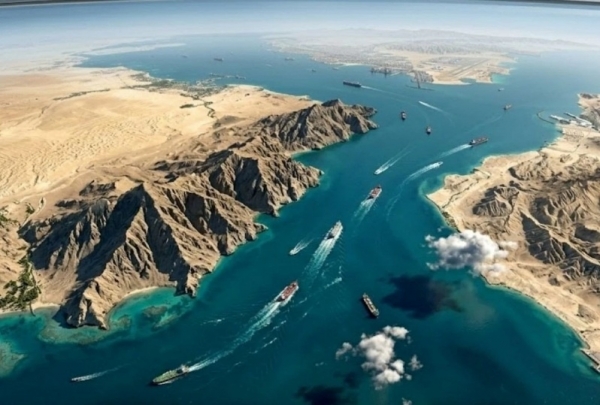
Middle East Accelerates Fuel Oil Exports Following Strait of Hormuz Reopening
In the context of the global energy market recovering from recent volatility, the Middle East is accelerating fuel oil exports with projections reaching a four-month high in June. This development occurs immediately after the Strait of Hormuz - the world's most crucial oil shipping artery - was reopened following previous disruptions.
Geopolitical Context and the Importance of the Strait of Hormuz
The Strait of Hormuz, located between Iran and the Arabian Peninsula, is a strategic waterway connecting the Persian Gulf with the Indian Ocean. It represents the world's most important oil transit route, with approximately 20-30% of globally refined fuel oil passing through it daily.
Middle Eastern nations such as Saudi Arabia, Iran, Iraq, Kuwait, and the United Arab Emirates (UAE) all depend on this route to export crude oil and refined petroleum products to global markets.
Previous Challenges
During the early months of 2023, the Strait of Hormuz faced numerous maritime security challenges, including attacks on vessels, naval interference, and regional political issues. These factors caused significant disruptions to oil shipping operations, substantially reducing oil export volumes from the region.
Energy sector experts note that the disruptions at Hormuz caused oil prices to surge and created substantial pressure on oil-export-dependent economies.
The Critical Shift: Hormuz Reopening
Early June 2023 marked a positive development in the Strait of Hormuz situation. Regional naval forces reached agreements on maritime security, helping to stabilize oil transport operations through this vital corridor.
According to reports from oil shipping companies and international energy agencies, the reopening of Hormuz has helped unclog oil flows and created favorable conditions for Middle Eastern countries to boost their exports.
Impressive Export Data
According to the latest forecast from energy consultancy Petrologistics, total fuel oil exports from the Middle East (including crude oil, diesel, gasoline, and jet fuel) are expected to reach approximately 18.3 million barrels per day in June, up from 17.8 million barrels per day in May.
This figure marks the highest level since February 2023, indicating a strong recovery in oil export operations from the region.
Country-by-Country Analysis
Among Middle Eastern countries, Saudi Arabia remains the largest oil exporter with an expected output of approximately 7.2 million barrels per day in June. This is followed by Iraq at 3.8 million barrels per day, UAE at 2.9 million barrels per day, and Kuwait at 2.5 million barrels per day.
Iran, despite ongoing international sanctions, has also shown improvement in its export operations, with an expected level of approximately 2.1 million barrels per day in June.
| Country | May Exports (million barrels/day) | June Exports (million barrels/day) | Growth (%) |
|---|---|---|---|
| Saudi Arabia | 7.0 | 7.2 | 2.9% |
| Iraq | 3.6 | 3.8 | 5.6% |
| UAE | 2.7 | 2.9 | 7.4% |
| Kuwait | 2.3 | 2.5 | 8.7% |
| Iran | 1.9 | 2.1 | 10.5% |
| Total Middle East | 17.8 | 18.3 | 2.8% |
Impact on Global Energy Markets
The increase in oil exports from the Middle East is having a significant impact on global energy markets. According to analysts, the rising oil volumes from this region are helping to partially offset supply shortages from Russia due to sanctions and from Venezuela due to production declines.
However, the impact on oil prices remains limited. Brent crude is still trading around the $75-80 per barrel mark, higher than the average but below the peak seen earlier in the year.
Future Oil Price Forecasts
Various market analysis firms offer different forecasts for oil prices in the coming months. While some predict continued oil price increases due to rising demand, particularly from Asia, others suggest prices may stabilize or decline slightly due to increased supply.
| Organization | Q3 2023 Forecast ($/barrel) | Q4 2023 Forecast ($/barrel) | Key Influencing Factors |
|---|---|---|---|
| IEA | 78-82 | 75-80 | Rising demand, stable supply |
| OPEC | 80-85 | 82-87 | Production cuts, strong demand |
| EIA | 76-80 | 74-78 | Slowing economic growth |
Future Outlook
In the long term, the outlook for Middle East oil exports remains dependent on various factors, including regional geopolitical situations, OPEC+ production policies, and the global energy transition.
Although oil demand continues to grow, particularly in developing nations, the trend toward renewable energy adoption and electrification is gradually creating pressure to reduce long-term oil demand.
Challenges Ahead
Despite current improvements, experts warn that the situation in the Strait of Hormuz still contains risks. Regional political tensions could flare up at any time, disrupting oil shipping operations.
Additionally, increasing pressure from climate change targets may lead to policies restricting oil production in the future.
Conclusion
The acceleration of fuel oil exports from the Middle East following the Hormuz reopening is positive news for the global energy market. Increased oil volumes from this region are helping to stabilize supply and control oil prices in the short term.
However, in the long run, Middle Eastern countries need to prepare for changes in the global energy structure, where the role of oil may gradually diminish. Diversifying their economies and investing in clean energy sectors may be the appropriate direction for these countries in the future.
The CEO of a major energy company commented: "The reopening of Hormuz and increased oil exports are positive in the short term, but we also clearly see the global energy transition trend. Middle Eastern countries need to leverage their current resources to prepare for a sustainable energy future."
#MiddleEast #OilExports #StraitOfHormuz #EnergyMarket #OilPrices #OPEC