Petrovietnam Researches Implementation of National Crude Oil Storage Facility
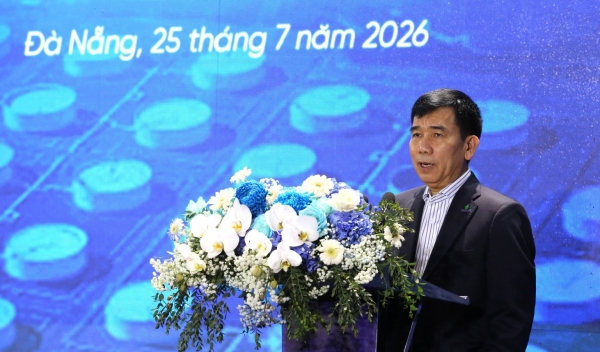
On July 25th, the Vietnam National Oil and Gas Group (Petrovietnam) organized a conference to research and discuss plans for implementing a national crude oil storage facility. This event marks a significant step in strengthening national energy security amid continuing complex developments in the global energy market.
Conference Discusses Strategic Solutions
The conference aimed to facilitate discussions and evaluations of advanced crude oil storage models from around the world, with the goal of identifying solutions suitable for Vietnam's specific conditions. The event attracted leading energy experts, representatives from government agencies, and member units of Petrovietnam.
In the context of strong fluctuations in global oil prices and increasing energy security risks, establishing a national crude oil storage facility has become an urgent requirement for Vietnam. The conference focused on discussing organizational models, scale, location, and appropriate technologies for Vietnam's crude oil storage system.
Background and Urgency
According to expert assessments, the global energy market faces significant challenges from geopolitical conflicts, climate change, and the energy transition. Vietnam, as a developing country with increasing energy demands, needs to proactively establish a national crude oil storage system to ensure energy security.
Data from the General Statistics Office shows that Vietnam imports approximately 95% of its crude oil needs. In 2022, Vietnam imported about 17.5 million tons of crude oil, valued at approximately $13.3 billion. This high dependency on imported crude oil makes Vietnam vulnerable to global market shocks.
| Indicator | 2021 | 2022 | Growth |
|---|---|---|---|
| Crude oil import volume (million tons) | 16.2 | 17.5 | 8.0% |
| Import value (billion USD) | 10.8 | 13.3 | 23.1% |
| Import dependency ratio | 93% | 95% | 2% |
Advanced Crude Oil Storage Models Worldwide
At the conference, experts introduced and analyzed several advanced crude oil storage models successfully implemented worldwide. Three main models were considered:
- US Strategic Storage Model: The Strategic Petroleum Reserve (SPR) system with a capacity of over 600 million barrels, managed by the US Department of Energy. This model can meet demand for 90 days.
- EU Storage Model: EU member states maintain crude oil reserves equivalent to 90 days of imports, managed by specialized agencies with sharing mechanisms when necessary.
- Japan Storage Model: Japan maintains the world's second-largest crude oil storage after the US, with a capacity of approximately 500 million barrels, managed by JOGMEC (Japan Organization for Metals and Energy Security).
Comparison of International Crude Oil Storage Models
| Country | Storage Capacity | Response Time | Management | Key Features |
|---|---|---|---|---|
| United States | 600 million barrels | 90 days | Department of Energy | Public-private model, flexible mobilization mechanism |
| European Union | 90 days of imports | 90 days | Union of national agencies | Volume sharing mechanism among member states |
| Japan | 500 million barrels | 120 days | JOGMEC | Combination of state and private reserves, advanced storage technology |
Solutions Suitable for Vietnam's Conditions
Based on analysis of international models and assessment of Vietnam's actual conditions, the conference proposed several key solutions for the national crude oil storage system:
- Building a multi-tiered storage system: Combining state reserves and commercial reserves with appropriate ratios to ensure both economic efficiency and energy security.
- Strategic site selection: Constructing storage facilities in areas with advantages in transportation, logistics, and security, such as Vung Tau, Dung Quat, or other safe mountainous areas.
- Applying modern storage technology: Utilizing advanced technologies for crude oil storage, monitoring, and management to ensure safety, efficiency, and minimize environmental impact.
- Establishing management and operational mechanisms: Creating a clear and effective legal framework and management mechanism suitable for Vietnam's conditions and international commitments.
Significance and Impact on National Energy Security
The establishment of a national crude oil storage facility will bring significant benefits for Vietnam's energy security and economic development:
- Enhanced resilience to market shocks: The storage system will help Vietnam proactively respond to oil price fluctuations, supply disruptions, or unexpected incidents.
- Strengthened international negotiation position: With a national storage facility, Vietnam will have additional tools in energy cooperation and oil trade negotiations.
- Foundation for sustainable development: The storage system will contribute to stabilizing the domestic market, supporting industries dependent on crude oil, and creating conditions for the energy transition.
Conclusion
The conference on implementing a national crude oil storage facility organized by Petrovietnam has opened a new direction for Vietnam's energy security. With thorough preparation and absorption of advanced models from around the world, Vietnam is gradually building an effective national crude oil storage system, contributing to ensuring energy security and promoting sustainable socio-economic development.
Following the conference, Petrovietnam will continue to research and develop detailed proposals for submission to competent authorities for approval. The project is expected to be implemented in the 2024-2027 period, with a planned capacity to meet 30-45 days of Vietnam's consumption needs.