Three Critical Weaknesses Suffocating Kazakhstan's Oil Industry
In the context of the Ukraine conflict and Western oil sanctions, Kazakhstan - the largest oil producer in Central Asia - has a golden opportunity to increase its exports. However, the country's oil industry faces significant challenges that prevent it from fully maximizing its potential.
Background: A Missed Opportunity
Kazakh crude oil is not subject to sanctions, and European refineries are seeking alternatives to Russian oil. This presents a golden opportunity for Kazakhstan to increase oil production and exports. In reality, however, the country has been unable to effectively deliver its oil to international markets.
Analysts note that while Kazakhstan has the potential for oil production of approximately 1.8-2 million barrels per day, actual production typically only reaches around 1.7 million barrels per day. This gap indicates significant limitations in the Central Asian nation's oil industry.
Three Key Weaknesses Hampering Kazakhstan's Oil Industry
1. Outdated Transportation and Export Infrastructure
As a landlocked country, Kazakhstan's oil exports depend entirely on pipelines. The country's existing pipeline system primarily routes to Russia and China, its traditional markets.
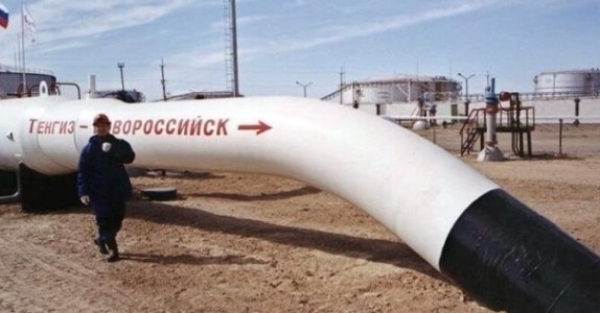
To transport oil to Europe, Kazakhstan must use the Caspian Pipeline Consortium (CPC) pipeline, which passes through Russia to reach the port of Novorossiysk on the Black Sea. This route frequently experiences technical issues and is tightly controlled by Russia.
In October 2022, Russia temporarily halted CPC operations for several weeks for "maintenance," causing hundreds of millions of dollars in losses for Kazakhstan. This event demonstrated the critical vulnerability of dependency on Russian infrastructure.
| Kazakhstan's Major Pipeline Systems | Destination | Capacity (thousand barrels/day) | Risks |
|---|---|---|---|
| Caspian Pipeline Consortium (CPC) | Novorossiysk (Russia) | 1,200 | Dependency on Russia |
| Central Asia-China Pipeline | China | 400 | Limited market |
| Atyrau-Samara Pipeline | Russia | 300 | Dependency on Russia |
2. Lack of Modern Technology and Investment
Many of Kazakhstan's oil fields were developed during the Soviet era and are now in the production decline phase. To maintain production levels, Kazakh oil companies need significant investment in advanced extraction technologies and infrastructure upgrades.
However, the industry is suffering from capital shortages and outdated technology. State-owned companies like KazMunayGas (KMG) frequently face financial difficulties, while international companies such as ExxonMobil, Shell, and Chevron are also tightening spending due to global oil price volatility.
According to data from Kazakhstan's Ministry of Energy, the current oil recovery rate from existing fields is only about 25-30%, significantly lower than the international standard of 40-50%. This indicates backwardness in extraction technology.
| Technology Challenge | Current Status | International Standard | Gap |
|---|---|---|---|
| Oil recovery rate | 25-30% | 40-50% | 15-20% |
| Equipment age | Over 20 years | 10-15 years | 5-10 years |
| Automation rate | 35% | 70% | 35% |
3. Weak Resource Management and Corruption
Kazakhstan's oil industry is frequently affected by corruption issues and weak resource management. Many oil contracts are signed with non-transparent terms, causing losses to the national budget.
The Kazakh government has made efforts to reform the oil industry in recent years, but progress has been slow. A new law on oil production sharing, passed in 2022, aims to attract foreign investment, but investors remain concerned about transparency and policy stability.
Additionally, competition between state-owned and private oil companies has led to fragmentation and inefficiency in resource management. KMG, the national oil company, frequently disputes with international companies over extraction rights and profit sharing.
Economic Impact and Outlook
Failing to capitalize on the opportunity created by Russian oil sanctions is causing significant damage to Kazakhstan's economy. Oil accounts for approximately 30% of GDP and 70% of exports.
According to World Bank estimates, Kazakhstan could increase oil exports to Europe by 300,000 barrels per day if it addresses the weaknesses mentioned above. This would bring an additional $10-15 billion in annual revenue for the country.
The Kazakh government has announced plans to build a new pipeline across the Caspian Sea to directly connect with Europe, but this project requires substantial investment and will take many years to complete.
Conclusion
Kazakhstan stands before a historical opportunity to enhance its position in the global oil market, but inherent weaknesses in infrastructure, technology, and management are constraining its potential. To capitalize on the opportunity presented by the Ukraine conflict, Kazakhstan needs to comprehensively reform its oil industry, reduce dependency on Russia, and increase transparency in resource management.
Experts warn that if these challenges are not addressed, Kazakhstan risks missing this "golden opportunity" in the short term and continuing dependency on traditional markets in the long term, thereby reducing the country's competitive advantage in the global oil market.