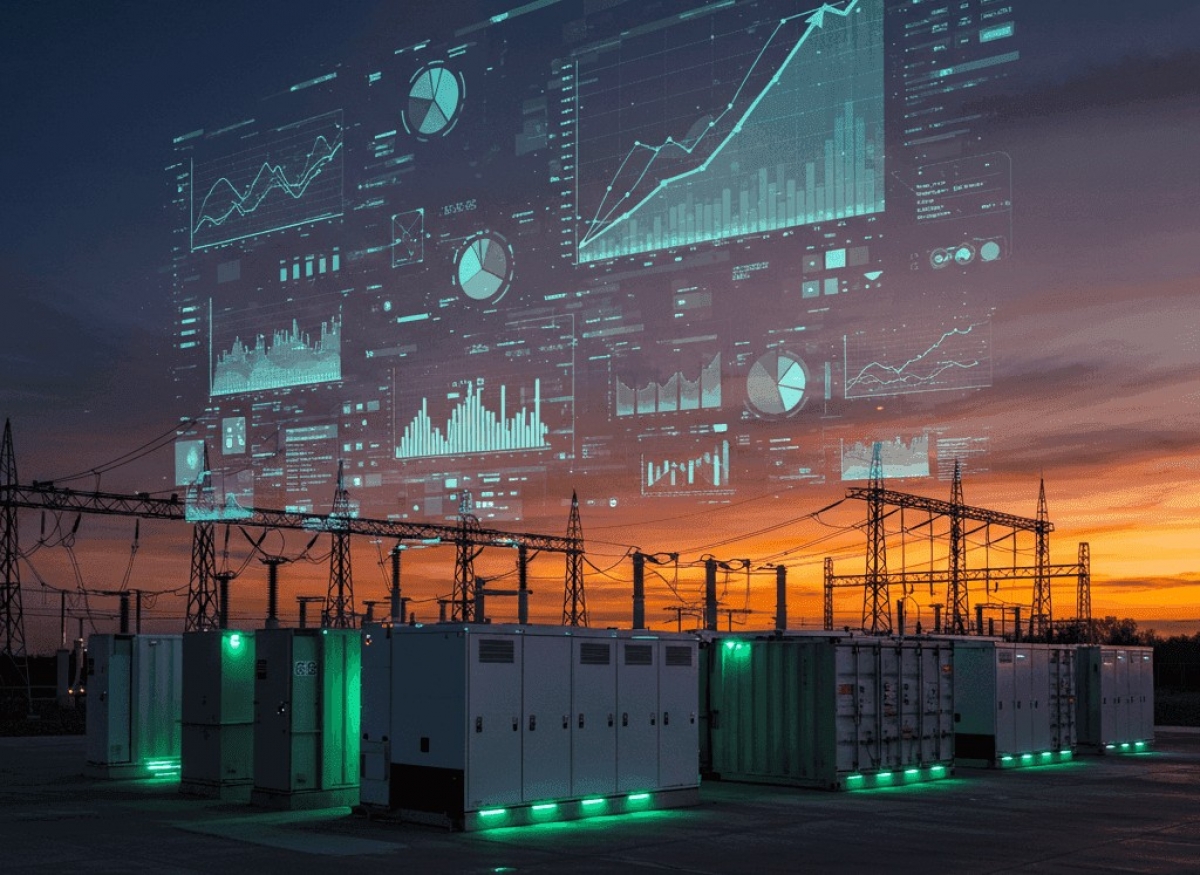
Strategic Direction and Policy Solutions for Developing Battery Energy Storage Systems (BESS) in Vietnam
The Vietnam Energy Association (VEA) has recently published an in-depth report on Battery Energy Storage Systems (BESS), marking a significant milestone in guiding the development of Vietnam's energy market. This comprehensive report, built on thorough professional analysis, provides scientific data and arguments to support policy-making and communication within the energy sector.
Overview of the BESS Market in Vietnam
Battery Energy Storage Systems (BESS) are becoming a critical component in Vietnam's energy transition. With broad applications ranging from grid support and frequency stabilization to renewable energy integration, BESS is opening up new development opportunities for the national energy sector.
With the target of achieving 47% renewable energy in total electricity production by 2050, Vietnam faces significant challenges in ensuring system stability as the proportion of renewable energy increases. BESS is considered the key technological solution to address this issue.
Three Core Pillars of the BESS Market
1. Explosive Growth Potential in the Next Decade
According to the VEA report, the BESS market in Vietnam is expected to demonstrate remarkable growth between 2023-2033. The following details the market size forecast:
| Year | Installed Capacity (MW) | Market Value (Million USD) |
|---|---|---|
| 2023 | 150 | 225 |
| 2025 | 450 | 675 |
| 2030 | 2,000 | 3,000 |
| 2033 | 5,000 | 7,500 |
Source: Vietnam Energy Association (VEA)
This growth is driven by several factors:
- Government policies encouraging renewable energy development
- Increasing demand for grid stability
- Development of new battery technologies with decreasing costs
- Digital transformation programs in the energy sector
2. Institutional and Financial Barriers to Overcome
The report identifies several key barriers hindering the development of the BESS market in Vietnam:
| Barrier Type | Description | Impact Level |
|---|---|---|
| Institutional | Lack of comprehensive legal framework for BESS | High |
| Financial | High initial investment costs | High |
| Technological | Dependence on imported technology | Medium |
| Human Resources | Lack of highly qualified experts | Medium |
Source: Vietnam Energy Association (VEA)
Specifically, in terms of institutions, Vietnam lacks clear mechanisms for BESS to participate in the electricity market as a service provider. Financially, BESS project financing models remain limited, especially for small and medium-sized enterprises.
3. Strategic Development Space
The report identifies the areas with the highest potential for BESS development in Vietnam:
- Support for solar and wind power plants
- Providing frequency regulation services for the national grid
- Energy storage in industrial zones
- Rooftop solar systems combined with storage
- Large-scale BESS projects in remote and rural areas
Among these, BESS applications to support solar and wind power development are evaluated as having the greatest potential, addressing the issue of unstable output from these renewable energy sources.
Proposed Policy Solutions
Based on comprehensive analysis, VEA has proposed several urgent policy solutions to promote the BESS market in Vietnam:
1. Improving the Legal Framework
- Establish a dedicated legal framework for BESS, clearly classifying BESS as a component of the power system
- Create a pricing mechanism for BESS services participating in the electricity market
- Issue national technical standards for BESS
2. Financial Support Policies
- Tax incentives for companies investing in BESS
- Interest rate support for BESS projects
- Establish a BESS development fund
- Promote public-private partnerships (PPP) in BESS development
3. Technology and Human Resource Development
- Encourage transfer of advanced BESS technology
- Invest in research and development of BESS in Vietnam
- Build high-quality training programs for the BESS workforce
Conclusion
The VEA report confirms that BESS holds a strategic position in Vietnam's energy transition path. With appropriate policies and participation from stakeholders, Vietnam's BESS market can experience strong growth in the next decade, making a significant contribution to ensuring energy security and achieving the net-zero commitment by 2050.
However, to realize this potential, coordinated efforts between the government, businesses, and professional organizations are needed to remove existing institutional, financial, and technological barriers.
Contact Information:
Vietnam Energy Association (VEA)
Address: 8th Floor, VCCI Building, 12 Le Thanh Ton, Hoan Kiem, Hanoi
Website: nangluongvietnam.vn
Keywords: #BESS #VietnamEnergy #VietnamEnergyAssociation #EnergyStorage #EnergyTransition #RenewableEnergy #EnergyPolicy