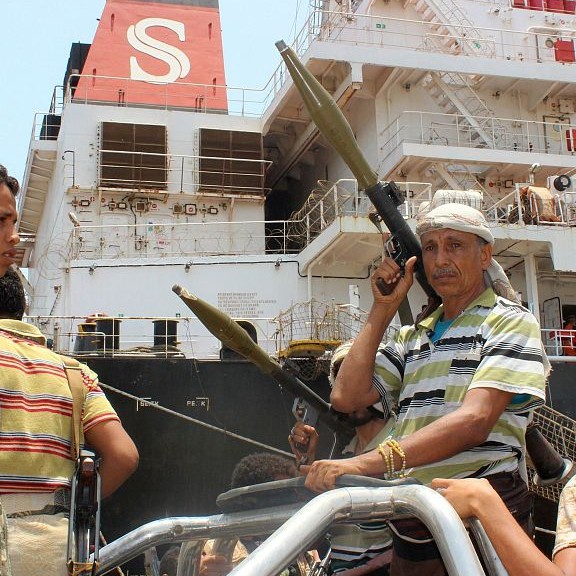
Red Sea Crisis: Houthi Naval Blockade Threatens Global Oil Supplies
The escalating crisis in Yemen has raised significant concerns about potential disruptions to global crude oil supplies. In a renewed escalation of regional tensions, Houthi forces have announced the establishment of a naval blockade targeting Saudi Arabian ports in the Red Sea, jeopardizing the export of over 4 million barrels of oil daily from the kingdom. This development comes at a time when global markets are already grappling with geopolitical tensions in the Middle East, potentially triggering substantial increases in oil prices and affecting economies worldwide.
The Houthi Naval Blockade and Its Implications
On Monday, Houthi rebels officially declared a "naval blockade" against Saudi Arabia, effectively expanding their military operations to include maritime targets in the Red Sea. This strategic move directly threatens the flow of crude oil that Saudi Arabia had redirected from the Strait of Hormuz to the Red Sea route—a shift that had previously alleviated concerns among traders about potential supply shortages.
The affected Saudi ports handle a substantial portion of the kingdom's oil exports, representing approximately 4 million barrels per day. This accounts for nearly 4% of global oil supply, making any disruption a matter of significant concern for international markets. The blockade specifically targets vessels transiting through the Bab el-Mandeb Strait, a critical chokepoint connecting the Red Sea to the Gulf of Aden.
Strategic Importance of the Red Sea Route
The Red Sea route has gained particular importance in recent years as an alternative to the Strait of Hormuz, through which approximately 20% of global oil trade passes. By redirecting exports through the Red Sea, Saudi Arabia aimed to diversify its shipping routes and reduce vulnerability to tensions in the Persian Gulf.
The Houthi blockade effectively negates these strategic advantages, forcing oil tankers to either risk passage through the dangerous waters or seek alternative, longer routes that increase both transit time and transportation costs.
Market Response and Price Volatility
The announcement has already triggered noticeable reactions in global oil markets. According to industry analysts, the immediate impact has been a surge in freight costs and insurance premiums for vessels transiting the region. This additional cost is gradually being passed on to consumers through higher oil prices.
Richard Bronze, co-founder and CEO of Energy Aspects, commented: "Traders are monitoring factors that could stimulate another round of price increases. The effectiveness of Houthi attacks and their ability to actually close Bab el-Mandeb will be crucial determinants."
Current Market Conditions and Price Trends
Global oil markets have experienced significant volatility in recent months, with prices reaching multi-year highs. The Saxo Bank reports indicate that crude oil prices have surged by as much as 65% since the beginning of the year. Over the past 12 months, both Brent crude and West Texas Intermediate (WTI) benchmarks have increased by more than 50%.
| Oil Benchmark | Price Increase (Past 12 Months) | Current Price Range |
|---|---|---|
| Brent Crude | 50% | $75-80 per barrel |
| West Texas Intermediate (WTI) | 50% | |
| Composite Crude | 65% |
These price increases have been driven by a combination of factors, including recovering global demand post-pandemic, production cuts by OPEC+ nations, and escalating geopolitical tensions in the Middle East. The Houthi blockade represents a new layer of complexity in an already volatile market.
Shipping Route Disruptions and Their Consequences
The ING commodity research team has reported that numerous oil tankers have altered their routes to avoid the Bab el-Mandeb Strait, where Houthi forces have demonstrated increased naval capabilities. This rerouting has significant implications for global supply chains.
"Tankers are now forced to enter and exit the Red Sea via the Suez Canal, substantially increasing transit time and transportation costs to Asia," explained Warren Patterson and Ewa Manthey, analysts at ING. "This not only affects oil shipments but also has broader implications for global trade, as the Suez Canal handles approximately 12% of global trade volume."
Increased Transportation Costs
The rerouting of oil tankers has resulted in several cost increases:
- Extended voyage times, adding 5-7 days to journeys from the Middle East to Asian markets
- Higher insurance premiums for vessels transiting high-risk areas
- Increased fuel consumption due to longer routes
- Higher charter rates for vessels willing to risk passage through affected waters
These additional costs are ultimately passed on to consumers, contributing to inflationary pressures in oil-importing nations.
Global Economic Impact Assessment
The ongoing blockade has prompted economists and analysts to express concerns about potential global economic repercussions. John Paisie, president of Stratas Advisors, warned: "If this situation persists, it will affect both crude oil prices and refined product prices. It will weaken the entire global economy."
The potential economic impacts include:
- Inflationary pressures in oil-importing nations
- Reduced consumer purchasing power due to higher energy costs
- Increased operational costs for industries dependent on oil and petroleum products
- Potential slowdown in economic growth, particularly in emerging markets
Supply Chain Vulnerabilities
The disruption extends beyond Saudi Arabian exports. In the Black Sea region, the suspension of oil intake from Kazakhstan at the CPC (Caspian Pipeline Consortium) terminal has further strained global supplies. Kazakhstan, which exports approximately 1.7 million barrels of oil daily through the CPC terminal, now faces significant logistical challenges.
The combined effect of reduced exports from both Saudi Arabia and Kazakhstan creates a substantial supply deficit in global oil markets. This deficit is particularly concerning as it coincides with peak demand seasons in several key consuming nations.
Geopolitical Implications and Regional Dynamics
The Houthi blockade represents a significant escalation in the Yemen conflict and has broader implications for regional geopolitics. The announcement comes amid heightened tensions between the United States and Iran, with the latter being accused of supporting Houthi forces.
The blockade also underscores the vulnerability of global maritime chokepoints, which have historically been flashpoints for geopolitical conflicts. The Bab el-Mandeb Strait, in particular, has become increasingly contested as regional powers seek to assert influence over critical trade routes.
International Response
International community responses to the blockade have been mixed, with some nations condemning the action as a violation of international maritime law, while others have called for de-escalation and diplomatic solutions. The United States has reportedly increased naval presence in the region to protect commercial shipping, though these measures have thus far failed to deter Houthi activities.
Historical Precedents and Lessons
The current situation echoes several historical incidents where geopolitical tensions disrupted global oil supplies. Notably, the 1973 oil crisis and the 1979 Iranian Revolution both demonstrated how regional conflicts could trigger substantial price increases and economic disruptions.
However, the current blockade differs from historical events in several key aspects:
- The targeted nature of the blockade, specifically focusing on oil exports
- The involvement of non-state actors (Houthi rebels) rather than established governments
- The increased efficiency of global markets in responding to supply disruptions
- The availability of strategic petroleum reserves as a buffer against short-term disruptions
Future Scenarios and Market Outlook
Industry analysts have developed several scenarios for how the situation might evolve:
| Scenario | Probability | Potential Impact on Oil Prices |
|---|---|---|
| Quick Resolution | Low | Moderate increase (5-10%) |
| Prolonged Blockade | Medium | Significant increase (15-25%) |
| Regional Escalation | Medium | Sharp increase (25-40%) |
| Global Disruption | Low | Crisis-level increase (40%+) |
Regardless of the specific outcome, the current situation has highlighted the persistent vulnerability of global energy supplies to geopolitical disruptions. It has also underscored the importance of diversifying energy sources and developing more resilient supply chains in an increasingly uncertain geopolitical landscape.
Conclusion
The Houthi naval blockade of Saudi Arabian ports in the Red Sea represents a significant escalation in regional tensions that could have profound implications for global oil markets and the broader economy. With over 4 million barrels of Saudi oil exports at risk daily, the blockade threatens to exacerbate existing price pressures and potentially trigger a new energy crisis.
As the situation continues to evolve, market participants are closely monitoring developments in the Red Sea, with particular attention to the effectiveness of the blockade and potential responses from the international community. The coming weeks will likely determine whether this latest geopolitical flare-up results in sustained price increases or remains a temporary disruption in an otherwise recovering global economy.
Regardless of the outcome, the current crisis serves as a stark reminder of the delicate balance of global energy markets and the profound impact that regional conflicts can have on international economic stability. In an increasingly interconnected world, energy security remains a critical concern for nations and industries alike.