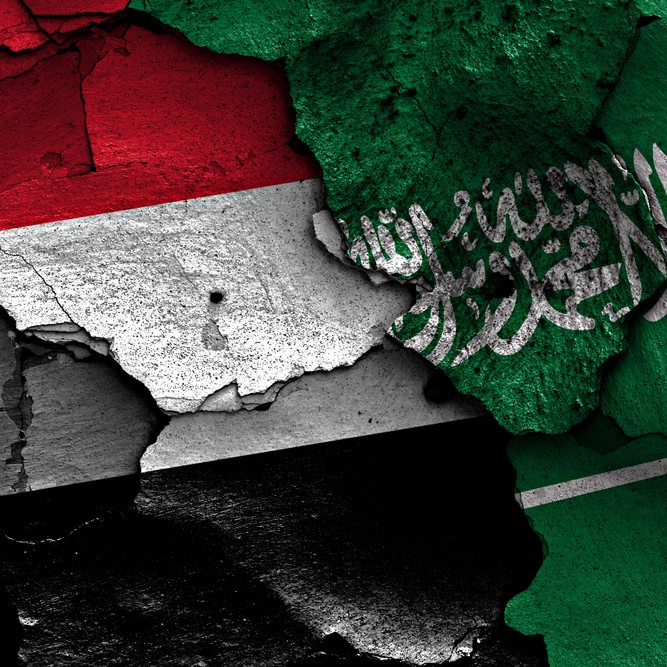
Houthis Declare Maritime Blockade Against Saudi Arabia, Threatening Global Oil Export Routes
Yemen - Houthi forces, linked to Iran, have declared an immediate maritime blockade against Saudi Arabia, bringing the U.S.-Iran conflict directly to the southern Red Sea and threatening the export route Riyadh uses to avoid disruptions at the Strait of Hormuz.
According to Reuters, the group stated that the "maritime siege" is retaliation for what they describe as Saudi Arabia's blockade of Yemen. As of this reporting, Saudi Arabia has not responded to the announcement.
Complex Geopolitical Background
The Houthi declaration follows Iran's instructions for the Houthis to prepare to close the Bab el-Mandeb Strait if the U.S. continues attacking Iranian energy infrastructure. According to Reuters, a complete closure could disrupt approximately 7% of global oil supplies, leaving Saudi Arabia threatened at both ends of its export system as vessel traffic through Hormuz remains significantly reduced.
Iran's Strategic Defense Posture
- Iran is utilizing Houthi forces as a strategic tool in Yemen
- Objective is to control strategic maritime shipping routes in the region
- Creating dual pressure on Saudi Arabia from both Hormuz and Bab el-Mandeb
Recent Military Developments
The Houthi announcement comes on the ninth consecutive night of U.S. strikes against Iran. Tehran reported attacks at Tabriz, Chabahar, Konarak, Bandar Mahshahr, and Bandar Imam Khomeini, while the Iranian Revolutionary Guard Corps claimed to have attacked U.S. military assets in Jordan, Kuwait, and Syria. Kuwait also reported another attack on a desalination plant, causing a fire.
Impact on Oil Shipping
Oil shipping activity through the Gulf is declining again. Satellite images reviewed by Reuters show only one oil-to-oil transfer outside Hormuz on July 18, down from three weeks prior. Maritime sources estimate only two or three transfers have occurred in recent days, and the number of supertankers passing Hormuz has decreased by an average of two per week compared to eight per day in late June and early July.
Satellite Monitoring in the Conflict
Satellite technology plays a crucial role in monitoring oil shipping activities in the region, providing real-time data on commercial shipping lanes and military movements.
| Time Period | Oil-to-Oil Transfers/Day | Supertankers Passing Hormuz/Month |
|---|---|---|
| Early July | 3 | 240 |
| Mid-July | 1 | 60 |
| Change | -67% | -75% |
Energy Market Reactions
Brent oil briefly traded above $90 per barrel following the blockade announcement before declining as traders assessed reports of new ceasefire efforts. Iran has received a 10-day ceasefire proposal, with both Tehran and Washington leaving open the possibility of renewed negotiations. Brent subsequently traded near $88.04 per barrel, while West Texas Intermediate fell to around $82.29.
Impact on Oil Prices
| Oil Type | Price Before Announcement | Peak Price After Announcement | Current Price | Change (%) |
|---|---|---|---|---|
| Brent Crude | $86.50 | $90.25 | $88.04 | +1.8% |
| West Texas Intermediate | $81.75 | $84.90 | $82.29 | +0.7% |
Future Outlook
The escalating tensions in the Gulf region could have profound implications for global energy security. Analysts warn that a prolonged closure of Bab el-Mandeb could trigger a global energy crisis, particularly when alternative routes like the Suez Canal could also be affected.
Satellite monitoring and maritime tracking systems will continue to play a crucial role in monitoring the situation and providing data to policymakers and financial markets.
Possible Scenarios
- Temporary Bab el-Mandeb closure: 3-5% disruption to global oil supply
- Prolonged closure: 6-8% supply disruption, oil prices could exceed $100/barrel
- Full-scale escalation: 10-12% supply disruption risk, potential global economic crisis
This geopolitical crisis highlights the fragility of strategic maritime routes and the impact of regional conflicts on global energy security. Major energy-consuming nations are now considering alternatives and supply diversification to mitigate risks.
#EnergySecurity #RedSea #GulfConflict #OilPrices #Houthis #Iran #SaudiArabia