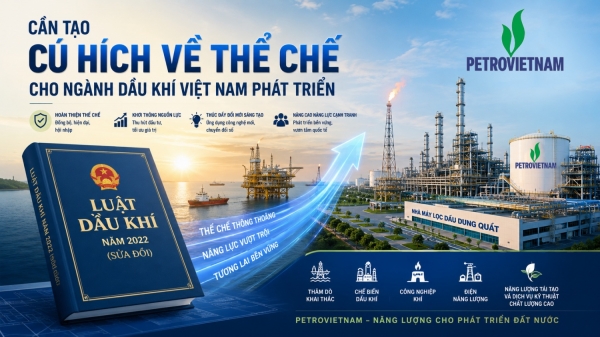
Amending Vietnam's Oil and Gas Law: Expanding Legal Framework for New Opportunities
In the context of Vietnam's major oil and gas fields gradually entering a phase of declining production, the amendment of the Oil and Gas Law has become an urgent task. This is not merely a technical adjustment but a significant policy initiative aimed at expanding the legal framework, thereby unlocking new potential from the nation's continental shelf.
Current State of Vietnam's Oil and Gas Industry
Vietnam's oil and gas industry has experienced numerous fluctuations over the past years. Currently, many major oil and gas fields show signs of declining production, making restructuring and policy adjustments more critical than ever before.
| Challenge | Description |
|---|---|
| Declining Production | Many major oil and gas fields can no longer provide production volumes as before. |
| Investment Requirements | Significant capital needed to explore new fields or upgrade extraction technologies. |
| Policy Innovation | Clear legal framework required to attract domestic and foreign investors. |
The industry's current trajectory presents several critical challenges that demand immediate attention. The decline in production from mature fields has been gradual but steady, with some key fields reporting reduced output by as much as 30-40% over the past decade. This reduction impacts national energy security, government revenue, and the broader economy that relies on this sector.
Key Highlights in the Amendment of the Oil and Gas Law
The amendment of the Oil and Gas Law represents not only a necessary step to improve the current situation but also aims to create a more favorable legal environment for future oil and gas activities. The key highlights include:
| Focus Area | Key Provisions |
|---|---|
| Investment Promotion | Incentive policies to attract investment from domestic and foreign companies. |
| Procedural Reform | Streamlining and simplifying legal procedures related to oil and gas exploration and extraction. |
| Environmental Safety | Strict regulations on environmental protection in oil and gas operations. |
| Technology Transfer | Requirements for technology sharing and capacity building in the sector. |
| Revenue Management | Transparent mechanisms for revenue sharing and distribution. |
The legislative reform process has involved extensive consultation with industry stakeholders, including national oil company PetroVietnam, international partners, and environmental experts. The new framework aims to balance economic development with environmental sustainability while ensuring Vietnam retains maximum benefit from its natural resources.
Unlocking Potential from Vietnam's Continental Shelf
Vietnam possesses an extensive continental shelf with numerous untapped resources. Expanding the legal framework will create favorable conditions for exploring and developing these resources.
- Untapped Oil and Gas Fields: Numerous coastal and continental shelf areas still have significant potential.
- Advanced Technologies: Application of modern technologies in oil and gas extraction.
- International Cooperation: Encouraging foreign investors and companies to participate in the oil and gas sector.
- Marine Economic Development: Integration of oil and gas activities with broader marine economic strategies.
The continental shelf of Vietnam spans approximately one million square kilometers, with sedimentary basins covering over 400,000 square kilometers. Geological surveys suggest these areas contain substantial hydrocarbon reserves, though much remains unexplored due to technical and financial constraints.
Future Outlook and Implementation Strategy
The implementation of the amended Oil and Gas Law will follow a phased approach, with immediate, medium-term, and long-term objectives:
| Timeline | Objectives |
|---|---|
| Short-term (1-2 years) | Enactment of secondary legislation, capacity building for regulatory agencies. |
| Medium-term (3-5 years) | Attraction of new investment, technology transfer agreements, exploration in new blocks. |
| Long-term (5-10 years) | Development of deep-sea extraction capabilities, diversification of energy portfolio. |
The successful implementation of this legal framework will not only help restore current extraction volumes but also open new opportunities for sustainable development in the future. By creating a more attractive investment climate, Vietnam aims to position itself as a competitive destination for oil and gas investment in the Asia-Pacific region.
The amendment process represents a forward-looking approach to resource management, balancing immediate economic needs with long-term sustainability goals. As global energy markets evolve and technology advances, Vietnam's oil and gas sector must adapt to maintain its relevance and contribution to national development.