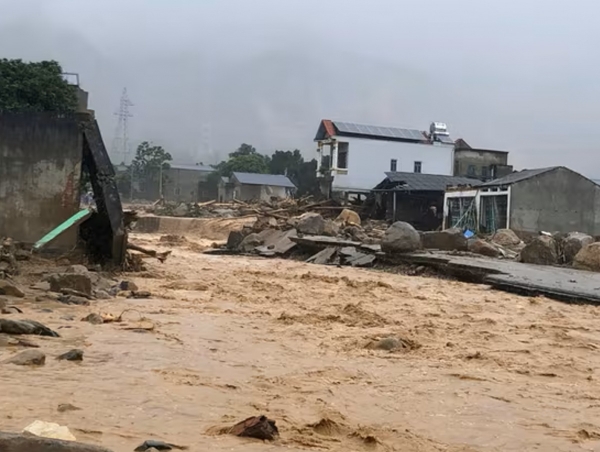
Ministry of Construction Urges Implementation of Emergency Measures to Ensure Transportation Safety in Northern Mountainous Regions Amid Heavy Rains
In response to the complex weather developments affecting the mountainous regions of Northern Vietnam, the Ministry of Construction has issued an urgent directive requiring all units within the industry and localities to implement comprehensive measures for natural disaster prevention and control. The directive mandates the organization of 24/7 duty systems and maximum mobilization of personnel and equipment to ensure transportation safety.
Weather Conditions and Natural Disaster Risks
According to information from the National Center for Hydro-Meteorological Forecasting, the mountainous regions of Northern Vietnam are currently being affected by prolonged heavy rainfall. Many areas have recorded rainfall levels that have reached historic records. Provinces such as Ha Giang, Lao Cai, Yen Bai, Son La, and Dien Bien have seen rainfall exceeding 300mm in just three days in some locations, creating a high risk of flash floods, landslides, and localized flooding.
Particularly vulnerable are the major transportation routes through mountainous areas such as National Highways 4A, 32, 279, and 219, which face the threat of being cut off due to landslides and flooding. This situation not only affects the daily lives of local residents but also causes significant economic losses and impedes rescue and relief operations in affected areas.
Technological Solutions in Weather Forecasting and Monitoring
To respond promptly to the developing situation, relevant authorities are intensifying the application of advanced technology in weather forecasting and monitoring. Automatic monitoring systems and hydro-meteorological stations are being enhanced for continuous observation, providing real-time data on rainfall levels and river water levels.
| Monitoring System | Technology Used | Update Frequency | Accuracy Level |
|---|---|---|---|
| Automatic monitoring system | IoT sensors, satellite data transmission | Every 5 minutes | 85-90% |
| Weather forecasting system | AI, Big Data, WRF model | Updated every 6 hours | 80-85% |
| Landslide monitoring system | IoT, terrain deformation sensors | Continuous | 75-80% |
Early Warning Systems and Disaster Response
The Ministry of Construction has required localities to proactively implement early warning systems for natural disasters, particularly for flash floods and landslides. Technological solutions such as intelligent loudspeaker systems, mobile warning applications, and electronic display boards are being installed in key areas.
GIS (Geographic Information System) technology is also being widely applied to create risk maps for landslides and flash floods, helping authorities accurately identify areas requiring evacuation and appropriate response measures.
Technology Supporting Transportation in Adverse Weather Conditions
To ensure smooth transportation flow, advanced technological solutions are being implemented:
- Intelligent Transportation Systems (ITS) with AI cameras detecting landslides and flooding
- Real-time traffic management software optimizing traffic flow
- GPS/GIS positioning technology for vehicle tracking and alternative route navigation
- Smart traffic light systems capable of adjustment based on weather conditions
Technological Solutions for Resilient Infrastructure Construction
In the face of climate change challenges, the Ministry of Construction is promoting the application of advanced construction technologies in mountainous transportation infrastructure:
| Technology | Application | Benefits |
|---|---|---|
| New material technologies | Flood and landslide-resistant bridges and roads | Increased service life, reduced maintenance costs |
| BIM (Building Information Modeling) | Transportation project design | Optimized design, early risk detection |
| Modern construction technology | Mountain road construction | Accelerated construction, reduced environmental impact |
The Role of Technology in Emergency Response Coordination
In emergency response coordination, the Ministry of Construction is intensifying technology application to enhance management effectiveness:
- Online meeting systems for remote command and control
- Platforms for real-time information aggregation from localities
- Software for managing disaster response personnel and equipment
- Drone technology for field surveys and damage assessment
Conclusion
The application of advanced technology in natural disaster prevention and ensuring transportation safety in the mountainous regions of Northern Vietnam is not merely a temporary solution but a strategic direction in the context of increasingly complex climate change. With the decisive guidance of the Ministry of Construction and the coordinated response of localities, technological solutions will play a crucial role in minimizing damage and ensuring the safety of lives and property.
However, to maximize the effectiveness of technology, substantial investment, workforce training, and community awareness enhancement regarding technology-based disaster response are essential.