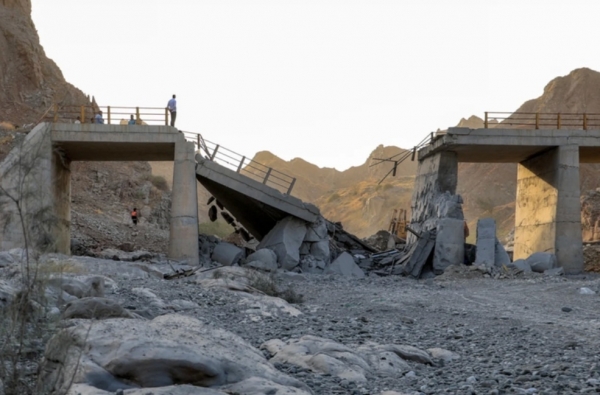
President Trump Responds to Fatal US Soldier Incident in Southern Iran Amid Escalating Tensions
In the escalating geopolitical landscape between the United States and Iran, President Donald Trump has issued a formal statement regarding the tragic incident where two US soldiers were killed in southern Iran, emphasizing Washington's core objectives in the region. The incident has brought renewed focus on the complex military and technological challenges facing US forces in volatile border areas.
Escalating Tensions in US-Iran Relations
Relations between the United States and Iran have reached unprecedented levels of tension since President Trump withdrew the US from the 2018 nuclear agreement and reimposed severe economic sanctions on Tehran. The latest incident involving US soldiers occurs against a backdrop of increasing military presence by various powers in the Middle East, a region that continues to be a potential flashpoint for international conflict.
The strategic importance of the Middle East has only intensified in recent years, with competing powers vying for influence, control over energy resources, and strategic positioning. The US maintains a significant military footprint in the region, with approximately 45,000 troops stationed across various countries including Iraq, Syria, and Saudi Arabia.
Details of the Southern Iran Incident
According to international media reports, the two US soldiers who lost their lives were members of a special operations unit conducting surveillance along the Iran-Iraq border when they were attacked. The incident occurred in remote terrain where the soldiers had become isolated and unable to receive timely support, highlighting the challenges of operating in such environments.
Pentagon officials have confirmed that the soldiers were part of a specialized reconnaissance team monitoring potential threats in the region. The exact circumstances of the attack remain under investigation, with preliminary reports suggesting an ambush by local militia groups possibly affiliated with Iranian-backed forces.
The incident has raised serious questions about the adequacy of communication systems, situational awareness technologies, and rapid response capabilities for US forces operating in border regions with complex geopolitical sensitivities.
President Trump's Official Response
In an official statement, President Trump strongly condemned the incident and reaffirmed key US policy positions:
- "Our primary objective in the region remains preventing Iran from acquiring nuclear weapons capabilities"
- "The United States will continue to protect our forces and retaliate forcefully against any actions targeting American military personnel"
- "We are enhancing surveillance capabilities and defensive technologies to ensure the safety of our troops"
- "Those responsible for this attack will be held accountable through appropriate military and diplomatic channels"
The White House statement emphasized that while the US seeks to avoid unnecessary escalation, it will not hesitate to defend its interests and personnel in the region. National security advisors have been instructed to review all available options for both immediate response and long-term strategic adjustments.
Advanced Surveillance and Defense Technologies in the Region
The incident underscores the technological challenges involved in implementing effective surveillance systems in complex border environments. The United States has been heavily investing in advanced technologies including:
- Satellite and drone-based surveillance systems providing persistent monitoring capabilities
- AI-powered facial recognition and behavioral analysis technologies for threat detection
- Secure communication systems resistant to interception and jamming
- Precision positioning technologies capable of functioning in challenging terrains
- Autonomous security systems for forward operating bases
- Integrated battlefield management systems enhancing situational awareness
These technologies represent billions in annual investment by the Department of Defense, with particular focus on developing systems that can operate effectively in contested environments where traditional communications and surveillance methods may be compromised.
| Technology | Capabilities | Limitations | Current Status |
|---|---|---|---|
| Satellite Surveillance | Global coverage, persistent monitoring, high-resolution imagery | High operational costs, predictable orbits, vulnerable to countermeasures | Multiple constellations operational with continuous upgrades |
| Military Drones | Extended loiter time, real-time video, precision strike capability | Limited by weather, vulnerable to advanced air defenses, bandwidth constraints | Over 700 operational systems with next-generation development underway |
| Ground Sensor Networks | Low detectability, persistent local monitoring, cost-effective deployment | Limited range, requires maintenance, susceptible to physical compromise | Deployed in key border areas with ongoing AI enhancement |
| AI-Powered Analytics | Requires extensive training data, potential for false positives, ethical concerns | Rapidly being integrated across all surveillance platforms |
Analysis of Iran's Nuclear Program
Iran's nuclear program has remained at the center of regional tensions. Key developments include:
- 2015: Iran signs the JCPOA nuclear agreement with world powers, limiting uranium enrichment activities
- 2018: US withdraws from the agreement under President Trump, citing insufficient restrictions on Iran's missile program and regional activities
- 2019-2023: Iran begins exceeding uranium enrichment limits beyond JCPOA specifications, progressively advancing toward weapons-grade material
- 2023: International Atomic Energy Agency reports Iran has accumulated sufficient nuclear material for one atomic bomb
- Current Status: Iran continues to expand its nuclear capabilities while engaging in intermittent diplomatic negotiations
The technological dimension of Iran's nuclear program has evolved significantly, with advances in centrifuge technology, uranium enrichment processes, and potential delivery systems. International monitoring efforts have faced increasing challenges as Iran has restricted some inspections and developed more sophisticated concealment techniques.
Geopolitical Implications
The incident involving US soldiers in southern Iran carries wide-ranging geopolitical consequences:
- Increased US military presence in the Middle East, with additional troop deployments likely in border regions
- Accelerated development and deployment of advanced military and surveillance technologies
- Elevated risk of direct military confrontation between US and Iranian forces
- Pot disruption to global oil supplies and energy price volatility
- Strain on alliances as regional partners reassess their positions amid heightened tensions
- Impact on nuclear non-proliferation efforts worldwide
The Middle East strategic environment has become increasingly complex with multiple actors pursuing competing objectives. Beyond the US-Iran dynamic, regional powers including Israel, Saudi Arabia, Turkey, and various non-state groups all influence the security calculus, creating a multi-dimensional challenge for strategic planners.
Future Outlook
Security analysts predict continued regional tension in the short to medium term. The United States is likely to:
- Significantly enhance surveillance technology deployments along sensitive borders
- Implement more stringent technological sanctions targeting Iran's defense and nuclear sectors
- Develop advanced cyber capabilities to potentially disrupt Iranian nuclear and military programs
- Strengthen intelligence sharing with regional allies to improve threat detection
- Invest in autonomous systems capable of operating in contested environments
- Explore diplomatic channels for crisis management while maintaining military pressure
The technological dimension of this conflict is particularly significant, with both sides investing heavily in asymmetric capabilities that could reshape the strategic balance. The development of hypersonic weapons, advanced electronic warfare systems, and AI-driven autonomous platforms represents the next frontier in this technological competition.
Conclusion
The tragic loss of two US soldiers in southern Iran reflects not only a specific security incident but also the broader technological and geopolitical complexities in an increasingly tense US-Iran relationship. The US objective of preventing Iran from acquiring nuclear weapons remains a cornerstone of regional strategy, yet the path to achieving this goal has grown increasingly complex.
As both nations invest heavily in advanced technologies for surveillance, defense, and potential offensive capabilities, the risk of unintended escalation grows. The incident underscores the critical need for robust communication systems, reliable intelligence, and clear protocols for operating in contested border environments where geopolitical sensitivities run high.
Moving forward, the technological dimension of this strategic competition will play an increasingly important role in shaping outcomes. The United States continues to prioritize technological superiority as a means of maintaining influence and protecting its interests in a region where the stakes extend far beyond local borders to encompass global energy markets, nuclear non-proliferation, and international security architecture.
#US_Iran_Relations #Nuclear_Proliferation #Military_Technology #National_Security #Middle_East_Politics