Hormuz Tensions Pose Global Supply Chain Threat Beyond Oil
July 15, 2023 - Escalating tensions in the Strait of Hormuz are emerging as a severe threat not only to global oil and gas supplies but also to far-reaching implications for worldwide commodity flows, international trade, and maritime security on an unprecedented scale.
The Strategic Position and Importance of the Strait of Hormuz
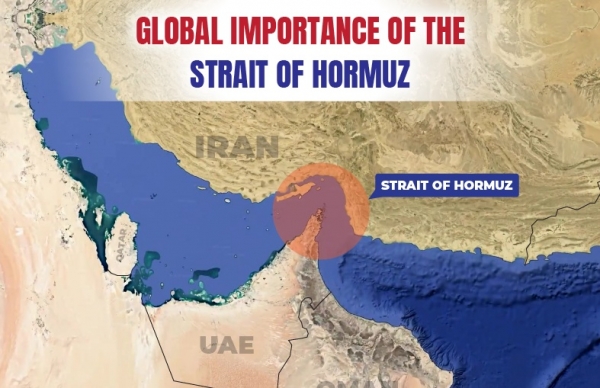
The Strait of Hormuz, a narrow waterway connecting the Persian Gulf with the Gulf of Oman and the Indian Ocean, serves as a vital maritime artery for the global energy industry. With a width of only about 33 km at its narrowest point, this region is the sole passage for maritime vessels entering and leaving the Persian Gulf - an area containing approximately 40% of the world's seaborne oil shipments and about 20% of global oil demand.
Beyond oil, the Strait of Hormuz also represents a critical shipping route for:
- LNG (liquefied natural gas)
- Containerized goods
- Industrial raw materials
- Food and agricultural products
- Electronics and technology components
Escalating Tensions in the Region
In recent months, political and military tensions in the Middle East, particularly involving Iran and Western nations, have intensified significantly. Incidents including attacks on commercial vessels, crew detentions, and military actions in the area have rendered maritime routes increasingly unsafe.
Notable incidents include:
- The seizure of the Mercer Street oil tanker in 2021, attributed to Iran
- The attack on the MV Helios Ray container ship in 2021
- The prolonged detention of the Suez Rajan oil tanker
- A series of attacks on oil tankers near the coast of the UAE
Impact on Oil and Gas Supply Chains
The Strait of Hormuz is a lifeline for the global energy industry. Any disruption in this region could lead to:
| Potential Consequences | Economic Impact |
|---|---|
| Oil transport disruption | Global oil price increases, higher inflation |
| Energy shortages | Reduced industrial production, electricity generation |
| LNG disruption | Natural gas shortages, increased energy prices |
| Increased shipping costs | Higher commodity prices, reduced profit margins |
According to estimates by the International Energy Agency (IEA), approximately 17-20 million barrels of crude oil are transported through the Strait of Hormuz daily. Any prolonged disruption could push oil prices to record levels, affecting the global economy still recovering from the COVID-19 pandemic.
Impact on Global Goods Supply Chains
Beyond oil, the Strait of Hormuz is a crucial route for many other types of commodities. Instability in this region could result in:
- Increased shipping insurance costs: Insurance companies would likely raise premiums for vessels transiting the risk area, increasing commodity costs.
- Longer alternative routes: Ships might need to take detours via Cape Town (South Africa) or Cape Horn (South America), extending transit times and fuel costs.
- Supply chain disruptions: Goods delays affecting production and distribution worldwide.
- Raw material shortages: Industries dependent on supplies from Asia and the Middle East could face material shortages.
Specific Impacts on Industries
| Industry Sector | Potential Impact |
|---|---|
| Electronics | Shortages of chips, components from Asia |
| Automotive | Production halts due to component shortages |
| Agriculture | Fertilizer, seed, equipment shortages |
| Textiles | Delays in raw materials and finished goods |
| Pharmaceuticals | Raw material production shortages |
Global Economic Consequences
Disruptions in the Strait of Hormuz could lead to severe economic repercussions:
- Increased inflation: Rising oil and commodity prices would push inflation higher, particularly in major energy-importing nations.
- Economic growth slowdown: Central banks might need to raise interest rates to control inflation, slowing economic growth.
- Financial market volatility: Stock markets and bond markets could experience significant fluctuations.
- International trade shifts: Countries might seek alternative shipping routes, altering global trade structures.
Responses from Countries and Businesses
In response to the escalating tensions, countries and businesses are taking various measures:
- United States and allies: Increasing military presence in the region, forming maritime security alliances.
- Iran: Threatening to block the Strait of Hormuz if subjected to sanctions or attacks.
- Oil-exporting nations: Diversifying markets, increasing strategic reserves.
- Shipping companies: Changing routes, enhancing vessel security measures.
- Energy corporations: Increasing investment in renewable energy and reducing dependence on Middle Eastern oil.
Future Outlook
The situation in the Strait of Hormuz remains highly uncertain. Experts forecast:
- Tensions could continue to escalate without effective diplomatic intervention.
- Global supply chains will need to adapt to long-term risks in the region.
- Countries will intensify supply diversification and alternative shipping routes.
- Investment in renewable energy may increase to reduce dependence on oil from the region.
In this context, maintaining political stability in the Middle East and ensuring maritime security in the Strait of Hormuz have become top priorities for the international community to protect global supply chains and the world economy.
Keywords: Hormuz, Global Supply Chain, Oil, Maritime Security, Global Economy, Sea Transport