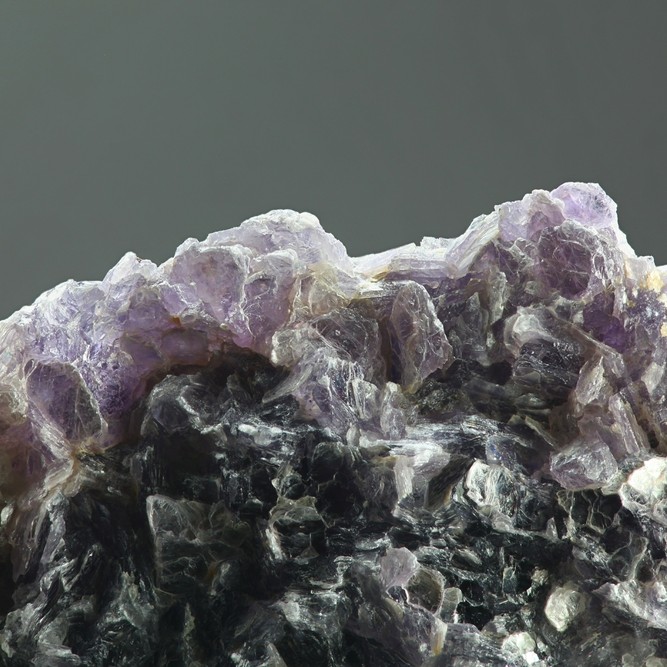
Cesium: The Rare Strategic Element with North America's Exclusive Project
Cesium - a "coveted yet obscure element" in one of the world's most tightly controlled critical mineral markets, where commercial production has historically come from just a handful of mines. The push for U.S. defense supply chain reconfiguration has transformed this rarest commercial metal into a strategic priority. While cesium has occupied a relatively quiet corner of the critical minerals industry for decades, its scarcity and uncertainty are now drawing increasing attention, signaling its growing role in U.S. defense technology.
Power Metals (TSXV PWM; OTC: PWRMF) is a company at the center of that shift. The company's 100%-owned Case Lake project in Ontario stands as the only cesium project in North America advancing toward commercial production. Backed by a long-term cesium purchase agreement with Albemarle, a specialized cesium chemical producer, the focus is on supporting a North American supply chain for defense and other industrial applications.
The Albemarle Partnership: Shaping North America's Cesium Future
Power Metals has entered the next development phase with Albemarle committed as the cesium offtake partner. The agreement ensures future off-take while providing up to C$5 million in project funding to help Case Lake advance toward production.
| Agreement Details | Specifications |
|---|---|
| Partner | Albemarle (NYSE: ALB) |
| Project Funding Value | Up to C$5 million |
| Term | Long-term agreement |
| Objective | Building a North American cesium supply chain |
The World's Fifth-Largest Cesium Resource
Many mining projects take years to identify commercial resources. Case Lake has established itself as the fifth-largest known cesium resource from a single mineralized dyke. This resource represents only part of a larger geological system, with additional cesium-bearing targets extending across the entire property.
This resource represents just one mineral within a much larger lithium-cesium-tantalum pegmatite system. The Case Lake property spans approximately 10 kilometers and includes multiple pegmatite dykes distributed across 14 granite domes. To date, Power Metals has identified 17 additional exploration targets beyond the current resource, suggesting a significant portion of the geological system remains outside today's mineral estimates.
Notable Grade Quality
Grade quality has also attracted attention. Commercial cesium production depends on the extremely rare pollucite mineral. Pollucite typically contains up to about 30% cesium oxide (Cs2O), making it the only commercially significant source of cesium. Drilling at Case Lake has encountered pollucite grades up to approximately 26% Cs2O, approaching the theoretical composition of pure pollucite and placing these intercepts among the highest-grade cesium mineralization reported by the company.
Cesium Applications: From Atomic Clocks to Defense Technology
For decades, cesium remained outside the critical minerals industry spotlight as the U.S. heavily relied on foreign sources for many critical minerals. Despite playing a vital role in technologies supporting the modern economy and defense, the cesium market has remained relatively stable.
Technological advancements have changed its profile. Today, it's used in atomic clocks that define international time standards, satellite positioning, secure communications, aerospace technology, radiation detection, and high-pressure drilling fluids used in some of the world's most technically demanding energy projects. Most of these applications have no practical substitutes for cesium.
| Cesium Applications | Role |
|---|---|
| Atomic clocks | Defines international time standards |
| Satellite positioning | GPS and positioning systems |
| Secure communications | Encryption communication devices |
| Aerospace technology | Propulsion and control systems |
| Radiation detection | Safety measurement equipment |
| High-pressure drilling fluids | Deep oil and gas exploration |
Concentrating the Cesium Supply Chain
The commercial cesium supply remains exceptionally concentrated. Only a handful of mines have historically produced cesium, while downstream processing remains the domain of a small number of specialized companies.
For decades, the global cesium supply has revolved around just three primary hard-rock sources: Tanco in Canada, Bikita in Zimbabwe, and Sinclair in Western Australia. Two of these are no longer significant high-grade cesium producers, while the third operates under an increasingly constrained supply picture. New commercial mines are virtually nonexistent.
New sources capable of reaching commercial production are exceedingly rare. This concentration of cesium supply means that each new reliable source carries strategic weight beyond its production volume.
Power Metals and Its Exclusive Position
With that in mind, the only advanced cesium project in North America possesses what many critical mineral developers spend years securing - a downstream customer.
"We've clearly defined Case Lake. It has a known high-grade cesium resource. We're moving into production - we've identified and created a lot of interest in the cesium market and understand that currently nowhere on the planet is producing or operating or mining high-grade cesium. So it will be the only cesium operator globally," Power Metals CEO Haydn Daxter told Oilprice.com.
A Direct Path to Commercial Production
Unlike many critical mineral projects requiring hundreds of millions of dollars, Power Metals believes Case Lake can be brought into production for under C$8 million. It's an unusual direct path to becoming a commercial cesium producer.
The contrast becomes evident when comparing to a project like Lithium Americas Corp.'s (NYSE: LAC) Thacker Pass project in Nevada, which is being built with a $2.23 billion loan from the U.S. Department of Energy and equity from General Motors. Case Lake's sub-C$8 million path to production is a reminder that not every North American critical mineral story needs a billion-dollar balance sheet behind it.
The Challenge of Restructuring the Cesium Supply Chain
Cesium is not a simplification story. The market has never operated like copper, lithium, or gold, where new discoveries can eventually feed established supply chains.
Cesium has been built around a much smaller system - scarce pollucite mines, non-transparent pricing, specialized processing, recycled wastewater, and long-term trade relationships between a handful of producers and industrial users.
That's why Case Lake is attracting attention not just for its geology. Rare Earth Exchanges, reviewing Hallgarten & Company's December 2025 cesium report, describes the most viable pathway outside China-linked supply chains as vertical integration - mining, processing, and offtake moving together rather than in isolation.
That's the model Power Metals is pursuing, with Case Lake as the resource and Albemarle as the downstream connection. The offtake agreement gives the project a commercial footing before production begins. Power Metals has described this as the first step toward a North American cesium platform, rather than a standalone mining project.
Future Outlook
Cesium may be one of the world's smallest critical mineral markets, but it's also one of the most concentrated. When supply is controlled by very few producers, even a single new source can change the competitive landscape.
In the context of global supply chain restructuring and growing demand for strategic minerals, Power Metals' Case Lake project represents a significant step toward establishing an independent and sustainable cesium supply for North America.
Related Hashtags:
- #Cesium
- #CriticalMinerals
- #PowerMetals
- #CaseLake
- #Albemarle
- #DefenseTechnology
- #StrategicMinerals
- #SupplyChainRestructuring