Vietnam's Economic Development Strategy: Public Investment, Logistics Growth, and Night Economy Expansion
On July 16, 2023, Vietnam's economic landscape continues to evolve with significant developments in public investment, logistics infrastructure, and the innovative night economy model. These initiatives represent the government's multifaceted approach to sustainable economic growth, targeting both immediate stimulus and long-term structural transformation.
Public Investment Capital Reaches 370,000 Billion VND Amid Accelerated Disbursement
According to the Ministry of Planning and Investment, as of mid-July 2023, Vietnam has successfully disbursed over 370,000 billion VND (approximately $15.8 billion USD) in public investment capital, achieving approximately 35% of the annual target. This substantial disbursement reflects intensified efforts to accelerate implementation of key infrastructure projects across the nation.
The public investment capital is strategically concentrated in critical sectors including transportation, energy, healthcare, and education. This targeted allocation not only stimulates economic growth but also establishes a foundation for sustainable development by addressing long-term infrastructure deficits.
| Period | Capital Disbursed (billion VND) | Disbursement Rate (%) | Year-over-Year Growth |
|---|---|---|---|
| January-June 2023 | 320,000 | 32% | +15% |
| July 2023 | 50,000 | 5% | +8% |
| Year-to-Date Total | 370,000 | 37% | +13% |
The government has directed ministries, sectors, and localities to accelerate the disbursement pace of public investment capital in the remaining months of 2023. This intensified effort aims to achieve 100% of the planned disbursement target by December 31, 2023, maximizing the economic impact of these investments.
"Public investment serves as a crucial driver of economic recovery and development," stated a Ministry of Planning and Investment official. "By expediting disbursement of capital for key infrastructure projects, we not only create jobs in the short term but also enhance Vietnam's long-term competitiveness."
Bac Ninh: Pioneering Northern Vietnam's International Logistics Hub
Bac Ninh Province is strategically positioning itself to become Northern Vietnam's international logistics center through comprehensive infrastructure development and targeted investment attraction. This ambitious initiative leverages the province's geographical advantages and industrial strengths to establish a modern logistics ecosystem.
At a recent meeting, the Bac Ninh Provincial People's Committee approved the Logistics Service Development Plan through 2025 with a vision extending to 2030. The plan focuses on developing modern industrial logistics zones that connect with major economic centers including Hanoi, Hai Phong, and neighboring provinces.
Bac Ninh possesses significant geographical advantages, situated along the vital transportation corridor connecting Hanoi with northeastern provinces and the Chinese border. The province is currently upgrading expressways, airports, and dry ports to support its logistics development ambitions.
Investment Incentives for Logistics Projects in Bac Ninh
- Corporate Income Tax Incentives: Four-year tax exemption followed by 50% tax reduction for the subsequent nine years
- Infrastructure Support: Financial assistance for technical infrastructure construction costs
- Land Use Benefits: Preferential land rent and land use fee policies
- Administrative Simplification: Streamlined approval processes for logistics projects
Bac Ninh is actively negotiating with major international logistics corporations to attract strategic projects that will enhance the region's logistics capabilities and competitiveness. These partnerships aim to establish Bac Ninh as a critical node in both domestic and international supply chains.
"The development of a modern logistics sector is essential for Bac Ninh's economic transformation," said a provincial economic official. "By positioning ourselves as a logistics hub, we can better integrate into regional and global value chains while supporting the growing manufacturing base in our province."
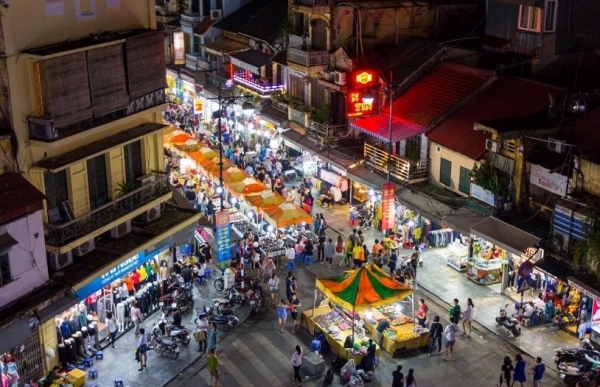
Hanoi's Ambitious Night Economy Strategy: Targeting 5% GRDP Contribution
Hanoi is implementing a comprehensive strategy to develop its night economy, with the ambitious goal of having this sector contribute approximately 5% of the city's Gross Regional Domestic Product (GRDP) by 2025. This initiative represents a holistic approach to economic development that balances growth with quality of life improvements.
According to the plan approved by the Hanoi People's Committee Committee, the night economy will be developed around key service sectors including gastronomy, entertainment, culture, tourism, and retail. The city will focus on establishing night economic zones in central districts such as Hoan Kiem, Ba Dinh, Hai Ba Truong, as well as peripheral districts including Thanh Xuan and Cau Giay.
To realize this vision, Hanoi will implement synchronized solutions ranging from infrastructure improvements and distinctive service development to appropriate management policies and security maintenance.
Hanoi's Night Economy Development Roadmap
| Year | GRDP Contribution Target | Number of Night Economic Zones | Operating Hours |
|---|---|---|---|
| 2023 | 2.5% | 5 zones | 20:00 - 2:00 |
| 2024 | 3.5% | 10 zones | 20:00 - 2:00 |
| 2025 | 5% | 15 zones | 20:00 - 2:00 |
"The night economy is not merely an economic activity but a vital component in enhancing quality of life, creating a dynamic, innovative city image, and attracting international visitors," stated Nguyen Duc Chung, Chairman of the Hanoi People's Committee.
Hanoi is studying best practices from major global cities such as Tokyo, Seoul, and Singapore, as well as regional counterparts like Bangkok and Kuala Lumpur, to develop a night economy model tailored to the capital's unique characteristics.
The city's night economy development strategy encompasses several key components:
- Cultural Preservation: Integrating traditional cultural elements into modern night-time entertainment
- Safety and Security: Implementing comprehensive measures to ensure visitor safety during extended operating hours
- Transportation Accessibility: Extending public transportation services to support night-time economic activities
- Regulatory Framework: Developing appropriate regulations that balance economic development with community well-being
Strategic Implications and Economic Outlook
The concurrent development of public investment, logistics infrastructure, and night economy initiatives across Vietnam's key regions demonstrates a sophisticated approach to economic development. These complementary strategies address both immediate economic stimulus requirements and long-term structural transformation needs.
Public investment disbursement provides immediate economic stimulation through infrastructure development while addressing long-term productivity constraints. Simultaneously, the focus on logistics development enhances Vietnam's position in global supply chains, potentially attracting higher-value manufacturing and service sectors.
The night economy initiative represents a diversification strategy that taps into Vietnam's growing service sector and tourism potential while creating employment opportunities across various skill levels. This approach aligns with global trends toward experience-based economies and urban revitalization.
In the context of global economic uncertainty, Vietnam's strategy of leveraging domestic strengths and local advantages presents a prudent approach to ensuring stable and sustainable economic growth. The integration of these initiatives creates a comprehensive economic development framework that balances immediate needs with future aspirations.
As implementation progresses, monitoring and evaluation mechanisms will be crucial to ensure these strategies deliver their intended economic benefits while maintaining environmental sustainability and social equity. The coming years will reveal how effectively Vietnam can translate these ambitious plans into tangible economic outcomes.
#VietnamEconomy #PublicInvestment #LogisticsDevelopment #NightEconomy #EconomicGrowth #InfrastructureDevelopment