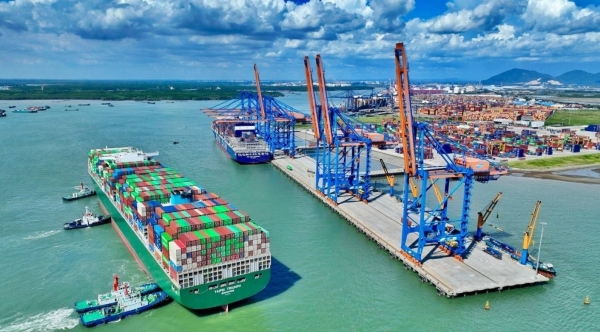
Economic News Update: Ho Chi Minh City Implements Free Port Infrastructure, International Financial Center Records $20 Billion in Committed Capital
July 15th marked a significant day in Vietnam's economic landscape, with several pivotal announcements poised to accelerate the nation's development trajectory. The most notable include Ho Chi Minh City's groundbreaking policy to waive port infrastructure fees, strategic diversification of capital channels, and the Vietnam International Financial Center's remarkable achievement of securing $20 billion in committed capital. These initiatives collectively demonstrate Vietnam's commitment to fostering a competitive business environment and positioning itself as a key player in the regional and global economy.
Ho Chi Minh City Implements Free Port Infrastructure Policy
In a move set to transform the logistics landscape, Ho Chi Minh City has announced a comprehensive policy waiving port infrastructure usage fees for all businesses operating within its jurisdiction. This unprecedented decision represents a significant shift in Vietnam's approach to supporting export-oriented industries and attracting foreign investment in the logistics sector.
According to an official statement from the Ho Chi Minh City Department of Transport, the policy will apply to all ports within the city, including both public and specialized terminals. The fee waiver is scheduled to commence on August 1, 2023, and will remain in effect for an initial period of six months, with potential extensions based on economic impact assessments.
| Beneficiary Categories | Fee Waiver Components | Implementation Period |
|---|---|---|
| All enterprises | Port infrastructure usage fees | 6 months (starting August 1, 2023) |
| Small and medium-sized enterprises (SMEs) | Handling service fees | 12 months (starting August 1, 2023) |
Mr. Nguyen Van Hung, Director of the Ho Chi Minh City Department of Transport, emphasized the strategic importance of this policy: "We anticipate that this initiative will substantially reduce logistics costs for enterprises, thereby enhancing the competitiveness of Vietnamese products in the international marketplace. This represents a crucial step in our broader effort to position Ho Chi Minh City as a premier logistics hub in Southeast Asia."
Impact on Business Operations
The port infrastructure fee waiver is being widely recognized as a practical solution to alleviate financial burdens on export-import enterprises. Industry analysts project that this policy could reduce annual logistics costs by 10-15% for affected companies, providing substantial relief in an increasingly competitive global market.
Ms. Tran Thi Mai, Director of An Phuong Trading and Transport Service Company, shared her perspective on the policy's significance: "This initiative represents a major catalyst for our business. Logistics costs typically constitute 20-30% of our product value, and this reduction will enable us to enhance our competitive positioning while expanding market reach. We anticipate being able to reallocate these savings toward technological upgrades and service quality improvements."
Broader Economic Implications
Economic experts suggest that the policy's impact extends beyond immediate cost savings. By reducing logistics expenses, the initiative is expected to stimulate increased export activities, attract foreign investment in related sectors, and accelerate Vietnam's integration into global supply chains. The policy aligns with Vietnam's broader economic strategy of becoming a manufacturing and logistics hub in the Indo-Pacific region.
Diversification of Capital Channels in Vietnam
Concurrently, the State Bank of Vietnam unveiled a comprehensive strategy to diversify capital channels, aimed at reducing dependence on bank-funded sources and fostering the development of capital markets. This strategic shift represents a fundamental reorientation of Vietnam's financial architecture toward more sustainable and market-driven funding mechanisms.
The diversification strategy prioritizes the development of corporate bond markets, investment funds, and international capital channels. Special emphasis will be placed on creating favorable conditions for enterprises listing on stock exchanges and attracting foreign direct investment. This multifaceted approach seeks to build a more resilient and dynamic financial ecosystem capable of supporting Vietnam's ambitious economic development goals.
| Capital Channel | 2025 Target | Growth Projection |
|---|---|---|
| Bond market | Increase to 25% of GDP | 15-20% annually |
| Investment funds | Double the number of funds | 25% annually |
| Foreign investment | Attract $20 billion annually | 10-15% annually |
Strategic Implementation Framework
The diversification strategy will be implemented through a coordinated approach involving regulatory reforms, market development initiatives, and international cooperation measures. Key components include streamlining listing requirements for enterprises, developing secondary markets, and enhancing transparency in financial reporting to attract international investors.
Mr. Pham Hong Son, Deputy Governor of the State Bank of Vietnam, commented on the strategic direction: "Our objective is to create a balanced financial ecosystem where multiple capital channels complement each other rather than compete. This diversification will enhance financial stability while providing enterprises with more flexible and cost-effective funding options."
Vietnam International Financial Center Secures $20 Billion in Committed Capital
In another significant development, the Vietnam International Financial Center (VIFC) announced remarkable results, securing $20 billion in committed capital from international financial institutions and foreign investors. This substantial figure not only exceeds initial targets but also reinforces Vietnam's growing prominence on the regional financial landscape.
Mr. Le Minh Hoang, Chairman of VIFC, expressed his satisfaction with the achievement: "These results reflect the international community's confidence in Vietnam's financial market potential. We will continue to cultivate an investment-friendly environment to attract additional high-quality capital flows and position Vietnam as a premier financial destination in Southeast Asia."
Capital Allocation Breakdown
The $20 billion in committed capital will be strategically allocated across various sectors to maximize developmental impact and ensure sustainable growth. The distribution reflects a balanced approach to infrastructure development, technological advancement, and environmental sustainability.
- Infrastructure Development: $8 billion - focused on transportation networks, port facilities, and urban infrastructure
- Technology and Digital Transformation: $6 billion - investment in AI, blockchain, and corporate digitalization projects
- Renewable Energy: $4 billion - development of solar power, wind energy, and clean energy initiatives
- Other Sectors: $2 billion - including high-tech agriculture, tourism, and service industries
Global Investor Confidence
The substantial capital commitment to VIFC signals growing international confidence in Vietnam's economic prospects and reform trajectory. Investors have particularly welcomed the government's commitment to improving the business climate, enhancing legal frameworks, and developing human capital resources.
Ms. Sarah Johnson, Regional Director for a leading international investment firm, commented: "Vietnam has demonstrated remarkable resilience and adaptability in its economic policies. The VIFC's success in attracting significant capital flows reflects the country's potential to become a key player in the regional financial ecosystem. We anticipate continued strong performance as reforms deepen and market opportunities expand."
Business-Centered Growth Strategy
At a business development seminar organized by the Ministry of Planning and Investment, experts emphasized the critical importance of adopting a business-centered approach in Vietnam's economic growth strategy. This paradigm shift recognizes enterprises as the primary drivers of economic development, job creation, and technological advancement.
The new strategic framework prioritizes creating a conducive business environment, streamlining administrative procedures, and supporting enterprises' access to capital, technology, and markets. Special incentives will be developed for small and medium-sized enterprises, high-tech firms, and startups. This comprehensive approach aims to unleash the full potential of Vietnam's private sector as the engine of sustainable economic growth.
Ms. Nguyen Thi Thu Trang, an economic expert, provided valuable insights: "Adopting a business-centered approach is the correct strategic direction. Enterprises are the primary drivers of economic growth, employment generation, and state budget contributions. It is imperative that we create all possible conditions for enterprise development and remove remaining barriers to business operations."
Support Policy Framework
The new strategy encompasses a comprehensive range of support measures for enterprises, from tax reductions and capital access support to workforce training and technology transfer. Special mechanisms will be established for enterprises participating in global supply chains and those with high export potential.
| Support Policy | Beneficiary Categories | Priority Level |
|---|---|---|
| Corporate income tax reduction | Small and medium-sized enterprises | High |
| Capital access support | High-tech enterprises | High |
| High-quality workforce training | All enterprises | Medium |
| Technology transfer | Startups | High |
Future Outlook and Conclusion
The economic developments announced on July 15th signal a positive transformation in Vietnam's policy approach to economic development. From the port infrastructure fee waiver in Ho Chi Minh City to the diversification of capital channels and the remarkable achievement of VIFC in attracting international capital, all initiatives align with the overarching goals of sustainable development, business-centered growth, and enhanced economic competitiveness.
Economic forecasters project that with these policy measures in place, Vietnam is well-positioned to achieve its 2023 growth target of 6-7% and maintain this positive trajectory in the coming years. The combination of reduced logistics costs, diversified funding sources, and increased international investment creates a favorable environment for accelerated economic development.
As Vietnam continues to implement these strategic initiatives, the country is solidifying its position as one of the most dynamic emerging economies in the Asia-Pacific region. The business-centered approach, supported by targeted policies and substantial international investment, provides a solid foundation for sustainable, inclusive growth and enhanced global economic integration.