Building a Comprehensive Legal Framework to Advance Sustainable Energy Development
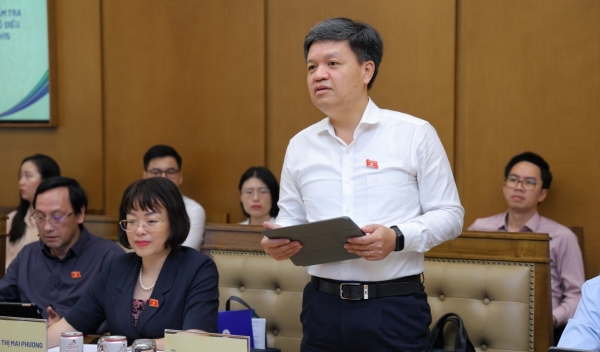
On the morning of July 14, in Hanoi, the National Assembly's Science, Technology and Environment Committee convened a crucial working session with Vietnam National Oil and Gas Group (Petrovietnam). The meeting served the purpose of supporting the survey and evaluation process for the project to amend and supplement certain articles of the Electricity Law No. 61/2024/QH15—a legal document of paramount importance in guiding the development of Vietnam's national energy sector.
The Critical Role of the Electricity Law in Sustainable Energy Development
The Electricity Law functions not merely as a legal framework regulating activities related to electricity production, transmission, and distribution, but as a foundation for establishing a legal corridor to promote sustainable development of the energy sector. The necessity of amending and supplementing provisions within this law is underscored by the need to adapt to current economic and environmental transformations.
As Vietnam continues its rapid economic development, the energy sector faces dual challenges: meeting growing electricity demand while transitioning toward more sustainable and environmentally friendly sources. The Electricity Law amendments aim to address these challenges by creating a more flexible, comprehensive legal environment that can accommodate both traditional energy sources and emerging renewable technologies.
Key Discussion Points
The working session focused on several critical aspects of energy development in Vietnam:
- Investment in Energy Infrastructure: Participants examined the current state of Vietnam's energy infrastructure and identified areas requiring significant investment upgrades. This included transmission networks, power generation facilities, and distribution systems that need enhancement to support both conventional and renewable energy sources.
- Renewable Energy Development and Technology Adoption: A substantial portion of the discussion centered on accelerating Vietnam's renewable energy transition. This involved exploring policies to incentivize solar, wind, hydro, and other renewable energy projects, as well as mechanisms to integrate new technologies like energy storage systems and smart grids.
- Environmental Protection and Natural Resource Management: The committee emphasized the importance of incorporating robust environmental protection measures into the legal framework. This included regulations on emissions standards, waste management, and sustainable extraction of natural resources to minimize the ecological footprint of energy production.
- Public-Private Partnerships in Energy: The meeting highlighted the necessity of fostering collaboration between energy enterprises and governmental agencies. This explored how to create an enabling environment for public-private partnerships that can leverage both public oversight and private sector efficiency in developing Vietnam's energy resources.
Stakeholder Perspectives
Representatives from Petrovietnam presented the corporation's viewpoint on the necessity of a clear and transparent legal framework to attract investment in the energy sector. They emphasized that establishing a comprehensive legal corridor would enhance business confidence in investing in energy projects, particularly in renewable energy.
"The current legal landscape presents both opportunities and challenges for energy investors," stated a Petrovietnam representative. "Amendments to the Electricity Law should aim to reduce bureaucratic hurdles while maintaining strong environmental safeguards. This balance will be crucial in Vietnam's transition toward a more sustainable energy future."
The committee members raised questions about implementation mechanisms, enforcement procedures, and timelines for the proposed amendments. They also sought clarification on how the revised law would address emerging technologies such as green hydrogen, advanced nuclear power, and carbon capture systems.
The Significance of Legal Reform in Energy
Legal reforms in the energy sector serve multiple critical functions beyond mere regulatory oversight. They provide the necessary foundation for enhancing production efficiency, optimizing resource utilization, and fostering innovation in energy technologies. By establishing a comprehensive legal framework, Vietnam can create an enabling environment for investment and technological advancement in its energy sector.
The amendments to the Electricity Law are particularly significant in the context of global climate commitments and Vietnam's ambitious targets for reducing greenhouse gas emissions. A well-structured legal framework can facilitate the country's transition to cleaner energy sources while ensuring energy security and economic competitiveness.
International Context and Best Practices
As Vietnam develops its energy legal framework, international experiences offer valuable insights. Many countries have successfully implemented energy transition policies that balance economic development with environmental protection. The working session included references to legal frameworks from nations with advanced renewable energy sectors, such as Germany, Denmark, and neighboring Thailand.
Key international best practices that were discussed include:
- Feed-in tariff mechanisms to incentivize renewable energy production
- Streamlined permitting processes for energy projects
- Carbon pricing mechanisms to internalize environmental costs
- Research and development tax credits for clean energy technologies
Future Outlook and Implementation Challenges
Following the working session, the National Assembly's Science, Technology and Environment Committee will compile the feedback and recommendations to refine the draft amendments. The legislative process is expected to involve multiple rounds of consultation with stakeholders, including energy enterprises, environmental organizations, and technical experts.
Implementation of the amended law will present several challenges, including:
- Aligning new regulations with existing legal frameworks
- Ensuring consistent enforcement across different regions
- Adapting to rapidly evolving energy technologies
- Balancing the interests of various stakeholders
Conclusion
The working session between the National Assembly's Science, Technology and Environment Committee and Petrovietnam has opened numerous opportunities for discussing and formulating effective legal solutions for Vietnam's energy sector. The necessity of establishing a comprehensive legal framework is undeniable, ensuring that Vietnam's energy sector can develop sustainably in the coming decades.
As Vietnam continues its economic development while addressing climate change challenges, the amended Electricity Law will play a pivotal role in shaping the country's energy future. By creating a balanced legal environment that promotes innovation, investment, and environmental protection, Vietnam can position itself as a leader in Southeast Asia's energy transition.
| Discussion Topic | Primary Objective |
|---|---|
| Energy Infrastructure Investment | Enhance production efficiency and reliability |
| Renewable Energy Development | Minimize environmental impact and carbon footprint |
| Environmental Protection Regulations | Ensure sustainable resource utilization |
| Public-Private Partnerships | Create favorable investment environment |
#Energy #LegalFramework #SustainableDevelopment #Petrovietnam #VietnamEnergy #ElectricityLaw #RenewableEnergy