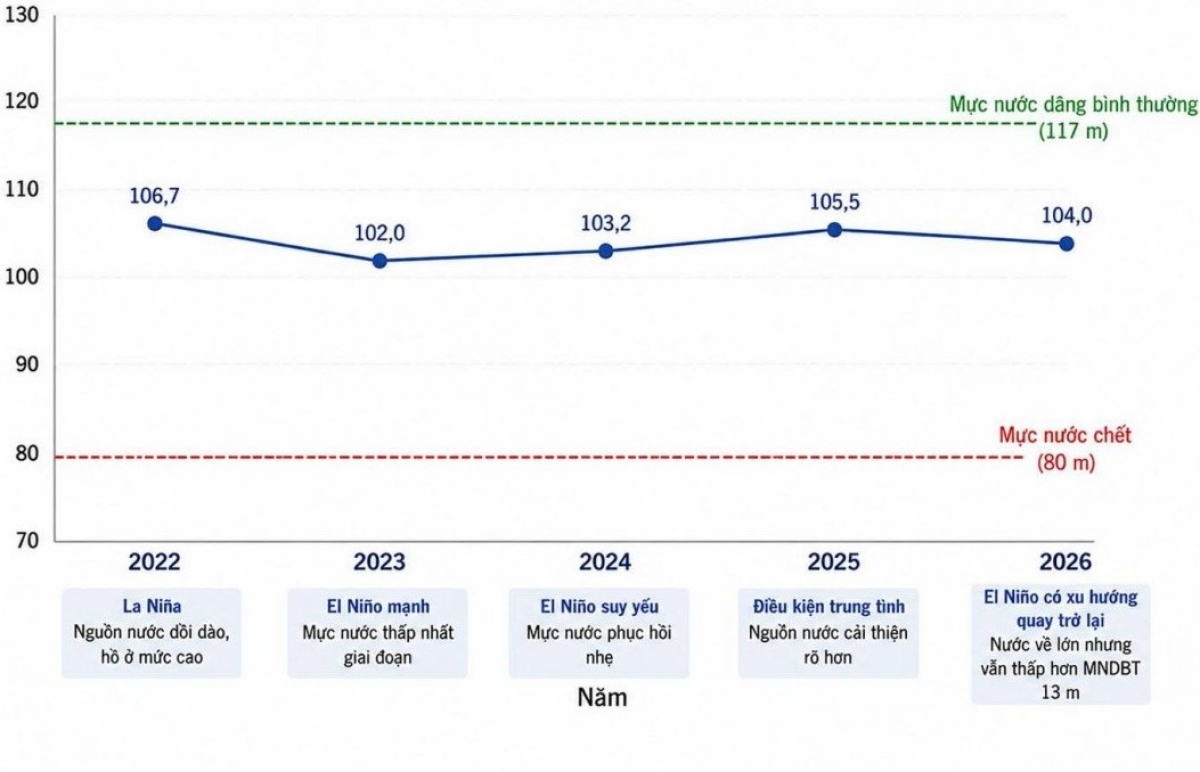
Hydroelectric Reservoir Water Levels Early July 2026: Positive Signs for Flood Season or Major Challenges for Year-End Operations?
Early July 2026 marks a significant turning point in Vietnam's hydrological landscape. After consecutive months facing water scarcity risks across multiple river basins, the water levels at many major hydroelectric reservoirs nationwide are showing clear signs of improvement. This development brings hope to Vietnam's hydropower sector and flood prevention efforts as the upcoming rainy season approaches. However, alongside these positive indicators, substantial challenges and variables remain in reservoir management operations, particularly for the latter half of the year.
Current Water Level Status at Major Hydroelectric Reservoirs - Early July 2026
According to the latest updated data, hydroelectric reservoirs along the Đà River system, including Hòa Bình, Sơn La, and Lai Châu, are recording water inflow rates considerably higher than the same period in previous years. This favorable situation creates advantageous conditions for water accumulation, preparing for the upcoming main flood season.
| Hydroelectric Reservoir | Current Water Level (m) | Design Water Level (m) | Water Inflow Rate (m³/s) | Status |
|---|---|---|---|---|
| Hòa Bình | 105.3 | 111.0 | 1,200 | Currently accumulating water, level below design |
| Sơn La | 200.8 | 215.0 | 1,100 | Currently accumulating water, level below design |
| Lai Châu | 130.5 | 140.0 | 950 | Currently accumulating water, level below design |
| Sông Tranh | 65.7 | 70.0 | 300 | Stable water level, preparing for accumulation |
Despite the increased water inflow to these reservoirs, most water levels remain below their design specifications compared to historical averages. The primary reason for this is the complex weather patterns observed during the first months of 2026, characterized by uneven rainfall distribution, which affected early water accumulation efforts.
Positive Developments for the Main Flood Season
The encouraging figures regarding water inflow to hydroelectric reservoirs in early July are viewed as positive developments, enabling operational units to build additional water reserves for electricity generation and proactive flood regulation. Sufficient water accumulation will help minimize risks associated with major floods while ensuring a stable electricity supply during the following dry season.
- Enhanced Water Accumulation: Reservoirs are focusing on water accumulation to raise levels closer to design capacity, serving both electricity generation and flood regulation purposes.
- Operational Preparation: Hydroelectric power plants are conducting comprehensive reviews and preparing rational operational plans to promptly respond to abnormal rainfall and flood developments.
- Reservoir Safety Assurance: Infrastructure technical inspections and maintenance are being prioritized to ensure safety before the rainy and typhoon season.
Significant Variables in Late-Year Operations
Despite the favorable outlook, numerous uncertain factors may impact the operation of hydroelectric reservoirs in the latter half of 2026:
- Complex Weather Patterns: Weather forecasts indicate potential for localized heavy rainfall episodes or alternating drought conditions that could significantly alter water volumes reaching reservoirs.
- Multi-objective Regulation Requirements: Beyond electricity generation, hydroelectric reservoirs must prioritize domestic water supply, agricultural needs, and flood prevention, leading to more complex and flexible operational requirements.
- Electricity Demand Pressure: Continuously increasing energy demand presents substantial challenges in balancing flood prevention water accumulation with optimal electricity generation.
Regional Analysis and Comparative Assessment
The improvement in water levels varies across different river systems in Vietnam. While the northern regions benefiting from the Đà River system show significant recovery, central and southern regions are experiencing more modest improvements. This disparity necessitates region-specific operational strategies.
| Geographic Region | Major River Systems | Water Level Improvement | Operational Challenges |
|---|---|---|---|
| Northern Region | Đà River, Ma River | Significant improvement (+15-20% compared to last year) | Balancing flood prevention with electricity generation |
| Central Region | Thạch Hãn, Hàn, Trà Khúc | Moderate improvement (+5-10% compared to last year) | Water scarcity concerns persist during dry spells |
| Southern Region | Mekong River, Đồng Nai | Gradual improvement (+3-8% compared to last year) | Saltwater intrusion prevention |
Technological and Operational Innovations in Reservoir Management
The improved hydrological conditions have enabled the implementation of advanced management techniques at several major reservoirs. These include the deployment of AI-powered prediction systems that analyze weather patterns, water inflow rates, and electricity demand to optimize reservoir operations. Additionally, improved sensor networks and real-time monitoring systems have enhanced the precision of water level management.
Environmental and Social Considerations
As water levels rise, environmental and social factors become increasingly important in reservoir management. The enhanced water capacity supports downstream ecosystems, including fisheries and agricultural activities. However, controlled water releases must be carefully managed to minimize disruption to downstream communities while maximizing benefits.
Future Outlook and Strategic Recommendations
Looking ahead to the latter half of 2026, several strategic recommendations emerge for optimal reservoir management:
- Enhanced Inter-reservoir Coordination: Strengthen coordination between reservoirs within the same river system to maximize overall efficiency.
- Climate Adaptation Measures: Implement long-term climate adaptation strategies to address increasing weather variability.
- Community Engagement: Improve communication with downstream communities regarding water release schedules to enhance preparedness.
- Infrastructure Modernization: Continue investing in infrastructure upgrades to enhance operational flexibility and safety.
Conclusion
The hydroelectric reservoir water levels observed in early July 2026 present positive developments, contributing momentum for safe and efficient operations during this year's flood season. However, management and operational units must continue to closely monitor hydrological developments, coordinate closely in water regulation efforts, to minimize risks, ensure downstream safety, and maintain a stable electricity supply to support socioeconomic development.
The current situation represents both an opportunity and a challenge for Vietnam's hydropower sector. With careful planning, technological innovation, and coordinated management, the country can navigate the upcoming wet season effectively while preparing for the dry season that follows.
#Hydropower #ReservoirWaterLevels #HydrologicalManagement #FloodSeason2026 #VietnamEnergy