India and Bangladesh: Divergent Energy Paths for Industrial Futures
While India Bets on Solar Energy, Bangladesh Heavily Invests in Nuclear Power for Industrialization
Previously, we reported on India's significant bet on solar energy to drive its industrialization process, abandoning earlier plans dependent on coal. In reality, India is forging a unique path by becoming the first nation to industrialize using clean energy rather than fossil fuels like traditional industrial powers. Meanwhile, India's smaller neighbor, Bangladesh, is also making a substantial wager on nuclear energy, another low-carbon resource.
The Rooppur Nuclear Power Project: A Historical Challenge
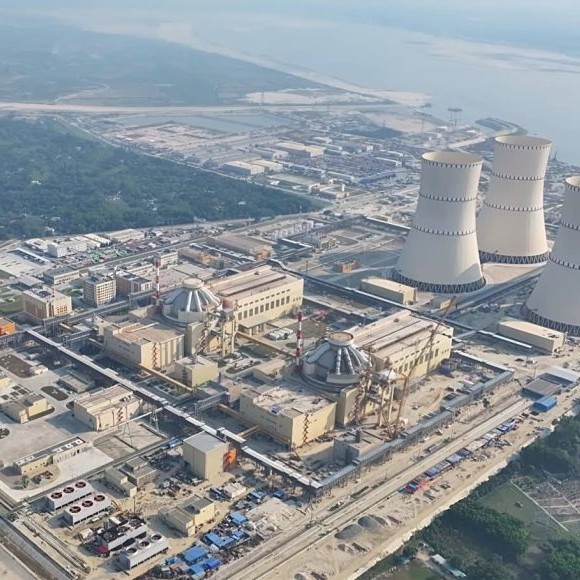
Bangladesh is currently developing the massive Rooppur Nuclear Power Plant, the largest infrastructure project in the nation's history. With a capacity of 2.4 gigawatts, the plant is expected to begin operation as early as this year. Constructed on the banks of the Padma River in western Bangladesh, the facility is being built by Russia at a cost of $12.65 billion and is attracting significant attention as a benchmark for atomic energy in developing nations, as reported by Livemint.
Specifically, the world will watch whether Bangladesh can successfully integrate a complex, high-cost nuclear resource into its developing economy without facing catastrophic financial pressure. After all, Rooppur represents a major financial commitment when Bangladesh's GDP for 2025 is projected to reach $510 billion.
Drivers Behind the Project
For Bangladesh, the primary motivation is simple: a long-term, reliable energy supply. Recent conflicts such as the Middle East and Russia-Ukraine wars have disrupted global energy flows, leading to expensive fuel imports, long queues at gas stations, and widespread rolling blackouts in a country heavily dependent on oil and gas.
When fully operational, the nuclear power plant will provide stable, low-carbon electricity meeting nearly 15% of Bangladesh's national electricity demand. However, it took conflicts to propel this massive project, which has faced multiple deadline delays over the past decade, starting with COVID-19 supply chain challenges, Western sanctions affecting the Russian-built plant by Rosatom, exchange rate fluctuations increasing costs by 25%, and then two conflicts affecting transportation.
Dependence on Indian Electricity Supply
Currently, Bangladesh heavily relies on India for electricity, importing to meet a significant portion of its daily electricity needs. India is now the largest electricity supplier to Bangladesh, with approximately 2.5 GW to 2.8 GW of daily capacity contracted from Indian power corporations, notably Adani Power operating the large dedicated coal plant in Godda, Jharkhand, as well as state-owned NTPC and PTC, according to Reuters.
This massive energy dependence has led to frequent tensions between the two nations, particularly regarding pricing and delayed payments by Dhaka due to foreign exchange restrictions. It also makes Bangladesh dependent on India - just two years ago, India's Adani Power cut electricity exports to Bangladesh by over 60% due to unresolved payment disputes. Bangladesh's accumulated debts to Adani Power reached approximately $800 million, primarily due to the Power Development Board's (PDB) financial constraints and the country's overall foreign exchange reserve shortages. The reduction from the dedicated 1,600 MW Godda plant in Jharkhand severely impacted Bangladesh's power grid, causing severe energy shortages. Adani Power supplies about 10% of Bangladesh's total electricity demand.
Future Direction: From Traditional Nuclear to SMRs
The financial burden and political disputes may make Rooppur the last large-scale nuclear plant Bangladesh builds. Moving forward, Dhaka is shifting its focus to Small Modular Reactors (SMRs), with the government having negotiated with Western and Chinese companies, signaling a quiet adjustment away from complete dependence on Russian energy partners, as reported by Bloomberg.
Typically generating 300 to 400 MW per plant, SMRs are very appealing to the country's policymakers for several reasons. First, SMRs may cost only $500 million to $1 billion compared to over $10 billion for traditional nuclear plants. However, larger plants have economies of scale advantages, with capital costs typically ranging from $6,600 to $8,000 per kW of capacity versus $8,000 to over $10,000 per kW for SMRs. Second, SMRs can be deployed along coastlines and riverfronts much faster than traditional reactors, directly serving concentrated industrial zones without relying on long-distance power transmission.
Timeline for Operation
The first reactor is expected to begin supplying 300 MW to Bangladesh's grid in August before increasing to over 1,000 MW by late 2026. Fuel loading for the second reactor is planned for 2027, with the 2.4 GW Rooppur plant expected to become operational in 2028. When both units are operational, nuclear energy will be on par with domestic natural gas as one of Bangladesh's largest base power sources.
Comparison: Traditional Nuclear vs. SMR
| Feature | Traditional Nuclear | Small Modular Reactors (SMR) |
|---|---|---|
| Capacity per plant | 1,000+ MW | 300-400 MW |
| Investment cost | Over $10 billion | $500 million - $1 billion |
| Capital cost (USD/kW) | $6,600 - $8,000 | $8,000 - $10,000+ |
| Deployment timeline | Long (10+ years) | Shorter |
| Deployment locations | Requires substantial infrastructure | Flexible along coasts, riverfronts |
Conclusion
Both India and Bangladesh are pursuing distinct but complementary energy strategies aimed at sustainable industrialization. While India is making a significant bet on solar energy to become the first nation to industrialize using clean energy, Bangladesh is heavily investing in nuclear power through the massive Rooppur project. This initiative not only addresses the country's energy needs but also serves as a crucial test for integrating complex nuclear technology into a developing economy.
However, facing financial and political challenges, Bangladesh is now looking toward a future with more advanced, flexible, and potentially lower-cost SMR technology. This transition could reshape the regional energy landscape and raise questions about the future of international energy cooperation in the region.