TKV Pioneering Circular Economy Model for Coal Waste Recycling in Vietnam
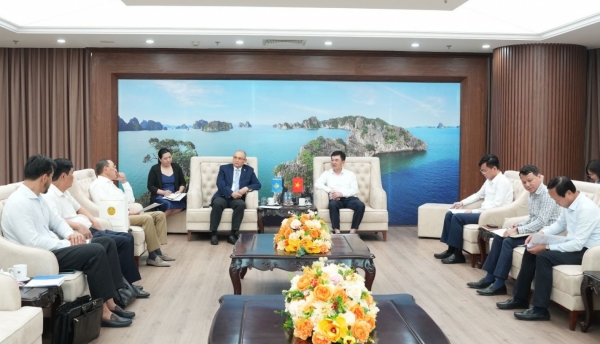
In a significant move toward sustainable industrial development, the Vietnam Coal and Mineral Industries Holding Corporation (TKV) is advancing its circular economy initiative by focusing on recycling coal industry waste. On July 14 in Hanoi, Chairman of the TKV Board of Directors, Mr. Ngô Hoàng Ngân, presided over a working session with the Embassy of the Republic of Kazakhstan in Vietnam to discuss cooperation in the field of coal waste recycling. This marks a crucial step in TKV's strategy to implement a circular economy model, aiming for sustainable development in Vietnam's coal industry.
Strategic Context and Significance
Vietnam's coal industry currently faces substantial challenges in waste management, particularly concerning coal ash - a byproduct of coal combustion in thermal power plants. Statistics indicate that Vietnam's coal industry produces millions of tons of coal ash annually, while the recycling and effective utilization rates remain limited.
Adopting a circular economy model not only addresses environmental concerns but also generates new economic value from waste products, simultaneously reducing dependence on raw materials. This approach represents an inevitable global industrial trend and aligns with Vietnam's government sustainable development orientation.
Cooperation Details
During the working session, TKV Chairman Ngô Hoàng Ngân and the Kazakhstani Embassy engaged in in-depth discussions regarding potential cooperation in coal waste recycling technologies. Specifically, the two sides discussed:
- Transfer of advanced technologies in coal ash treatment and recycling
- Development of value-added products from coal industry waste
- Establishment of business cooperation models between both parties
- Training of specialized human resources in the recycling field
The Republic of Kazakhstan possesses significant strengths in coal mining and coal waste treatment, featuring numerous advanced technologies. Vietnam, with its substantial coal reserves and sustainable development needs, presents a promising market for these technological solutions.
Chairman Ngô Hoàng Ngân emphasized at the meeting:
"TKV identifies coal waste recycling as one of our key priorities in transitioning to a circular economy model. We highly appreciate Kazakhstan's experience and technology in this field and hope to receive support to effectively implement these solutions in Vietnam."
Potential Technologies and Applications
Recycled coal ash can be applied across various sectors, creating significant economic value:
| Industry Application | Products from Coal Ash | Economic Value |
|---|---|---|
| Construction | High | |
| Geotechnical Engineering | Medium-High | |
| Agriculture | Medium | |
| Industry | High |
TKV's Implementation Roadmap
According to its plan, TKV will implement the coal waste recycling project in phases:
- Phase 1 (2023-2025): Research, technology assessment, and establishment of pilot models in coal mining concentrated areas.
- Phase 2 (2025-2027): Scale expansion, construction of industrial recycling plants in key areas.
- Phase 3 (2027-2030): Completion of the circular economy ecosystem in the coal industry, minimizing waste and maximizing resource value.
Challenges and Solutions
Despite significant potential, implementing a circular economy model in the coal industry faces numerous challenges:
| Challenges | Proposed Solutions |
|---|---|
| Limited technology | International cooperation, transfer of advanced technologies |
| Large investment requirements | Mobilizing capital from multiple sources, public-private partnerships |
| Market consumption | Building incentive policies, expanding market access |
| Human resources |
Future Vision
With the successful implementation of the circular economy model, TKV envisions revolutionizing Vietnam's coal industry. Waste recycling not only helps reduce environmental impact but also creates new value chains, enhances economic efficiency, and generates employment opportunities.
Particularly, through cooperation with the Republic of Kazakhstan, TKV has the opportunity to access the most advanced technologies, accelerating development and enhancing the competitive capacity of Vietnam's coal industry in the international market.
Conclusion
TKV's shift toward recycling coal industry waste according to a circular economy model represents not just an environmental solution but a strategic move for sustainable development. With international cooperation and the corporation's determination, Vietnam's coal industry is undergoing a significant transformation toward a green and sustainable future.
This initiative serves as a clear demonstration of Vietnam's commitment to achieving sustainable development goals and minimizing environmental impact during economic growth.
Keywords: #TKV #circular_economy #recycling #coal_industry_waste #Kazakhstan #coal_mineral_industries