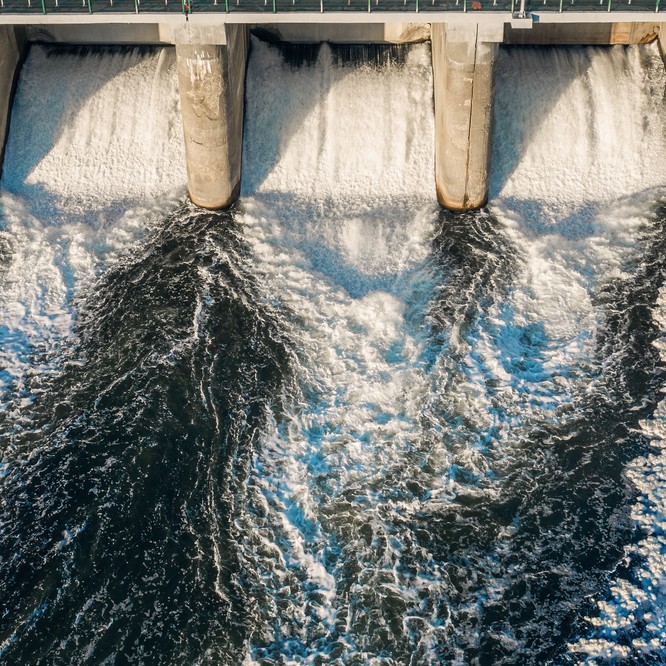
United Kingdom Advances Hydropower Development as Part of Green Transition
After years of neglect, the United Kingdom is making significant plans for the hydropower sector as a component of its broader green transition strategy. The British government is supporting the development of three large-scale hydropower projects as part of an initiative to diversify energy sources, support the green transition process, and enhance energy security.
Overview of Hydropower Technology
Hydropower is one of the oldest and largest renewable energy sources in the world. This technology works by converting the energy of flowing water into electrical energy. Many hydropower projects rely on reservoirs created by dams to store large quantities of water and generate electricity when needed. In contrast, hydropower plants without reservoirs are often called run-of-river facilities. In these types of installations, output is controlled by the amount of water flowing through at any given time.
Just four countries - China, Brazil, Canada, and the United States - produce approximately half of the world's hydropower.
Current State of Hydropower in the UK
The United Kingdom has generated electricity from hydropower projects since the 1800s, and this energy source currently contributes about 2% of the country's electricity output. Two-thirds of the electricity generated from hydropower is produced during the winter months. There are nearly 1,700 hydropower systems across the UK with an installed capacity of approximately 2 GW.
| UK Hydropower Statistics | Value |
|---|---|
| Contribution to electricity output | 2% |
| Number of hydropower systems | Nearly 1,700 |
| Installed capacity | 2 GW |
| Peak electricity production period | Winter (2/3 of total output) |
Green Transition Strategy and Long-Term Energy Storage
As part of its green transition plan, the UK is expected to invest heavily in hydropower in the coming years. In October 2024, the British government unveiled new policies to encourage investment in Long-Duration Energy Storage (LDES) as part of its national decarbonization plan.
Global demand for energy storage has surged in recent years as many countries shift to less stable renewable energy sources for low-carbon electricity generation. LDES, also known as Pumped Hydro Storage (PHS), is a type of hydropower energy storage. This technology works by using two reservoirs at different elevations to generate electricity by moving water from one reservoir to the other (discharging water as it passes through turbines). Water can also be pumped back to the higher elevation reservoir (recharging) during low electricity demand periods for reuse during peak demand. This system functions like a giant battery, storing electricity to be released when needed.
Diversifying Energy Sources
The UK government's goal is to diversify the country's energy sources to reduce dependence on fossil fuels and help enhance energy security. After making substantial investments in intermittent clean energy sources like wind and solar power, the nation is now turning to other energy sources, including hydropower and geothermal, to fill the gaps.
Currently, there are four PHS systems in the UK, all publicly funded between the 1960s and 1980s to store electricity generated from nuclear power overnight. By 2025, 11 PHS projects are being developed across the UK, with a total expected storage capacity of over 10 GW and 200 GWh, or 25% of the country's electricity demand, upon completion. A study from Imperial College London suggests that only 4.5 GW of new PHS with 90 GWh of storage could save up to £690 million annually in system energy costs by 2050.
Three New Hydropower Projects in Northern Scotland
Last month, the UK energy regulator approved in principle the first large-scale hydropower projects in over four decades, as part of the UK's plan to reduce dependence on imported energy, responding to ongoing geopolitical tensions in the Middle East and severe energy supply chain disruptions. Three new PHS plants will be developed in Northern Scotland, utilizing the region's famous lochs to provide hydropower, awaiting final approval.
| Project | Developer | Water Source | Features |
|---|---|---|---|
| Loch Kemp | Statera Energy | Loch Ness | One of the three new PHS projects |
| Coire Glas | SSE | Loch Lochy | Between Fort William and Inverness |
| Earba | Gilkes Energy | Loch Leamhain and Loch Earba | Expected to be the UK's largest pumped hydro facility |
All three projects are expected to be completed in the early 2030s and will be the first PHS projects since the Dinorwig hydropower plant was completed in North Wales in 1984. Dinorwig, also known as "Electric Mountain," can generate enough electricity to power nearly 2 million homes in just a few seconds.
Strategic Implications
UK Energy Minister Michael Shanks stated: "After forty years since the country's last pumped storage facility, this government is building Britain anew. The lesson from the conflict in Iran is clear - the UK cannot continue to be dependent on volatile fossil fuel markets and leave families facing the next price shock."
The new hydropower projects are expected to enhance the reliability of the UK's renewable energy and help the country reduce its dependence on fossil fuels once and for all. They will help reduce dependence on imported energy, support the government's green transition targets, and enhance energy security through diversification. The PHS projects also offer an alternative to lithium-ion battery storage, reducing imports of raw materials and batteries from China.
#Hydropower #GreenTransition #EnergySecurity #UnitedKingdom #EnergyStorage