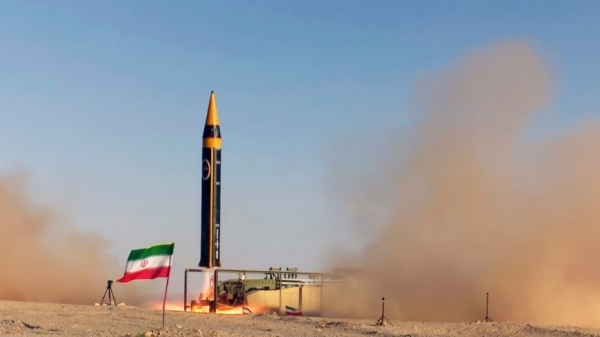
Iran Strikes US Military Base in Jordan: Escalation in Regional Tensions
Thursday, February 15, 2024 - The Islamic Revolutionary Guard Corps (IRGC) has announced the launch of 10 ballistic missiles at a US military base in Jordan, marking a significant escalation in tensions between Tehran and Washington in an already volatile Middle East.
Attack Details and Development
According to sources from the IRGC, the operation was conducted in retaliation for what Iran described as "violations of its sovereignty" by US forces in the region. The official statement from Iran's elite military force confirmed that the missiles were launched from Iranian territory and successfully hit their intended targets.
"We have sent a clear message to America and its allies that any action against Iranian interests will face a commensurate response," stated an IRGC spokesperson to state media, emphasizing the strategic nature of the strike.
Context of Rising Tensions
The attack occurs amid already strained Iran-US relations, which have deteriorated significantly since the US withdrawal from the 2015 nuclear agreement. The following table summarizes key events leading to the current tensions:
| Date | Key Event | Impact |
|---|---|---|
| 2018 | US withdrawal from JCPOA nuclear deal | Escalated tensions to highest levels in years |
| 2020 | US assassination of General Soleimani | Iran retaliated with missile strikes on Ain al-Assad base |
| 2022-2023 | Iran's suppression of nationwide protests | International condemnation and Western sanctions |
| 2024 | Missile attack on Jordan military base | New escalation in ongoing conflict |
Reactions from Involved Parties
Following the announcement of the attack, the Pentagon released a statement indicating they were "assessing the situation" and "preparing appropriate response options." A US defense official, speaking on condition of anonymity, revealed that the attack was "partially successful" with some missiles intercepted.
Jordan's government strongly condemned the attack, deeming it a "grave violation of national sovereignty" and a threat to regional security. The Jordanian Foreign Ministry summoned the Iranian ambassador to formally protest the military action.
The United Nations issued a call for "calm and restraint," urging all parties to avoid actions that could further escalate the conflict. "We urge all parties to exercise maximum restraint and seek peaceful solutions to their disputes," stated a UN spokesperson.
Expert Analysis
Regional experts from the Middle East Institute (MEI) have characterized the attack as a demonstration of Iran's "limited retaliation" strategy. "Iran is employing a calibrated response—strong enough to send a message but carefully avoiding direct confrontation with the United States," noted one analyst.
"Iran is in a position of economic weakness due to international sanctions, yet they continue to project themselves as a regional power capable of retaliation," explained Ali Vaez, Iran project director at International Crisis Group (ICG).
Implications for Regional Security
The attack could have wide-ranging consequences for regional security:
- Israel may enhance its defensive posture in anticipation of potential expanded Iranian operations
- The Persian Gulf could witness increased US military presence and activities
- Maritime shipping routes and oil infrastructure may face disruption if tensions escalate further
- Global energy markets could react negatively to concerns about supply disruptions
International Perspectives
The European Union condemned the attack while calling for "diplomatic solutions to resolve differences." EU foreign ministers are scheduled to hold an emergency meeting to discuss an appropriate response.
Meanwhile, Russia and China have adopted more cautious positions, urging against "hasty conclusions" and emphasizing the need for resolving issues through multilateral mechanisms.
Connection to the Gaza Conflict
Many experts believe the attack may be connected to the escalating situation in Gaza. Iran supports Hamas and other Palestinian militant groups, and may be sending a message related to the ongoing conflict.
"Iran is attempting to position itself as a leader in the Muslim world, particularly following Saudi Arabia's normalization of relations with Israel," explained a professor of Middle East Studies at Georgetown University. "They need to demonstrate their ability to protect Palestinian interests."
Summary and Outlook
The missile attack on a US military base in Jordan represents a significant escalation in Iran-US tensions. While both sides may attempt to avoid direct military confrontation, the risk of a broader conflict remains substantial.
In the short term, the region may witness increased military activity and heightened diplomatic tensions. Long-term de-escalation will require robust diplomatic efforts from the international community and restraint from all involved parties.
We will continue to monitor developments closely and provide updates on this evolving situation.
Related Articles:
- Iran-Israel: Shadow Conflict Intensifies
- Gulf Security Dynamics Post-US Withdrawal
- Economic Implications of Middle East Tensions
Keywords: #Iran #USA #Jordan #MissileAttack #Retaliation #MiddleEastConflict #InternationalSecurity