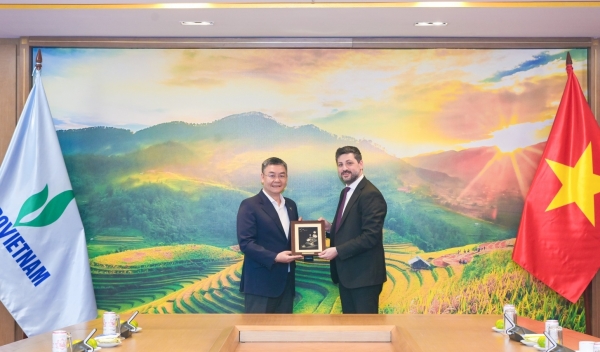
Leadership Dialogue Between Petrovietnam and WEF on Future Energy Development Trends
On July 8 in Hanoi, Mr. Lê Mạnh Cường, General Director of the Vietnam National Oil and Gas Group (Petrovietnam), held a significant meeting with Mr. Maroun Kairouz, Executive Director of the World Economic Forum (WEF). This strategic discussion occurred against a backdrop of global energy transformations, with both parties engaging in substantive exchanges regarding global energy trends, energy security, and Vietnam's development opportunities in the evolving energy landscape.
Key Discussion Points
- Global Energy Transition: Both parties discussed the accelerating global shift from traditional energy sources to renewable alternatives, a trend becoming increasingly prominent across international energy markets.
- Energy Security Priorities: Energy security has emerged as a top priority for nations worldwide. Mr. Lê Mạnh Cường emphasized Petrovietnam's critical role in ensuring stable energy supply for Vietnam's growing economy.
- Development Opportunities for Vietnam: Vietnam possesses significant potential for developing green energy sectors, particularly in renewable energy domains such as wind and solar power.
Global Energy Context
In recent years, the global energy landscape has undergone substantial transformations influenced by climate change impacts, rising energy demands, and geopolitical crises. The transition toward renewable energy is no longer merely a trend but an urgent requirement to ensure sustainable development worldwide. The current energy paradigm is characterized by:
- Increasing pressure to reduce carbon emissions
- Technological advancements in renewable energy generation and storage
- Geopolitical factors affecting traditional energy supply chains
- Economic considerations balancing energy affordability and sustainability
Vietnam's Energy Position
As a rapidly developing economy, Vietnam faces both challenges and opportunities in its energy sector. The country has demonstrated remarkable economic growth, which has consequently increased energy demand. However, Vietnam also possesses abundant renewable energy resources that could position it as a regional leader in sustainable energy development.
The Vietnamese government has committed to ambitious climate targets, including achieving net-zero emissions by 2050. Petrovietnam, as the state-owned energy enterprise, plays a pivotal role in this transition while simultaneously ensuring energy security for the nation's industrial and residential sectors.
Strategic Implications
The dialogue between Petrovietnam and WEF carries significant strategic implications for Vietnam's energy future. Key areas of potential collaboration include:
- Technology transfer and knowledge sharing in renewable energy development
- Investment opportunities in Vietnam's emerging green energy projects
- Policy development frameworks to support sustainable energy transitions
- Regional energy partnerships and integration initiatives
Future Cooperation Opportunities
The exchange between Petrovietnam leadership and WEF executives not only provided deep insights into current energy dynamics but also opened numerous avenues for future cooperation. Vietnam, with its abundant renewable energy potential, could become a critical link in the global energy supply chain.
Potential areas for enhanced cooperation include:
- Joint research and development initiatives in renewable energy technologies
- Capacity building programs for energy sector professionals
- Public-private partnerships to accelerate energy transition
- International benchmarking of best practices in energy governance
Meeting Details
| Topic | Information |
|---|---|
| Petrovietnam Leadership | Lê Mạnh Cường, General Director |
| WEF Executive Director | Maroun Kairouz |
| Meeting Date | July 8 |
| Location | Hanoi, Vietnam |
| Primary Focus | Global energy trends and Vietnam's development opportunities |
Conclusion
The strategic dialogue between Petrovietnam and WEF representatives marks an important step in Vietnam's engagement with global energy transformation efforts. As the world navigates complex energy challenges, Vietnam's proactive approach to developing its renewable energy resources positions it favorably for sustainable economic growth.
With Petrovietnam at the helm of this energy transition, Vietnam has the potential to emerge as a model for developing nations balancing energy security with environmental responsibility. The collaboration with international organizations like WEF will be instrumental in accessing global best practices, technologies, and investment necessary to achieve this vision.