AI Power Crisis: How Tech Giants Are Racing for Nuclear Energy to Overwhelm US Grid
The artificial intelligence revolution is triggering the most significant energy crisis in decades across the United States. As AI systems expand exponentially, data centers housing these technologies are consuming unprecedented amounts of electricity, far exceeding utility companies' projections. Rather than waiting for the national power grid to expand, major tech corporations are implementing aggressive strategies to secure their own energy sources through direct investments in nuclear power plants, natural gas facilities, and large-scale renewable energy projects.
The Escalating Energy Demand of AI
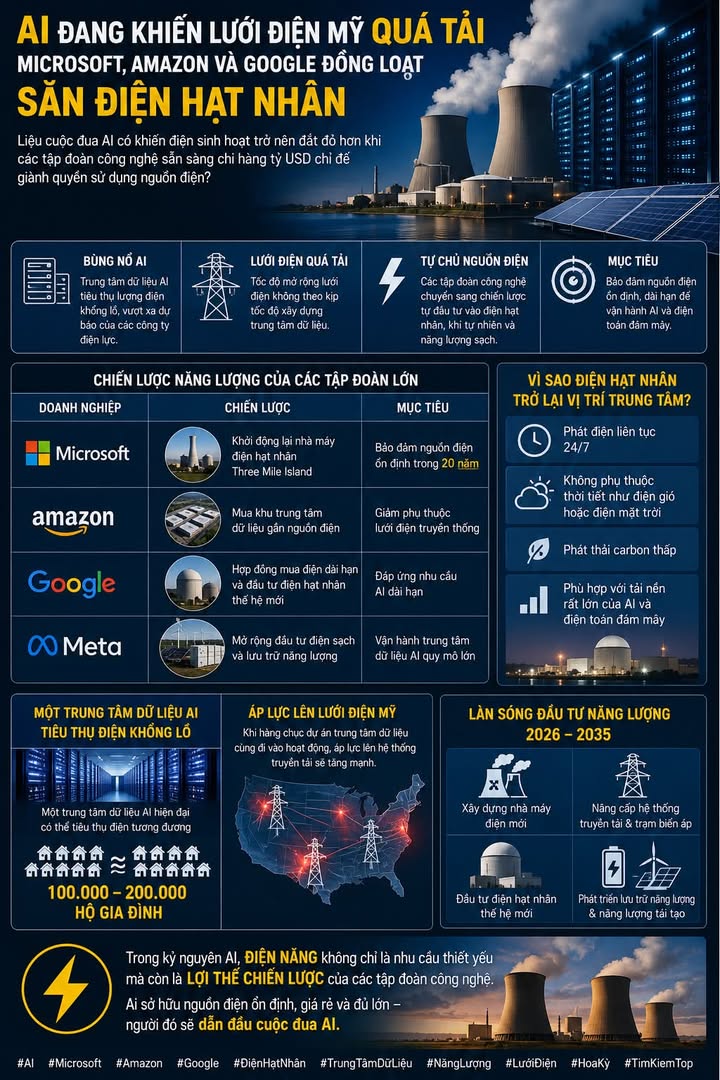
Modern AI data centers present an extraordinary challenge to traditional energy infrastructure. A single advanced AI facility can now consume electricity equivalent to hundreds of thousands of households. When multiple such facilities come online simultaneously, the strain on transmission systems becomes critical. This has created a fundamental mismatch between the pace of AI development and the expansion of electrical infrastructure.
Utility companies across the nation report that their grid expansion projections, typically planned years in advance, are becoming obsolete as tech companies accelerate their AI deployments. The traditional approach of expanding grid capacity incrementally is proving insufficient to meet the immediate, massive demands of AI computing.
Corporate Strategies for Energy Security
In response to this challenge, technology leaders are pursuing diverse but equally ambitious strategies to guarantee reliable power for their AI operations:
Microsoft's Nuclear Power Revival
Microsoft has emerged as a pioneer in the tech industry's energy transition, demonstrating commitment through its landmark agreement to restart the Three Mile Island nuclear power plant. The company signed a 20-year contract to bring this dormant facility back online, representing a significant investment in baseload power generation. This strategic move aims to provide stable, continuous electricity for Microsoft's rapidly expanding AI data center network.
The Three Mile Island project symbolizes a broader industry shift toward nuclear energy, offering a solution that combines high power output with relatively low carbon emissions—a critical consideration for companies under increasing pressure to meet sustainability goals.
Amazon's Proximity Power Play
Amazon has taken a different approach by investing approximately $650 million to acquire data center campuses located adjacent to existing power generation facilities. This proximity strategy allows Amazon to bypass the traditional grid infrastructure and access high-capacity electricity directly from power sources.
By situating its data centers near power plants, Amazon reduces dependence on an overloaded transmission system while minimizing energy losses that occur during long-distance transmission. This approach provides greater control over energy costs and reliability, factors that become increasingly critical as AI workloads expand.
Google and Meta's Diversified Energy Portfolio
Google and Meta are pursuing multifaceted energy strategies that combine long-term power purchase agreements with investments in next-generation nuclear technology, natural gas facilities, and renewable energy systems paired with advanced storage solutions.
These companies recognize that a diversified energy portfolio provides resilience against supply disruptions and price volatility. Their strategies include both direct investments in generation capacity and innovative approaches to energy storage, ensuring they can maintain AI operations even during periods of peak demand or intermittent renewable generation.
| Company | Energy Strategy | Primary Objective |
|---|---|---|
| Microsoft | Restarting Three Mile Island nuclear power plant | Securing 20 years of stable baseload power for AI data centers |
| Amazon | Acquiring data center campuses adjacent to power plants | Reducing dependence on traditional grid infrastructure |
| Long-term power contracts and next-generation nuclear investment | Meeting long-term AI computing demands | |
| Meta | Expanding clean energy investments with energy storage systems | Supporting large-scale AI data center operations |
The Nuclear Renaissance: Powering the AI Future
Nuclear power is experiencing a remarkable resurgence in the tech industry's energy strategy, driven by several compelling advantages:
- Continuous 24/7 Power Generation: Unlike intermittent renewable sources, nuclear plants provide consistent baseload power essential for AI operations that cannot tolerate interruptions.
- Weather Independence: Nuclear generation remains unaffected by weather conditions, ensuring reliability regardless of seasonal variations or extreme weather events.
- Low Carbon Emissions: As companies face increasing pressure to reduce carbon footprints, nuclear power offers a low-emission alternative to fossil fuels.
- High Power Density: Nuclear facilities provide enormous power output in a relatively small physical footprint, making them ideal for supporting the massive energy requirements of AI data centers.
These characteristics make nuclear power particularly well-suited for the large, constant energy demands of AI and cloud computing workloads, which require uninterrupted power to maintain computational integrity and prevent costly service interruptions.
The Future of US Energy Infrastructure
Energy analysts predict that the period from 2026 to 2035 will witness unprecedented investment in US electrical infrastructure. This goes beyond merely constructing new power plants—it will involve comprehensive modernization of transmission systems, transformer stations, and energy storage technologies specifically designed to support AI-driven computational demands.
Utilities and regulators are beginning to recognize that traditional approaches to grid planning must evolve to accommodate the unique characteristics of AI energy consumption. This includes developing more flexible transmission systems, implementing advanced demand-response mechanisms, and creating new regulatory frameworks that facilitate private investment in energy infrastructure.
The Energy Advantage: The New Frontier of Tech Competition
As the AI landscape matures, the competitive edge may increasingly shift from algorithmic superiority to energy security. Companies that can guarantee reliable, cost-effective power for their AI operations will hold a significant advantage in developing and deploying more powerful models.
In this new paradigm, energy is emerging as a strategic resource comparable in importance to semiconductors. The ability to power millions of AI processors continuously around the clock could become the determining factor in which companies lead the next generation of technological innovation.
The convergence of AI and energy represents one of the most significant industrial transformations of the 21st century. As tech giants invest billions in securing their energy futures, they are not merely solving an immediate operational challenge—they are reshaping the fundamental relationship between computation and power generation in ways that will define the technological landscape for decades to come.