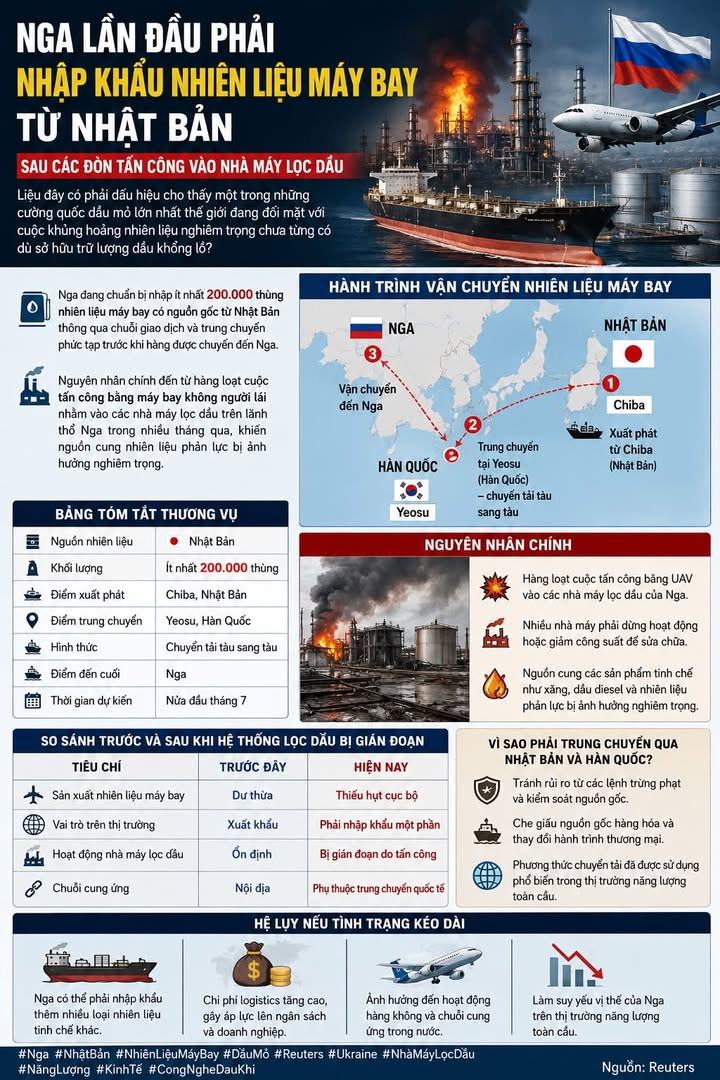
Russia Turns to Japan for Aviation Fuel Amid Unprecedented Refinery Crisis
In a remarkable reversal of fortune, Russia—one of the world's top three crude oil producers—is preparing to import aviation fuel from Japan for the first time. The move signals a deepening crisis in the nation's refining capabilities following a series of targeted attacks on its oil infrastructure, raising questions about the resilience of one of the energy giants' most critical sectors.
Historic Fuel Import Deal Takes Shape
According to industry sources, Russia is arranging to import at least 200,000 barrels of aviation fuel originating from Japan through a complex chain of transactions and transshipment operations. The carefully orchestrated logistics chain highlights the extraordinary measures Russia must now undertake to secure essential energy products that it once produced in abundance.
The fuel will be loaded at the port of Chiba in Japan during the first half of July, then transported to Yeosu port in South Korea for transshipment before continuing its journey to Russia. This multi-leg journey underscores both the logistical challenges and the lengths to which Russia must go to mask the origin of its energy imports amid ongoing geopolitical tensions.
The Impact of Persistent Drone Attacks
The root cause of Russia's aviation fuel shortage stems from a prolonged campaign of drone attacks targeting oil refineries across the country. These coordinated strikes have forced numerous refining facilities to suspend operations or significantly reduce processing capacity, creating bottlenecks in the production of refined petroleum products.
Aviation fuel, or jet fuel, represents a particularly critical vulnerability. Unlike crude oil, which Russia continues to produce at high volumes, refined products require sophisticated processing infrastructure that has increasingly come under attack. The resulting shortages have created a paradoxical situation where the world's largest crude producer finds itself dependent on imports for certain refined products.
From Energy Exporter to Importer
Russia's shift from aviation fuel exporter to importer represents a significant strategic reversal. Historically, the country has maintained a robust refining sector that not only met domestic demand but also supplied international markets. This capability has been severely compromised in recent months, forcing a reevaluation of Russia's energy self-sufficiency.
"The situation reflects a critical vulnerability in Russia's energy infrastructure," noted energy analyst Maria Petrova. "While maintaining crude production levels is one thing, ensuring the refining capacity to transform that crude into usable products is quite another. The attacks have exposed this weakness dramatically."
Complex Logistics Amid Sanctions
The choice of routing through Japan and South Korea demonstrates the evolving complexity of global energy trade in an era of sanctions and heightened geopolitical risks. The transshipment operations, while adding cost and complexity, serve to obscure the ultimate destination of the fuel, a common practice in circumventing trade restrictions.
Such routing strategies have become increasingly prevalent in global energy markets in recent years, allowing countries to maintain energy flows while navigating complex political landscapes. The multi-port approach creates additional layers in the supply chain, making it more difficult to track and potentially subject to sanctions.
Russia's Energy Sector Under Strain
The aviation fuel shortage represents just one facet of broader challenges facing Russia's energy sector. If the attacks on refineries continue, analysts warn that Russia may need to import additional types of refined fuels, including gasoline and diesel, further straining logistics networks and increasing costs.
"This is not just about aviation fuel," explained energy consultant Sergei Ivanov. "The systematic targeting of refining infrastructure could force Russia into a position where it must import multiple refined products simultaneously, creating unprecedented pressure on domestic supply chains despite maintaining high crude production."
Comparative Analysis: Russia's Refining Sector Before and After Attacks
The following table illustrates the dramatic shift in Russia's refining capabilities and market position following the sustained attacks on its oil infrastructure:
| Criteria | Before Attacks | Current Situation |
|---|---|---|
| Jet Fuel Production | Surplus | Localized Shortages |
| Market Role | Net Exporter | Partial Importer |
| Refinery Operations | Stable | Disrupted due to attacks |
| Supply Chain | Domestic Focus | International Transshipment Dependent |
Details of the Historic Import Agreement
The following table provides a comprehensive overview of the aviation fuel import arrangement between Russia and Japan:
| Category | Details |
|---|---|
| Fuel Source | Japan |
| Volume | Minimum 200,000 barrels |
| Point of Origin | Chiba Port, Japan |
| Transshipment Point | Yeosu Port, South Korea |
| Transfer Method | Ship-to-ship transfer |
| Final Destination | Russia |
| Expected Timeline | First half of July |
Broader Implications for Global Energy Markets
Russia's struggle to maintain its refining capacity carries potential ripple effects across global energy markets. The country remains one of the world's largest crude producers, and any disruption to its ability to process that crude could influence global product balances and pricing.
Meanwhile, the situation highlights the growing sophistication of drone warfare in modern conflicts and its potential impact on critical infrastructure. The ability to target specific components of energy infrastructure—rather than just production facilities—represents a new frontier in energy security challenges.
Future Scenarios and Uncertainties
Looking ahead, several scenarios could unfold depending on the duration and intensity of the attacks on Russian refineries. In the short term, Russia may successfully adapt its import strategies to maintain essential fuel supplies. However, prolonged disruptions could force more fundamental changes to the country's energy sector, potentially accelerating investments in refining capacity or alternative energy sources.
The international community will also be watching how this situation evolves, as it may provide insights into the resilience of energy infrastructure in conflict zones and inform future energy security strategies worldwide.
Conclusion: A New Chapter in Russia's Energy Story
The import of aviation fuel from Japan marks a significant turning point in Russia's energy narrative, highlighting the vulnerabilities that even resource-rich nations can face when critical infrastructure is targeted. As Russia navigates this unprecedented challenge, the world will be watching to see how one of the energy giants adapts to this new reality and what lessons can be drawn for global energy security in an increasingly complex geopolitical landscape.
Whether this represents a temporary setback or a more permanent shift in Russia's energy capabilities remains to be seen, but one thing is certain: the era of Russian energy dominance has entered a new, more uncertain phase.