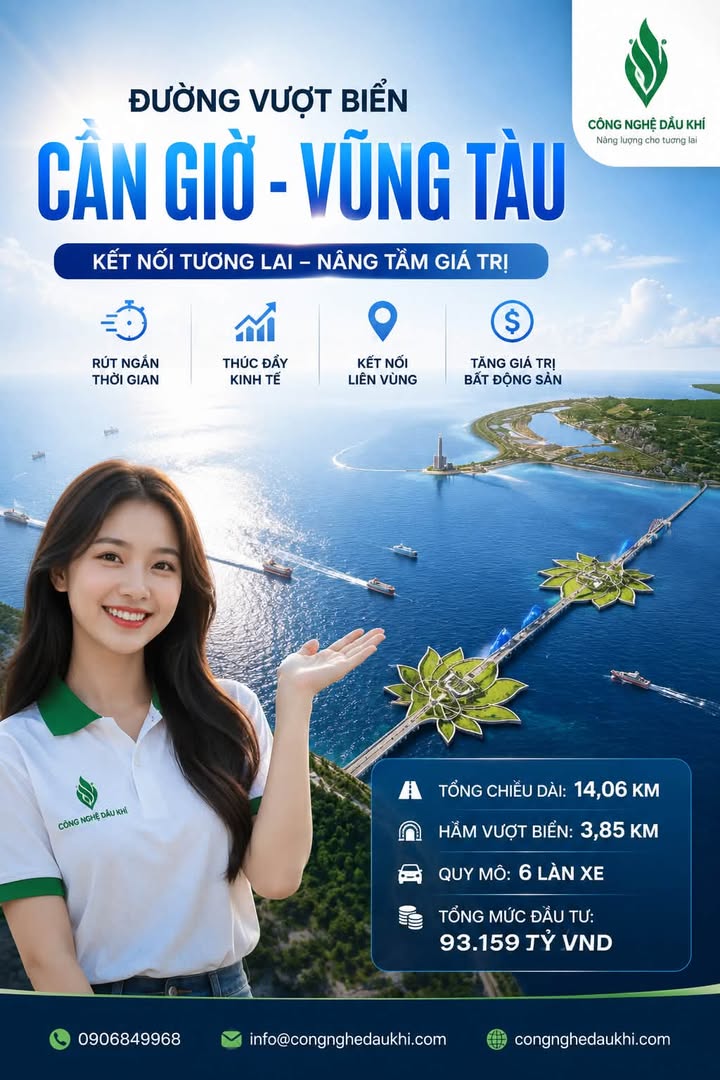
Can Gio's Value Set to Explode as Vung Tau Sea-Crossing Road Project Officially Commences
The groundbreaking ceremony for the Can Gio - Vung Tau sea-crossing road project on July 1st marks a significant milestone in Ho Chi Minh City's infrastructure development strategy. This massive transportation project is not just a large-scale engineering feat but is also expected to completely transform Can Gio's status, transitioning it from a coastal area with limited connectivity into a new commercial, tourism, and logistics hub for the Southeast region.
Project Overview: Engineering Marvel
The Can Gio - Vung Tau sea-crossing road represents one of Vietnam's most ambitious infrastructure projects. With a total length of approximately 14.06 kilometers, the project will feature six lanes of traffic, including a remarkable 3.85-kilometer sea tunnel section. The total preliminary investment is estimated at approximately 93,159 billion VND. What makes this project unique is that it's the first in Vietnam to combine bridges, gate tunnels, and sea tunnels within a single technical framework.
| Project Specifications | Details |
|---|---|
| Total Route Length | Approximately 14.06 km |
| Sea Tunnel Length | Approximately 3.85 km |
| Lane Configuration | 6 lanes |
| Total Investment | Approximately 93,159 billion VND |
Strategic Importance: Transforming Regional Connectivity
The most significant aspect of this project lies not in its physical length but in its potential to restructure the entire regional transportation network. When combined with the Ben Thanh - Can Gio metro line, Bien Hoa - Vung Tau highway, Ho Tram - Long Thanh highway, the Can Gio international transshipment port, and the Cai Mei - Thi Vai port cluster, the southern region will form a coastal economic corridor with international competitiveness.
According to analysis from the Ho Chi Minh City Real Estate Association, once this comprehensive transportation system is completed, travel time from central Ho Chi Minh City to Vung Tau could be significantly reduced, creating favorable conditions for stronger development of investment capital flows, tourism activities, and logistics operations. Can Gio will no longer be an endpoint of the road network but will transform into a strategic junction connecting multiple interregional transportation routes.
Impact on Real Estate: Beyond Speculative Growth
One of the most significant transformations will occur in the real estate market. Infrastructure has always been a factor in creating sustainable value, and when strategic transportation routes converge, land values typically grow in tandem with economic development rather than merely speculative expectations.
| Region | Expected Impact |
|---|---|
| Can Gio | Increased urban coastal value, tourism and services development |
| Tam Thanh | Development of TOD centers and logistics hubs |
| Ho Tram | Growth in investment for tourism and aviation tourism |
| Cai Mei - Thi Vai | Expansion of logistics and international commerce |
New Economic Frontiers: Marine Economy Expansion
The sea-crossing road also opens up significant development opportunities for the marine economy. New value chains will emerge including seaports, logistics, free trade zones, marine tourism, maritime services, energy, oil and gas, high-tech aquaculture, and next-generation transportation modes such as future flying taxis.
For Ho Chi Minh City, the greater significance lies in expanding its development space. Rather than concentrating solely on the inner city, the municipality will have a new coastal growth pole directly connecting Ba Ria - Vung Tau and the coastal provinces of South Central Vietnam, creating conditions to attract investment across various sectors from industry and services to finance and international tourism.
Future Outlook: Economic Reshaping
If related infrastructure projects continue to be implemented on schedule, the Can Gio - Vung Tau sea-crossing road will not only be an iconic transportation project but will also become a driving force reshaping the economic map of southern Vietnam, elevating Can Gio from a coastal gateway region into a new development center for Ho Chi Minh City for decades to come.
This ambitious project represents more than just concrete and steel—it symbolizes Vietnam's commitment to modernizing its infrastructure to unlock new economic potential and improve connectivity between key regions. As construction progresses, the transformation of Can Gio and the surrounding areas will likely become one of the most significant stories of regional development in Southeast Asia.