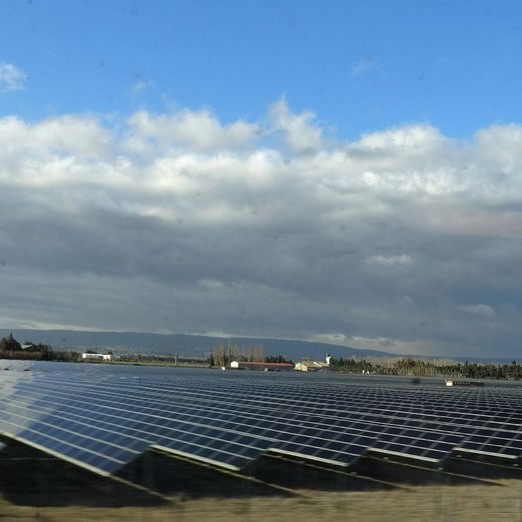
KKR Makes Record $4.2 Billion Investment in Clean Energy with EDF Acquisition
Global investment firm KKR has agreed to acquire EDF Power Solutions North America in a $4.2 billion deal, marking the company's largest renewable energy investment in history. The transaction immediately gives KKR control of one of North America's largest clean energy portfolios, with over 5.6 gigawatts of operational wind, solar, and battery storage assets.
Historic Transaction in the Renewable Energy Sector
The acquisition of EDF Power Solutions North America comes as investors compete fiercely to secure power supply for AI data centers and other rapidly growing energy demand sources. This deal instantly transforms KKR into one of the largest owners of renewable energy production assets in North America.
EDF Power Solutions has developed over 26 GW of wind, solar, and battery storage projects in nearly 40 years and operates one of the continent's largest clean energy portfolios.
Transaction Details
- Transaction value: $4.2 billion
- Assets acquired: Over 5.6 GW of operational assets
- Asset types: Wind, solar, and battery storage
- Geographic focus: North America
Strategic Rationale Behind the Deal
KKR will finance the transaction through its global infrastructure strategy. This acquisition allows the firm to capitalize on the insatiable energy demand driven by the AI boom. To date, KKR has deployed over $26 billion globally across renewable energy and transition strategies.
For EDF, this divestment aligns with the group's portfolio rotation strategy. The French energy giant will use the cash proceeds to maintain its 57 nuclear reactors domestically and finance six new nuclear units in Europe.
KKR's Renewable Energy Strategy
KKR has recently made significant investments in renewable energy. The company just signed definitive agreements with South Korea's SK Inc. to launch the country's largest integrated renewable energy platform, valued at 2 trillion won ($1.3 billion).
The platform begins operations with approximately 1.7 GW of existing clean energy assets, with plans to expand total electricity capacity to 10 GW. The platform consolidates previously dispersed renewable energy operations across SK's subsidiaries, including solar, onshore and offshore wind, fuel cells, and energy storage systems (ESS).
Comparison of Recent Major Renewable Energy Deals
| Company | Partner | Value | Capacity | Region |
|---|---|---|---|---|
| KKR | EDF Power Solutions | $4.2 billion | 5.6 GW | North America |
| KKR | SK Inc. (South Korea) | $1.3 billion | 1.7 GW (target 10 GW) | South Korea |
Impact on the Energy Market
This transaction demonstrates a significant shift of large investment funds into the renewable energy sector, particularly as energy demand from AI data centers surges. Major technology companies are seeking clean and reliable energy sources to support their increasingly large data center operations.
KKR's strong commitment to renewable energy, as one of the world's largest private equity firms, also indicates that the global energy transition is accelerating.
Future Outlook
The acquisition of EDF Power Solutions North America may be the first in a series of major renewable energy deals by KKR. With substantial capital resources and infrastructure investment experience, the company is well-positioned to continue expanding its clean energy investment portfolio globally.
For the North American renewable energy market, this deal could trigger a wave of similar transactions as major energy corporations restructure their portfolios and focus on core areas.
North American Renewable Energy Growth Forecast
| Year | Wind Capacity (GW) | Solar Capacity (GW) | Battery Storage Capacity (GW) | Total Capacity (GW) |
|---|---|---|---|---|
| 2023 | 145 | 75 | 8 | 228 |
| 2024 (projected) | 165 | 95 | 12 | 272 |
| 2025 (projected) | 190 | 120 | 18 | 328 |
KKR's acquisition of EDF Power Solutions North America is not just a strategic move for the company but also an important indicator of the global energy market's strong shift toward renewable energy sources. With energy demand from new technologies like AI continuing to rise, investments of this magnitude are likely to become more common in the coming years.