China: Heavy Investments in Both Coal and Renewable Energy
Beijing has recently unveiled its next five-year plan, revealing that China will continue to heavily invest in both coal and alternative energy sources like wind and solar over the next five years. This apparent paradox demonstrates that the world's largest emitting nation continues to generate a significant portion of its energy from coal while simultaneously expanding its world-leading renewable energy capacity.
In reality, this is not a paradox. Since signing the Paris Agreement in 2015, many nations have worked to reduce their hydrocarbon dependence in transportation and electricity generation. China has been among the most active countries in this transition while maintaining its "all of the above" approach to energy.
The "All of the Above" Energy Strategy
While Germany is shutting down its last nuclear reactors and the UK is tightening North Sea oil and gas production to make way for wind and solar energy, China is simultaneously building wind and solar installations and coal-fired power plants. And they intend to continue doing so.
In 2025, China will account for as much as 78% of global new coal power capacity. Currently, the nation accounts for 86% of global coal power capacity under construction and expected to come online this year.
| Indicator | China | Global |
|---|---|---|
| Share of new coal power capacity (2025) | 78% | 100% |
| Share of coal capacity under construction (projected 2026) | 86% | 100% |
This is because China appears to be very aware of the importance of baseload power generation - electricity that can be supplied when needed rather than only when weather conditions permit.
Investments in Alternative Energy
However, China is also keenly aware of the importance of diversification, which is why it has heavily invested in building the world's largest renewable energy capacity. Between 2019 and 2025, the world has spent a total of $1.1 trillion on alternative energy solutions like wind, solar, and other sources. China has spent more than half of that amount.
Importance of Energy Independence
There's also the matter of energy independence, and China truly excels in this area, emerging as a global superpower in energy transition technology, controlling critical mineral supply chains, rare earth processing capacity, and becoming the world's largest manufacturer of wind and solar equipment that other regions of the world desire to depend on for their transition plans.
Meanwhile, China continues to increase domestic coal and natural gas production, still relying on the principle of self-reliance and the essential importance of energy security.
2030 Electricity Targets
For energy security reasons, China has stipulated in its new five-year plan that the target for 2030 is to generate 50% of electricity from non-hydrocarbon sources. This is an increase from the previous target of 42.3% set for 2025. Beijing intends to achieve this by building more wind and solar capacity, bringing the total to over 50% of the country's total installed capacity, which is 2,700 GW.
By the end of 2025, wind and solar energy will account for 47% of total installed capacity for power generation in China.
| Year | Target for electricity from non-hydrocarbon sources | Wind & Solar Capacity |
|---|---|---|
| 2025 | 42.3% | 47% of total capacity |
| 2030 | 50% | 50% of total capacity (2,700 GW) |
Coal Power Continues to Expand
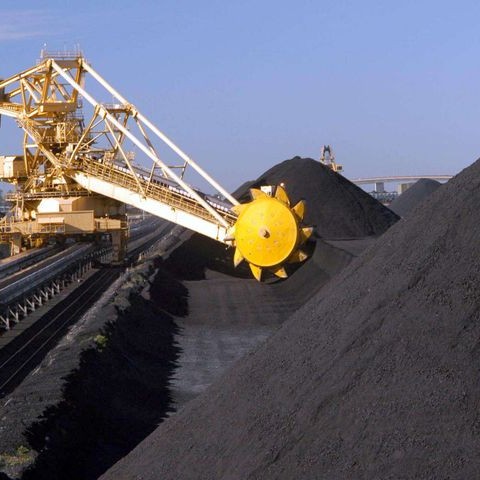
However, while doing this, China will continue to build new coal-fired power plants, mine more coal, and potentially import more when necessary. Reuters' Clyde Russell recently reported in an article about China's energy plans that domestic coal production has tripled since 2000 and is expected to reach a record 4.823 billion tons this year.
The country has also built a rather unique industry to convert coal into gas and petroleum products.
A Comprehensive Strategy
In other words, China is leaving nothing to chance. They are betting on all options for their energy security, not just the technologies that give climate feel-good vibes for politicians elsewhere, even if they come with quite a solid carbon footprint because they are produced in China using coal power.
This approach shows China is balancing between economic development needs, energy security, and environmental responsibility in its own way, not bound by political pressures or one-sided biases.