Petrovietnam Enhances Equipment Management Efficiency in Gas and Oil Refining Industry
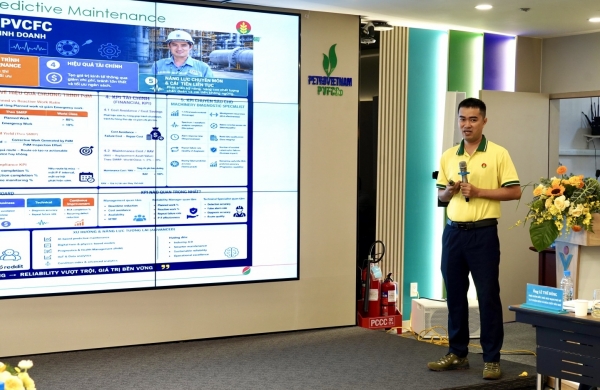
The seminar "Equipment Condition Assessment in Gas and Oil Refining Plants" recently brought together experts, leaders, and engineers from various units within the Petrovietnam ecosystem. This event served not only as a forum for sharing practical experience but also as an opportunity to update on advanced technical solutions, promote the application of digital transformation in equipment management, and contribute to enhancing operational reliability and optimizing production efficiency.
Background and Challenges in Equipment Management
The gas and oil refining industry in Vietnam faces numerous challenges in managing complex equipment systems that require high precision and reliability. Plants must operate continuously 24/7 in harsh environments with high temperatures, pressures, and corrosive chemicals. This places special demands on equipment management to ensure safety, economic efficiency, and environmental protection.
According to expert assessments, equipment failures can cause damage worth hundreds of billions of Vietnamese dong, affecting not only production volume but also threatening worker safety and the environment. Therefore, improving equipment management efficiency has become an urgent requirement in the current context.
Seminar - A Knowledge and Experience Sharing Forum
The seminar attracted representatives from Petrovietnam member units such as Vietnam Gas Corporation (PVGas), Dung Quat Oil Refining Corporation (PVD), BSR Gas Corporation, gas power plants, and other member units.
At the seminar, delegates focused on discussing:
- Results of equipment condition assessment in Petrovietnam system plants
- Analysis of equipment failure causes and proposed solutions
- Sharing effective equipment management experiences from successful projects
- Application of new technologies in monitoring, maintenance, and equipment assessment
- Building risk management and accident prevention systems
Advanced Technical Solutions Presented
During the seminar, many experts presented advanced technical solutions to improve equipment management efficiency:
| Solution | Application | Benefits |
|---|---|---|
| Equipment Condition Monitoring System (CBM) | Continuous monitoring of technical parameters | Early failure detection, reduced downtime |
| Oil and Material Analysis Technology | Evaluating oil quality and material wear | Equipment life prediction, optimized maintenance scheduling |
| Enterprise Asset Management (EAM/CMMS) | Integrating equipment data and maintenance history | Cost optimization, improved management efficiency |
| Virtual Reality (VR) and Augmented Reality (AR) Technology | Operations training, remote technical support, maintenance risk reduction | Enhanced safety, improved maintenance efficiency |
Digital Transformation Applications in Equipment Management
Digital transformation is becoming an inevitable trend in industrial equipment management. At the seminar, representatives from various units shared their experiences in applying digital technologies such as:
- Internet of Things (IoT): Implementing sensor systems to collect real-time data from equipment, enabling continuous monitoring and anomaly detection.
- Artificial Intelligence (AI) and Machine Learning: Analyzing data to predict equipment failures and optimize predictive maintenance schedules.
- Cloud Computing: Building centralized data repositories that allow information access and sharing from anywhere, anytime.
- Blockchain: Ensuring transparency and immutability of equipment historical data, increasing reliability for management decisions.
Mr. Nguyen Van Hung, Head of Technical Department at Vietnam Gas Corporation, shared: "The application of digital technologies has helped us reduce unplanned downtime by 30% and increase equipment efficiency by 15% within just two years. This is clear evidence of the effectiveness of digital transformation in equipment management."
Results and Benefits Achieved
Improved equipment management has brought positive results for Petrovietnam member units:
| Indicator | Before Implementation | After Implementation | Improvement Rate |
|---|---|---|---|
| Equipment Availability Rate | 92% | 97% | +5% |
| Unplanned Downtime | 120 hours/year | 75 hours/year | -37.5% |
| Maintenance Cost per Standard | 100% | 85% | -15% |
| Safety Incidents Related to Equipment | 8 incidents/year | 3 incidents/year | -62.5% |
Future Prospects and Action Plans
At the seminar, Petrovietnam leadership outlined orientations and action plans for the future:
- Completing an integrated equipment management system across the entire Petrovietnam system
- Investing in AI and IoT technologies to build an intelligent management system
- Building centralized equipment databases (Digital Twin) for key plants
- Developing high-quality human resources in digital equipment management
- Strengthening cooperation with international partners to access advanced technologies
Mr. Le Manh Hung, General Director of Petrovietnam, emphasized: "Effective equipment management is a key factor to ensure safety, efficiency, and competitiveness in the gas and oil refining industry. We commit to continuing strong investment in digital transformation and new technology applications to build an intelligent, modern equipment management system, contributing to the successful implementation of the Group's development strategy."
Conclusion
The seminar "Equipment Condition Assessment in Gas and Oil Refining Plants" affirmed the importance of improving equipment management efficiency in the context of digital transformation. With determination and proper investment, Petrovietnam is gradually building an intelligent, modern equipment management system, contributing to ensuring safety, enhancing production and business efficiency, and strengthening competitiveness in Vietnam's gas and oil refining industry.
This event not only highlights the achievements but also serves as motivation for units to continue innovating and applying new technologies, aiming for sustainable development and modernization of the national energy industry.