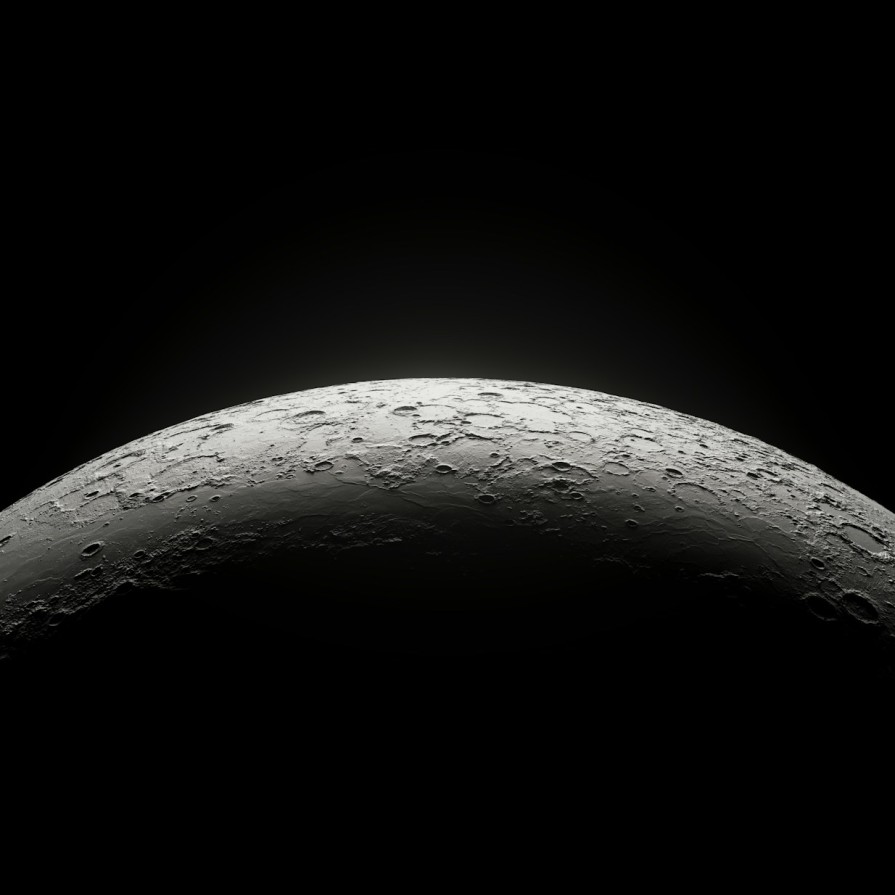
The Lunar Exploration Race: NASA and China Face Off in Lunar Base Construction Plans
In the current landscape of major space exploration initiatives, several governments are proposing ambitious energy production projects on the Moon, including initiatives utilizing both solar and nuclear power technologies. In May, NASA announced comprehensive plans to send automated landers, innovative hopping drones, and advanced vehicles to the lunar surface as part of the U.S. government's ambitious lunar base development project.
These initiatives represent a new era in space exploration, marking a shift from brief visits to sustained presence on our celestial neighbor. Both NASA and China are investing heavily in what could become humanity's first off-world settlements, with significant implications for scientific research, resource utilization, and our long-term future as a multi-planetary species.
NASA's Ambitious Plans
NASA expects to develop these sophisticated lunar systems in collaboration with leading aerospace companies including Intuitive Machines, Astrobotic, Blue Origin, and Elon Musk's SpaceX. The United States' stated goal is to return its astronauts to the Moon before President Donald Trump leaves office in 2029, exactly 60 years after the nation first achieved this historic feat with the Apollo 11 mission.
In March, NASA unveiled a comprehensive $20 billion program aimed at developing a permanent nuclear and solar-powered base at the Moon's south pole by 2032. This strategically located base would benefit from near-constant sunlight on the peaks while having access to water ice in permanently shadowed craters. Establishing such a base would enable the United States to conduct unprecedented scientific experiments, potentially mine valuable resources including helium-3, and critically assess the feasibility of future Mars missions.
Recent NASA Achievements and Milestones
NASA achieved a significant recent success with the Artemis II mission orbiting the Moon in April, marking the first crewed lunar flyby since Apollo 17 in 1972. Before sending humans back to the lunar surface, NASA plans to deploy a series of automated landers and innovative hopping drones to thoroughly assess the terrain and identify optimal landing sites. They also intend to develop advanced cargo vehicles capable of moving astronauts across the lunar surface and transporting essential communications and scientific equipment.
The Artemis program represents NASA's most ambitious lunar effort since the Apollo era, with a projected total cost of over $93 billion through 2025. This investment includes development of the Space Launch System (SLS) rocket, the Orion spacecraft, and various surface systems designed to support extended human presence on the Moon.
| NASA Lunar Initiatives | Timeline | Key Partners |
|---|---|---|
| Artemis crewed lunar missions | Artemis III: 2026-2029 | International partners, commercial providers |
| Automated lander and drone deployments | Before 2029 | Intuitive Machines, Astrobotic, Blue Origin, SpaceX |
| Permanent base construction | Before 2032 | NASA-led consortium |
| Total Artemis program launches | Multiple through 2030s | NASA, commercial partners |
Significant Challenges for NASA
Despite these ambitious plans, NASA has faced considerable criticism regarding the feasibility of its proposed timelines. Many space policy experts suggest that NASA's schedule may be overly optimistic given the technical and financial challenges involved. Simeon Barber, a prominent lunar scientist at The Open University in the UK, stated: "I wouldn't be surprised if China gets there first." Barber highlighted that NASA continues to struggle with securing a reliable and fully funded lunar-capable spacecraft, with the SLS program experiencing repeated delays and cost overruns.
Budgetary constraints represent another significant hurdle. Although NASA has requested substantial funding for Artemis, the program's future depends on consistent congressional appropriations. Additionally, the development of critical technologies such as lunar habitats, advanced spacesuits, and surface power systems remains in early stages, with numerous technical challenges yet to be resolved.
The Intensifying Race with China
The U.S. space agency now faces increasingly stiff competition from China, which has set an ambitious deadline of 2030 for its first crewed lunar landing. China has successfully sent astronauts to its Tiangong space station nearly a dozen times and is developing more sophisticated capabilities to achieve human lunar exploration.
In May, China launched the Shenzhou-23 spacecraft to transport a three-person crew to the Tiangong space station. Notably, one of the astronauts will remain at the station for a year—a record duration for Chinese spaceflight. This extended mission will help researchers assess human physiology over prolonged periods in space, including critical factors such as the physiological effects of cosmic radiation, bone density loss, muscle atrophy, and psychological stress during long-duration missions.
China's lunar ambitions extend beyond simple exploration. The nation has outlined plans for a robotic lunar research station by the late 2020s, followed by crewed missions and eventual international collaboration on a permanent lunar base. These efforts are supported by China's rapidly advancing space program, which has demonstrated consistent progress in areas including robotic exploration, crewed spaceflight, and space station operations.
Strategic Objectives and China's Lunar Ambitions
Many international observers speculate that the Chinese government is targeting both the exploitation and settlement of lunar territory and resources, although Beijing consistently denies allegations of territorial ambitions. To achieve its 2030 goal, China needs to develop appropriate hardware and software specifically designed for lunar missions, as its current spacecraft technology is optimized for low Earth orbit operations.
China has made significant strides in developing its Long March rockets, crewed spacecraft, and lunar exploration capabilities. The Chang'e program has successfully deployed multiple lunar orbiters, landers, and rovers, including the first-ever soft landing on the far side of the Moon with Chang'e-4 in 2019. These achievements demonstrate China's growing technical competence and its commitment to lunar exploration.
| China's Lunar Plans | Timeline | Key Features and Objectives |
|---|---|---|
| Crewed lunar landing | 2030 | First Chinese astronauts on lunar surface |
| International lunar research station | 2028-2035 | Robotic precursor, crewed follow-up, international collaboration |
| Lunar resource utilization | 2030s | Water ice extraction, potential helium-3 studies |
| Long-duration space biology experiments | Ongoing | Artificial embryo development, plant growth in lunar gravity |
Strategic Implications and International Dimensions
The renewed lunar race carries significant strategic implications for both nations and the broader international community. Success in establishing a sustainable lunar presence would demonstrate technological superiority, enhance national prestige, and potentially establish precedents for future space governance and resource utilization.
International cooperation remains a complex factor in lunar exploration. While NASA's Artemis program emphasizes international partnerships through the Artemis Accords, China has been largely excluded from these initiatives due to geopolitical considerations. Instead, China has pursued bilateral agreements with Russia and other nations, including plans for a joint International Lunar Research Station (ILRS) by 2035.
The potential discovery and utilization of lunar resources adds another dimension to this competition. Water ice, which could be processed into drinking water, oxygen, and hydrogen fuel for rockets, represents perhaps the most valuable resource. Rare earth elements and helium-3, which is potentially useful for future nuclear fusion reactors, may also become targets of interest as extraction technologies advance.
Technological Requirements and Innovations
Both NASA and China face substantial technological challenges in achieving their lunar ambitions. Key requirements include:
- Advanced propulsion systems capable of efficient trans-lunar transport
- Radiation protection for crews during transit and surface operations
- Closed-loop life support systems for extended stays
- Lunar surface mobility solutions including pressurized rovers
- Power generation systems optimized for lunar conditions
- Construction technologies for habitat assembly in extraterrestrial environments
- Remote operation capabilities for telerobotic systems
Innovations in these areas are accelerating, driven by both government programs and private sector initiatives. Companies like SpaceX are developing more cost-effective launch systems, while specialized firms are working on lunar resource utilization technologies that could dramatically reduce the cost of sustained lunar presence.
Environmental and Ethical Considerations
As plans for lunar bases advance, environmental and ethical considerations have gained increasing attention. The Moon, though seemingly barren, hosts scientifically valuable pristine environments and potential astrobiological interest zones. Establishing protocols to preserve these areas while enabling exploration represents an important challenge for the international community.
The Outer Space Treaty of 1967 provides the basic legal framework for space activities, but its provisions regarding planetary protection and resource utilization require clarification and updating to address contemporary activities. Both NASA and China must navigate these evolving legal and ethical landscapes as they pursue lunar ambitions.
Conclusion: The Dawn of Sustained Lunar Presence
The renewed space race between the United States and China represents more than a competition for prestige—it marks the beginning of humanity's transition to a multi-planetary species. If both nations achieve their goals, we may witness the establishment of the first permanent human settlements beyond Earth within the next two decades.
These lunar bases would serve as critical testing grounds for technologies and operational concepts necessary for more ambitious missions to Mars and beyond. They would also provide unprecedented opportunities for scientific discovery, potentially revolutionizing our understanding of the solar system's formation, the history of Earth, and the potential for life elsewhere in the universe.
Regardless of which nation achieves the first sustainable lunar presence, the ultimate success of these efforts will depend on international cooperation, responsible resource utilization, and a shared commitment to expanding humanity's presence in the cosmos. The Moon, once merely a destination for brief visits, is poised to become humanity's first foothold in the solar system, with implications that will resonate for generations to come.
#NASA #China #MoonExploration #LunarBase #SpaceRace #Artemis #SpaceTechnology #SpaceExploration