Continuous Peak Load Records and Effective Coordination of Vietnam's National Power System
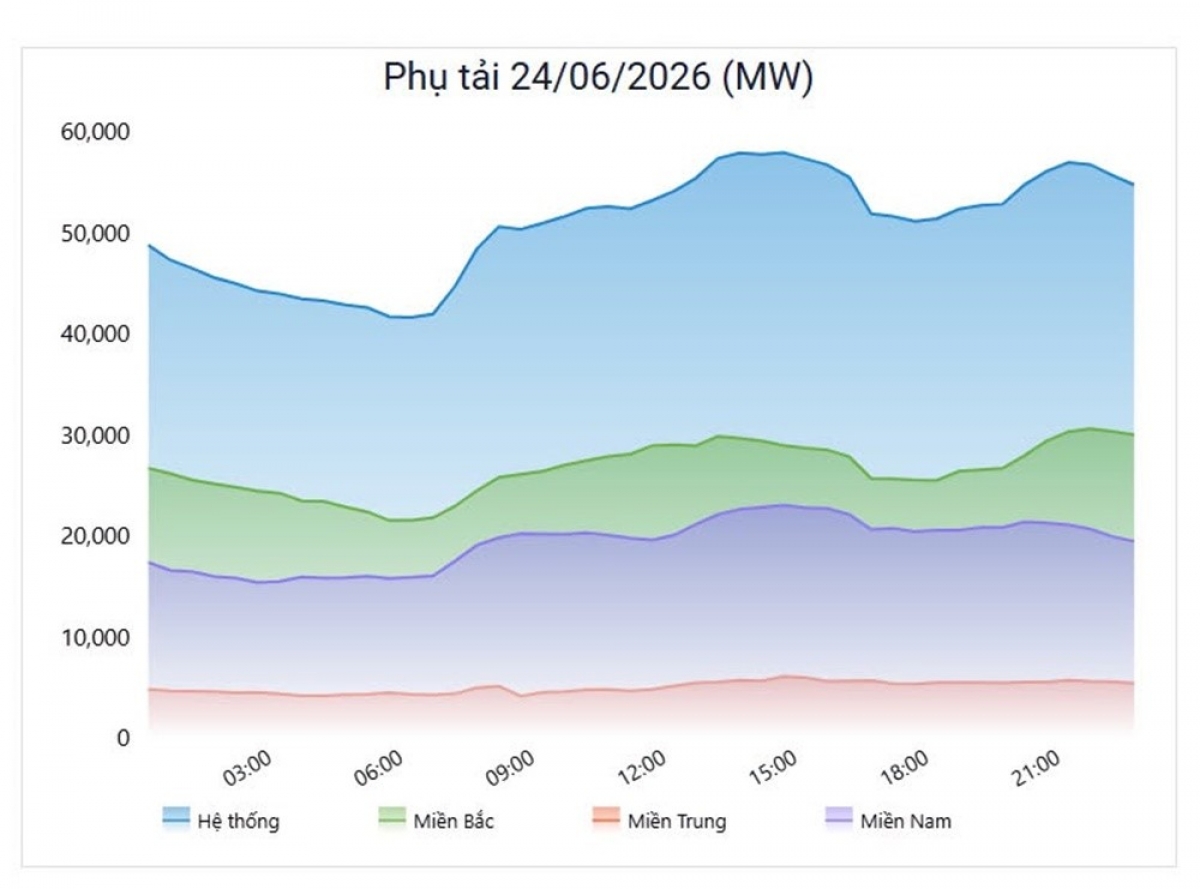
In late June 2026, Vietnam's power system marked a significant milestone as it consecutively set new peak load records. Notably, the Northern region exceeded the 30,000 MW threshold for the first time, while the national power consumption reached nearly 58,500 MW. These unprecedented figures reflect both the growing energy demands and the enhanced operational capabilities of Vietnam's national power grid.
Increasing Pressure from Rising Electricity Demand
The extreme heat wave that blanketed Vietnam in late June has driven electricity consumption to unprecedented levels, creating substantial pressure on the power supply system. To meet this soaring demand, the national power operator implemented enhanced transmission capabilities, transferring significant power capacity from the Central and Southern regions to the Northern area through the 500 kV North-South transmission lines.
This cross-regional power flow represents a critical operational strategy to balance supply and demand across the country's diverse geographical zones. The Northern region, traditionally facing power shortages during hot summer months, has particularly benefited from this enhanced interconnection.
Strategic Power System Coordination
Effective coordination of the national power system stands as one of the most significant challenges during this period of peak demand. The successful management of these record-breaking loads demonstrates the increasing sophistication of Vietnam's power dispatch capabilities. Below is a summary of key information regarding the coordination of Vietnam's power system:
| Parameter | Value |
|---|---|
| National power consumption | 58,500 MW |
| Northern region power consumption | 30,000 MW |
| Main transmission corridor | 500 kV North-South lines |
| Time of new peak records | Late June 2026 |
| Temperature conditions | Extreme heat wave |
Operational Measures Implemented
In response to the escalating demand, Vietnam's National Power Dispatch Center (NPDC) implemented several operational measures to maintain grid stability:
- Optimized dispatch of power plants across all regions
- Enhanced cross-regional power transmission via the 500 kV North-South backbone
- Coordinated operation of hydro, thermal, and renewable energy sources
- Implementation of demand response programs with industrial consumers
- Continuous monitoring and adjustment of voltage levels throughout the grid
Challenges Ahead
These record-breaking figures not only reflect immediate supply pressure but also highlight significant challenges facing Vietnam's power sector in ensuring stable and sustainable energy supply. Key challenges include:
- Infrastructure Modernization: The existing power infrastructure requires continuous upgrading to handle increasing loads and improve reliability.
- Transmission Capacity Enhancement: Expanding the high-voltage transmission network, particularly the North-South corridor, is essential for balanced regional development.
- Renewable Energy Integration: As Vietnam accelerates renewable energy development, grid integration of variable sources like solar and wind presents technical challenges.
- Climate Resilience: Building a power system resilient to extreme weather events becomes increasingly critical with climate change impacts.
- Supply-Demand Balance: Maintaining equilibrium between growing electricity demand and supply capacity requires long-term strategic planning.
Future Development Directions
Vietnam's power sector is implementing several strategic initiatives to address these challenges:
- Accelerating the development of renewable energy projects, particularly solar and wind power
- Enhancing energy storage systems to support renewable integration
- Implementing smart grid technologies to improve efficiency and reliability
- Diversifying the energy mix to reduce dependence on fossil fuels
- Strengthening international cooperation in energy technology and management
Conclusion
Against the backdrop of rising electricity demand driven by extreme weather conditions and economic development, enhancing power system coordination and improving the national electricity grid have become essential. Vietnam's power sector requires comprehensive long-term planning to ensure stable and sustainable energy supply for both residential consumers and the growing industrial base.
The successful management of these unprecedented peak loads demonstrates the increasing resilience and sophistication of Vietnam's power system. However, continued investment in infrastructure, technology, and human resources will be crucial to meet the nation's growing energy needs while transitioning toward a more sustainable and low-carbon energy future.
#PowerSystem #Vietnam #ElectricityConsumption #PowerGrid #RenewableEnergy