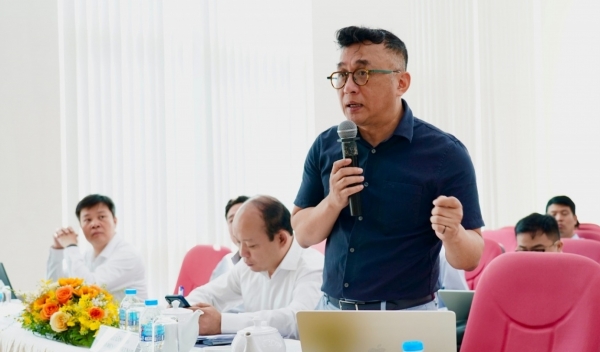
Petrovietnam Proposes Breakthrough Mechanisms for Offshore Gas and Wind Power Development
Based on practical experience in developing LNG power projects and offshore renewable energy, Petrovietnam has submitted significant recommendations to improve the draft Law Amending and Supplementing Certain Articles of the Electricity Law.
Context and Significance
In the context of global energy transition and Vietnam's net-zero commitment by 2050, the country is accelerating the development of renewable energy sources and transitioning from coal-fired power to cleaner energy forms. Petrovietnam, as the leading entity in the oil and gas sector, is actively participating in this transition by developing LNG power projects and offshore wind power initiatives.
The amendment of the Electricity Law is necessary to create a favorable legal framework for new energy projects, particularly offshore projects that require advanced technology and substantial investment. Petrovietnam's recommendations aim to address current obstacles in existing mechanisms, creating more favorable conditions for the development of clean energy projects.
Content of Petrovietnam's Recommendations
Based on practical experience in implementing projects, Petrovietnam has proposed several important contents to improve the draft Law Amending and Supplementing Certain Articles of the Electricity Law:
1. Mechanisms for LNG Power
- Establish a separate legal framework for LNG power projects, including electricity pricing mechanisms, long-term power purchase agreements, and risk-sharing mechanisms.
- Allow investors to freely negotiate and sign power purchase agreements directly with LNG producers.
- Establish support mechanisms for the investment phase of LNG projects, especially for the first projects in Vietnam.
- Create a clear roadmap for transitioning from coal to gas, ensuring national energy security.
2. Mechanisms for Offshore Wind Power
- Improve the legal framework for offshore wind power, including bidding mechanisms, licensing, and risk-sharing.
- Establish preferential electricity pricing mechanisms for offshore wind power, suitable for the characteristics and high investment costs of the technology.
- Allow foreign investors to own 100% of capital in offshore wind power projects.
- Establish support mechanisms for developing the offshore wind power supporting industry in Vietnam.
3. Risk-Sharing Mechanisms
- Establish risk-sharing mechanisms between the state, investors, and consumers for large-scale energy projects, especially offshore projects.
- Allow the application of flexible power purchase agreement (PPA) mechanisms suitable for the characteristics of each project.
- Establish a clean energy development fund to support high-risk projects that bring long-term benefits.
Impact of the Recommendations
Petrovietnam's recommendations are considered significant in promoting clean energy development in Vietnam. Completing the legal framework will create favorable conditions for attracting investment in LNG power and offshore wind power projects, contributing to achieving the net-zero commitment by 2050.
Additionally, these recommendations will help diversify electricity supply sources, reduce dependence on coal, and enhance national energy security. Particularly, with the development of offshore projects, Vietnam has the opportunity to become a clean energy center in the region.
Challenges and Opportunities
Although Petrovietnam's recommendations bring many benefits, implementation still faces several challenges:
- The initial investment costs for LNG power and offshore wind power projects are very large, requiring abundant capital sources.
- Technology for offshore projects is still complex and requires high technical expertise.
- Transmission and distribution infrastructure needs upgrading to meet the requirements of new energy sources.
- Coordination mechanisms between ministries and sectors are needed to ensure policy unity and effectiveness.
However, these challenges also present many opportunities:
- Create conditions for developing Vietnam's clean energy industry, creating jobs and transferring technology.
- Attract foreign investment in the energy sector, contributing to socio-economic development.
- Enhance Vietnam's position on the global energy map.
- Contribute to environmental protection, reduce greenhouse gas emissions, and adapt to climate change.
Conclusion
Petrovietnam's recommendations to improve the draft Law Amending and Supplementing Certain Articles of the Electricity Law are extremely necessary and timely. Building suitable mechanisms for LNG power and offshore wind power will create momentum for the sustainable development of Vietnam's power industry, while contributing to achieving the net-zero commitment by 2050.
For these recommendations to be effectively implemented, close coordination between ministries and sectors and consensus among stakeholders are required. Only then can Vietnam fully leverage the potential of clean energy, especially offshore energy, for sustainable development and enhance its international position.
Forecast of Vietnam's Energy Development until 2030
| Energy Source | Expected Capacity (MW) | Percentage (%) | Notes |
|---|---|---|---|
| Coal Power | 25,000 | 30% | Gradually decreasing according to roadmap |
| LNG Power | 15,000 | 18% | Rapid growth |
| Offshore Wind Power | 10,000 | 12% | Strong growth |
| Solar Power | 20,000 | 24% | Stable |
| Hydropower | 12,000 | 14% | Stable |
| Other Energy | 2,000 | 2% | New development |
| Total | 84,000 | 100% |
Comparison of Development Mechanisms for LNG Power and Offshore Wind Power
| Feature | LNG Power | Offshore Wind Power |
|---|---|---|
| Technology | Proven globally | Rapidly developing, needs technology transfer |
| Investment Cost | Very high (1,500-2,000 USD/kW) | High (1,800-2,500 USD/kW) |
| Implementation Time | 3-5 years | 2-4 years |
| Operation Time | 20-25 years | 20-25 years |
| Stability | High (controllable) | Moderate (wind-dependent) |
| Main Challenge | LNG import dependence | Transmission infrastructure, storage |
| Main Benefit | Energy security, flexibility | Clean energy, emission reduction |
Petrovietnam's Energy Development Direction until 2030
Petrovietnam aims to become the leading entity in Vietnam's energy transition. By 2030, Petrovietnam plans to:
- Develop LNG power projects with a total capacity of 10,000 MW.
- Invest in offshore wind power projects with a total capacity of 5,000 MW.
- Participate in the clean energy value chain, from LNG production to gas power and wind power development.
- Convert existing coal-fired power plants to use natural gas and other clean energy sources.
- Develop green hydrogen energy and other advanced energy technologies.
To achieve these goals, Petrovietnam needs support from state policies through suitable mechanisms and policies. The recommendations for amending the Electricity Law are an important first step to create a favorable legal framework for this energy transition process.
The sustainable development of the power industry is not only Petrovietnam's responsibility but also a common cause of the entire nation. With determination and suitable mechanisms, Vietnam can completely build a clean, modern, and sustainable energy system, contributing to socio-economic development and environmental protection.
Hashtags:
#Petrovietnam #GasPower #WindPower #CleanEnergy #ElectricityLaw #EnergyTransition #NetZero #LNG #OffshoreWind