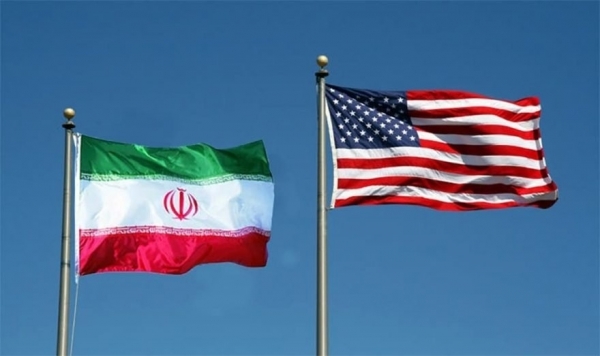
Iran's Nuclear Stance Intensifies as Country Refuses IAEA Inspections Amid US Negotiations
In the escalating geopolitical landscape of the Middle East, Iran's nuclear program continues to be a focal point of international concern. On June 25, 2023, Iran formally rejected requests from the International Atomic Energy Agency (IAEA) to conduct inspections at its nuclear facilities, a move that coincides with critical negotiations aimed at reviving the 2015 nuclear agreement between Tehran and Washington.
This development represents a significant shift in Iran's position toward international nuclear oversight and comes amid heightened tensions across the Middle East. The refusal of inspections by Tehran raises critical questions about the country's nuclear intentions and the future of diplomatic efforts to prevent a potential nuclear arms race in one of the world's most volatile regions.
Historical Context: Iran's Nuclear Program and International Diplomacy
Iran's nuclear program has been a source of international concern for decades. The program began in the 1950s under the Shah with Western support, but following the 1979 Islamic Revolution, it continued amid suspicions of military objectives. The discovery of clandestine nuclear facilities in the early 2000s led to multiple rounds of sanctions and diplomatic efforts.
The landmark 2015 Joint Comprehensive Plan of Action (JCPOA), negotiated between Iran, the P5+1 (the US, UK, France, Russia, China, and Germany), and the EU, imposed strict limitations on Iran's nuclear activities in exchange for sanctions relief. Under this agreement, Iran's uranium enrichment was capped at 3.67%, far below the 90% needed for weapons, and its stockpile of enriched uranium was reduced by 98%.
However, in 2018, the US unilaterally withdrew from the JCPOA under the Trump administration, reimposing harsh sanctions on Iran. In response, Iran gradually began exceeding the agreement's limits on uranium enrichment levels and stockpiles, moving closer to weapons-grade material.
The June 25th Incident: Iran's Rejection of IAEA Inspections
On June 25, 2023, Iranian officials formally notified the IAEA of their decision to refuse access to certain nuclear facilities and monitoring equipment. This action effectively removes international oversight from parts of Iran's nuclear program, creating what experts describe as a "black box" scenario where external verification becomes nearly impossible.
"In the current circumstances, we see no need for additional inspections beyond what is already stipulated in our agreements with the IAEA," stated an Iranian Foreign Ministry spokesperson. "These measures are temporary and reversible once the US returns to its commitments under the JCPOA."
The specific facilities affected by this decision include locations where Iran has conducted advanced centrifuge testing and uranium metal production—activities that can be precursors to nuclear weapons development. The IAEA's ability to monitor these sites through cameras and other surveillance equipment has been significantly curtailed.
Table: Key Developments in Iran's Nuclear Program (2019-2023)
| Date | Development | Significance |
|---|---|---|
| May 2019 | Iran exceeds 3.67% uranium enrichment limit | First breach of JCPOA limits |
| January 2020 | IAEA confirms Iran enriching uranium to 20% | Closer to weapons-grade material |
| April 2021 | IAEA detects uranium particles at undeclared site | Raised concerns about clandestine activities |
| June 2022 | Iran begins installing advanced IR-6 centrifuges | Increased enrichment capacity |
| March 2023 | Iran announces production of uranium metal | Material suitable for warheads |
| June 25, 2023 | Iran rejects IAEA inspections | Loss of international oversight |
Motivations Behind Iran's Stance
Iran's decision to refuse IAEA inspections appears to be calculated timing, occurring as indirect negotiations with the US approach a critical phase. Several factors likely influenced Tehran's move:
- Negotiating Leverage: By restricting IAEA access, Iran increases its bargaining position, hoping to extract greater concessions from the US in return for returning to full compliance.
- Domestic Politics: Hardline factions within Iran's government have long opposed international oversight of the nuclear program. This move may appease those elements while demonstrating resistance to foreign pressure.
- Deterrence Strategy: With advanced centrifuges and growing uranium stockpiles, Iran may be signaling its capability to rapidly produce nuclear weapons if necessary, serving as a deterrent against potential military action.
- Economic Pressures: Despite sanctions relief being a primary incentive in the JCPOA, Iran's economy continues to struggle. The regime may be calculating that maintaining nuclear leverage is more valuable than economic benefits.
International Reactions and Implications
The international community has responded with alarm to Iran's decision. The IAEA Board of Governors is scheduled to convene an emergency session to address the situation, though diplomatic channels remain open to avoid escalating tensions.
"Iran's refusal to allow IAEA inspections is a serious breach of its international obligations," stated a spokesperson for the US State Department. "This action undermines the entire non-proliferation regime and brings Iran closer to a nuclear weapons capability."
European powers, including France, Germany, and the UK, have issued similar statements, expressing disappointment with Iran's move while emphasizing their commitment to diplomacy. However, these nations face significant challenges in balancing their security concerns with economic interests in Iran.
Israel, which has consistently opposed the JCPOA, has called for stronger international action. "The world cannot afford to wait until Iran crosses the nuclear threshold," stated Israeli Prime Minister Naftali Bennett. "Diplomatic measures must be accompanied by credible military options."
Regional Security Implications
Iran's nuclear ambitions have profound implications for regional security dynamics across the Middle East:
- Israel's Response: Israel has repeatedly stated that it will not allow Iran to develop nuclear weapons and has conducted covert operations, including sabotage and assassinations targeting Iranian nuclear scientists. The absence of IAEA monitoring could potentially increase the likelihood of unilateral military action by Israel.
- Saudi Arabia's Position: As Iran's regional rival, Saudi Arabia has expressed concerns about a nuclear-armed Iran. Recent diplomatic normalization between Saudi Arabia and Iran, brokered by China, may be tested by this development, potentially leading to a regional arms race.
- Turkey's Calculations: Turkey has developed its own civilian nuclear program and may reconsider its position on nuclear weapons if Iran achieves nuclear capability, further destabilizing the region.
- Non-Proliferation Norms: Iran's actions could encourage other countries in the region to pursue nuclear programs, eroding decades of non-proliferation efforts and potentially creating a nuclear-armed Middle East.
The Path Forward: Negotiations and Potential Outcomes
Despite the current impasse, diplomatic efforts continue. The Biden administration has expressed its commitment to returning to the JCPOA, though with modifications to address concerns about Iran's ballistic missile program and regional activities. European allies are working to bridge the gap between Tehran and Washington.
Several scenarios could unfold in the coming weeks:
- Diplomatic Breakthrough: Iran reverses its decision on inspections in exchange for sanctions relief and security guarantees, leading to a revived agreement with additional provisions.
- Stalemate: The negotiations stall, with Iran continuing to advance its nuclear capabilities while maintaining just below the threshold for weapons-grade material—a "breakout" capability without actual weapons production.
- Escalation: The breakdown of talks leads to increased sanctions, covert actions, and potentially military confrontation, with unpredictable consequences for regional and global security.
- Alternative Agreements: A modified agreement emerges that addresses concerns of all parties, possibly including limited sanctions relief tied to specific nuclear transparency measures.
Expert Analysis: The Broader Geopolitical Context
Dr. Elena Petrova, a non-proliferation expert at the International Institute for Strategic Studies, offers perspective on the situation: "Iran's nuclear program has always been about more than just technology. It's about regional influence, national identity, and security in a neighborhood dominated by nuclear-armed rivals like Israel and Pakistan."
"The current situation reflects a complex interplay of factors," Petrova explains. "Iran feels emboldened by its growing regional influence and Russia's deepening ties following the Ukraine conflict. Meanwhile, the US is distracted by multiple global challenges, creating what Tehran perceives as an opportune moment to advance its nuclear ambitions."
Energy analyst Michael Chen adds economic context: "Iran's economy has proven more resilient than many anticipated under sanctions, primarily through oil exports to China and other Asian markets. This financial breathing room has given Iran greater flexibility in its nuclear calculus."
Conclusion: A Critical Juncture in Nuclear Diplomacy
Iran's refusal of IAEA inspections on June 25, 2023, represents a critical juncture in international nuclear diplomacy. The move underscores the fragility of non-proliferation efforts in the Middle East and highlights the complex interplay between security concerns, economic interests, and geopolitical rivalries that define the region.
As the international community responds to this challenge, the coming weeks will likely determine whether diplomacy can prevail or whether the Middle East will move closer to a nuclear-armed future. The stakes could not be higher, as the potential consequences extend far beyond Iran's borders to global security, energy markets, and the international order itself.
Whatever the outcome, the situation serves as a stark reminder of the enduring challenges of nuclear non-proliferation in an increasingly fragmented and multipolar world. The path forward will require not just technical solutions but a renewed commitment to diplomacy and a recognition that security for all can only be achieved through cooperation rather than confrontation.