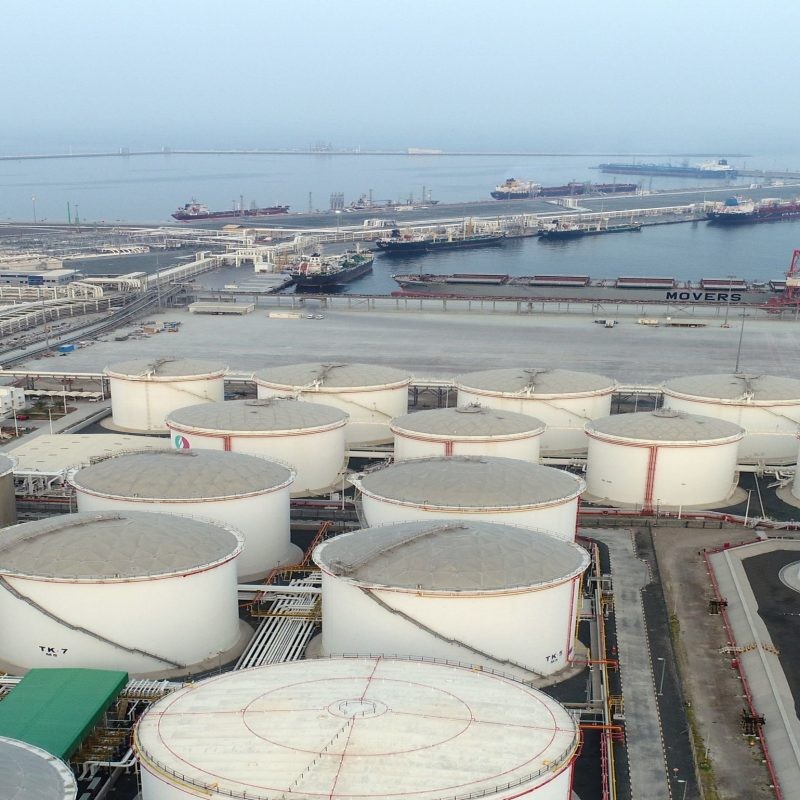
UAE Restructures Offshore Oil Pricing, Breakthrough into Asian Market
In recent developments, Abu Dhabi's Murban crude oil has rapidly emerged as a major global benchmark, surpassing traditional benchmarks like Platts Dubai. With high API gravity and low sulfur content, Murban is now traded on the ICE Futures Abu Dhabi (IFAD) exchange and recognized as a global energy benchmark. The provision of continuous trading, deep liquidity, and elimination of destination restrictions has helped Murban bring unprecedented price transparency and discovery to Middle Eastern crude oil.
However, Middle East conflicts have disrupted market dynamics, creating significant advantages for Asian oil refiners. The Abu Dhabi National Oil Company (ADNOC) is now shifting its official selling prices (OSP) for three of its offshore crude grades — Upper Zakum, Das, and Umm Lulu — from being based on Murban futures to being benchmarked against Dubai. This change will apply to upcoming cargoes over the next two months, while Murban crude remains linked to Murban futures contracts.
Causes and Consequences of the Pricing Shift
ADNOC's decision to price its offshore grades according to the Dubai benchmark rather than Murban represents a necessary adjustment to correct the economic distortion that has disadvantaged buyers for years. Murban is a light, sweet crude, while offshore grades like Upper Zakum, Das, and Umm Lulu are medium and sour, resulting in completely different product slates.
During the peak of US-Iran tensions, extreme market inversion and sudden demand for light crude caused Murban futures prices on IFAD to surge dramatically. When Upper Zakum and Das were priced based on Murban, these medium and sour grades became prohibitively expensive for Asian refiners, completely detached from their physical market fundamentals.
Strategic Foreign Trade Changes
Amid the geopolitical tensions, Asian refiners have sought alternative supply sources, including higher-priced WTI and West African crude, with much of July and August demand being met through these alternatives. With the US maritime blockade lifted and traffic through the Strait of Hormuz restored, floating storage volumes are returning to the market, increasing supply just as buying demand has decreased.
Currently, Asian buyers no longer need immediate volumes and have significantly reduced spot market purchases, forcing state-owned producers in the region to compete with a dwindling number of buyers.
Impact on Asian Refiners
Refiners in Japan, South Korea, and India are now in a stronger position to demand discounts for Dubai-linked offshore grades. They have ample supply while Middle Eastern producers need to maintain oil flow through reopened shipping routes.
| Refiner | Purchase Volume (Barrels) |
|---|---|
| India | 6 million |
| Japan (Eneos) | 3 million |
| South Korea (SK Energy & GS Energy) | 8 million |
These transactions have largely met their summer crude oil requirements. Now, with traffic through Hormuz restored and Gulf supply returning, producers are competing to attract buyers with already met short-term demand, giving Asian refiners more power to negotiate discounts for Dubai-linked cargoes.
ADNOC's New Direction
ADNOC is shifting to a new operational model that could become the standard in the future. Market analysts and industry sources suggest this transition represents a strategic adjustment to broader Asian and Middle East commodity market baskets. By separating price streams — maintaining Murban as a standalone benchmark for light crude while linking offshore medium and sour grades to Dubai — ADNOC has addressed the distinct physical characteristics of these crude types.
Returning to a system entirely based on Murban futures contracts for these offshore grades would require Murban contracts to consistently trade at premium levels, which has proven difficult amid competition with other global crude grades.
Production Growth Projections
After leaving OPEC, the UAE is expected to increase total oil production to 5 million barrels per day by 2027, marking an immediate increase of 730,000 barrels per day. No longer constrained by OPEC limitations, the International Energy Agency (IEA) forecasts total oil production, including crude, condensate, and natural gas liquids, will exceed 5.2 million barrels per day next year.
To achieve these targets, ADNOC will leverage billions in investments to drive a major scale-up strategy, including a $150 billion capital expenditure program for the 2026-2030 period alongside a 200 billion Dirham local project planning to increase daily production capacity, enhance export infrastructure, and expand global operations.
The company is also increasing investment in low-carbon energy solutions and renewables, including investments aimed at reducing carbon emissions, expanding petrochemical integration, and developing an international energy footprint through units like XRG.
Market Implications and Future Outlook
The restructuring of ADNOC's pricing strategy reflects a broader realignment in global oil markets amid geopolitical uncertainties. By creating distinct benchmarks for different crude qualities, the company is addressing market inefficiencies that have emerged during periods of heightened regional tensions.
As the UAE continues to expand its production capacity and diversify its energy portfolio, the global oil market may witness further evolution in pricing mechanisms and trading patterns. The separation of light crude benchmarks (Murban) from medium and sour grades (Dubai) could set a precedent for other oil-producing regions to develop more nuanced pricing structures that accurately reflect the physical characteristics and market dynamics of different crude types.
This strategic shift comes at a time when global energy markets are undergoing significant transformation, with traditional oil-exporting nations increasingly diversifying their energy portfolios while maintaining their core hydrocarbon operations. The UAE's approach exemplifies this balance, pursuing both production expansion and sustainable energy development.
Written by Alex Kimani for Oilprice.com
#ADNOC #CrudeOil #Murban #Dubai #OilMarket